



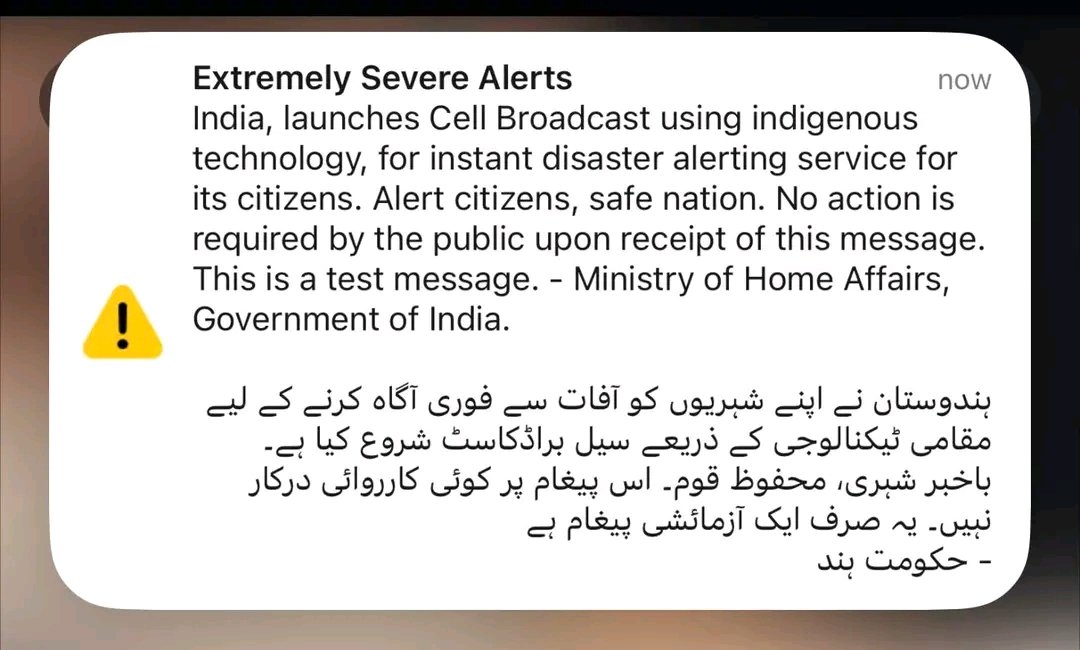
JAMMU,MAY 2 :The Government of India on Saturday carried out a nationwide trial of a newly developed mobile emergency alert system aimed at protecting people during natural disasters and other emergencies.
Known as the Cell Broadcast Alert system, the technology is currently being tested across the country. As part of the trial, citizens received a flash message on their mobile phones from the National Disaster Management Authority (NDMA).
The message informed users that the alert was only a test and there was no need to worry or take any action.
When the alert was delivered, phones rang with a loud alarm sound and displayed a bright notification, immediately catching users’ attention.
This alert system operates through an indigenous platform called SACHET (Integrated Alert System), which has been developed by the Centre for Development of Telematics (C-DOT).
It follows the globally accepted Common Alerting Protocol (CAP), recommended by international telecom standards bodies, ensuring reliable and fast communication during emergencies.
The main purpose of the system is to quickly send warnings to people in specific locations during events such as earthquakes, tsunamis, lightning strikes, and even human-made threats like gas leaks or chemical incidents.
Although similar tests have been conducted earlier, the current exercise is being carried out on a larger scale to evaluate how effectively the system performs before it is officially launched nationwide.
The NDMA, which is India’s top disaster management authority, sent these test alerts. Only those mobile devices with cell broadcast test settings enabled received the messages.
Users have the option to turn these alerts on or off by adjusting their phone settings under safety and emergency alert options.
Once testing is completed, the system will be fully implemented across the country and will provide emergency notifications in multiple Indian languages to ensure wider reach and understanding.

