



Arteev Sharma
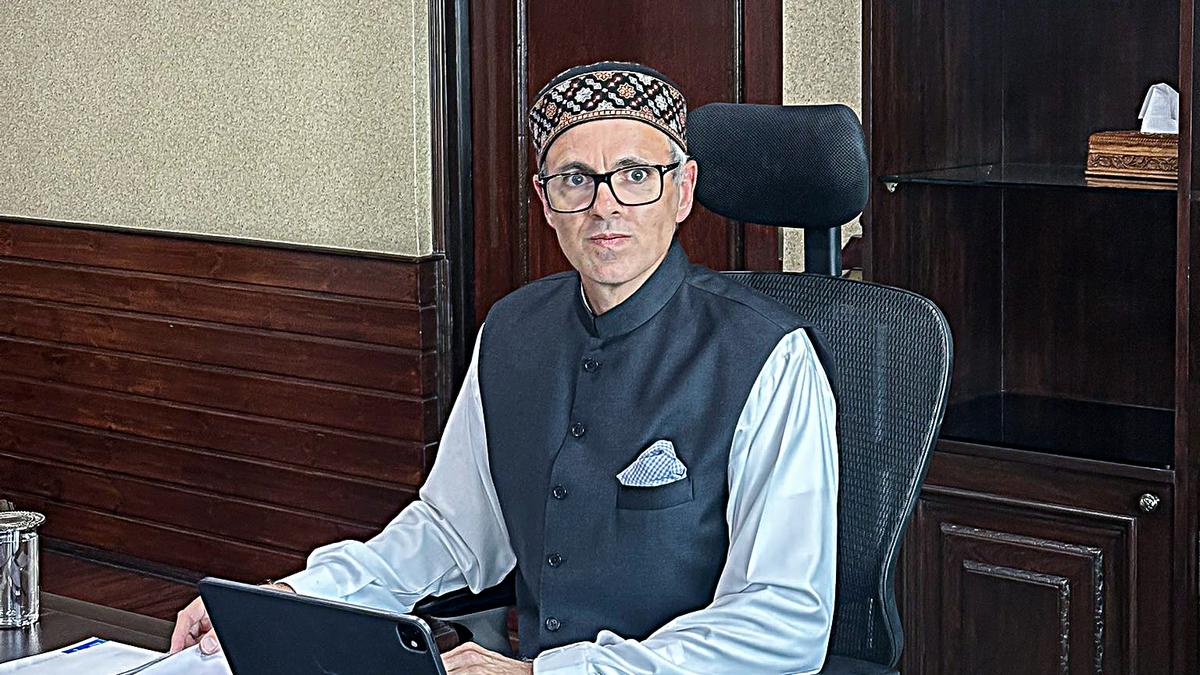
Jammu, December 31: With the year 2024 remaining a political rollercoaster for Chief Minister Omar Abdullah, marked by a dramatic journey from electoral defeat to lead governance in Jammu and Kashmir, the dawn of new year unfolds tough challenges for his government in meeting public expectations and delivering on his party’s election manifesto promises from the Assembly polls.
From achieving popular demands such as the restoration of full statehood to J&K and the release of political prisoners to delivering 200 units of free electricity to every household, 12 free LPG cylinders annually for the Economically Weaker Sections (EWS), and increasing monthly old age and widow pensions to Rs 3,000, the road ahead is apparently far from easy for Omar Abdullah.
Adding to these challenges is the simmering controversy over existing reservation policy in Jammu and Kashmir, which has even created rifts within the National Conference. The party’s unity will remain a pressing concern for the Chief Minister, who is also the vice president of the party, as NC Lok Sabha member from Srinagar, Aga Syed Ruhullah Mehdi, along with opposition leaders, recently joined student protests against the existing reservation policy outside the Chief Minister’s residence.
The Chief Minister, who has so far maintained a cautious approach to avoid confrontation with the Centre and the Raj Bhavan on various issues, has already met the Union Home Minister Amit Shah twice since assuming office on October 16, 2024, to seek restoration of statehood—a demand for which he is yet to secure a clear commitment from the Centre, and developmental funds to address region’s pressing issues.
To begin with, the National Conference’s election manifesto outlined bold commitments, including implementing the Autonomy Resolution of 2000, restoring Article 370 and 35A, and reversing changes made post-August 5, 2019.
“In the interim period, we will endeavor to redraw the Jammu and Kashmir Reorganization Act, 2019, and the Transaction of Business of the Government of Union Territory of Jammu and Kashmir Rules, 2019,” it had said, adding “We will make efforts to modify, annul, and repeal post-August 5, 2019, laws that impact the special status of J&K, and protect the land and employment rights of the people of Jammu and Kashmir”.
While the party has passed a resolution in the Legislative Assembly against the Centre’s decisions, tangible progress on these promises remains absent so far.
Furthermore, financial constraints loom large over the government’s ability to fulfill its election promises. Though the Chief Minister has made a commitment over providing free 200 units of electricity to the people every month from March, the fulfillment of the promise will definitely have strong financial implications against the wake of ever-growing power liability of the UT that has reached to a whopping over Rs 35,000 crores.
The total annual revenue realization on account of electricity consumption in the Union Territory has been hovering around Rs 4,000 crores, with an annual deficit of over Rs 3,200 cr incurred against the total power bill of Jammu and Kashmir.
Given the UT’s financial health, it seems to be a major challenge for the National Conference government to fulfill these promises as the debt-to-GDP ratio of J&K is projected to reach a precarious 51 percent by 2024-25, significantly higher than the fiscal prudence norm recommended for other states.
Additionally, the ruling party has even expressed commitment to find ways to reinstate the old pension scheme for government employees. It also promised increased free rice and Atta allocation to 10 kg per person per month, besides expressing commitment to review the allocation of kerosene and sugar, similar to the approach taken by other states.
“The implementation of these policy decisions will further amplify financial challenges for Omar Abdullah government, thereby making it difficult for the regime to go ahead with it,” a source said.
Pertinently, the National Conference emerged as a single largest party by winning 42 out of the total 90 Assembly seats in Jammu and Kashmir. With the support of six Independent MLAs, Omar Abdullah managed to secure a majority in the Legislative Assembly and became first Chief Minister of the Union Territory of Jammu and Kashmir.
