



Avinav Verma
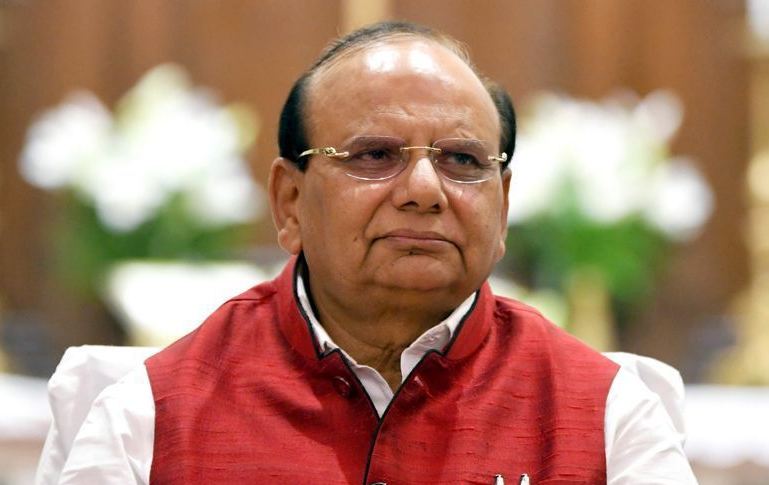
Jammu: Days before the Centre’s next round of talks with Ladakh’s political representatives, Lieutenant Governor Vinai Kumar Saxena has hit back at climate activist Sonam Wangchuk over his description of India as being under an “undeclared emergency”, accusing him of making controversial statements to remain in the news and questioning the public response to his September mobilisation.
Speaking at the India Today Conclave, Saxena challenged Wangchuk’s comparisons of Ladakh with Tibet and India with China, and cited the turnout at a march on September 23 and a rally on September 24 to question the activist’s political messaging.
Wangchuk had used the phrase “undeclared emergency” in a post on X following reports of arrests of student and youth leaders in Delhi ahead of a planned protest demanding the resignation of Chief Election Commissioner Gyanesh Kumar over alleged irregularities in electoral rolls. He had condemned the arrests and urged the government to resolve the issues through dialogue, warning that he might consider a peaceful sit-in, hunger strike or march in Leh or Delhi if the curbs were not withdrawn within 24 hours.
Saxena, however, questioned Wangchuk’s subsequent comparisons involving Ladakh, Tibet and China, alleging that such statements were intended to keep him in the news. He also challenged the activist’s environmental credentials, asking what concrete work he had undertaken to protect Ladakh’s fragile ecology.
The remarks come ahead of the October 15 meeting of the Union Ministry of Home Affairs’ (MHA) sub-committee with the Leh Apex Body (LAB), Kargil Democratic Alliance (KDA) and other representatives in Leh.
The meeting assumes significance as Ladakh’s political groups continue to press for constitutional safeguards, greater democratic representation and a defined governance framework for the Union Territory.
Responding to Wangchuk’s “undeclared emergency” remark, Saxena said he did not agree with the assertion and argued that the freedom to criticise political leaders was a feature of Indian democracy.
He contrasted India’s democratic space with China, questioning whether similar criticism of the country’s leadership would be possible there. Saxena referred to statements made against Prime Minister Narendra Modi during earlier protests, arguing that such expressions would not be possible under China’s political system.
Taking direct aim at Wangchuk, the LG alleged that activists sometimes make statements to remain in the news.
He linked the activist’s remarks comparing Ladakh with Tibet and India’s democratic system with China to the turnout at the September mobilisation.
According to Saxena, Wangchuk had announced a 20-km march on September 23, with thousands expected to participate, but fewer than 50 people turned up.
He claimed the march was called off after around four kilometres, with participants leaving in vehicles.
Saxena further said that the September 24 gathering at Polo Ground, for which he claimed an attendance of 15,000 had been projected, drew fewer than 500 people.
He alleged that Wangchuk’s remarks about Ladakh being worse off than Tibet and China having greater democracy than India followed the limited response to the two events.
Saxena also referred to Wangchuk’s earlier comparison of Ladakh with Manipur, questioning the basis of such statements.
The turnout figures and the interpretation of Wangchuk’s statements were presented by Saxena during the interview.
Saxena also questioned Wangchuk’s credentials as an environmentalist and climate activist, asking what concrete work he had undertaken to protect Ladakh’s fragile ecology and improve education.
He referred to the shrinking area of Tso Kar, claiming it had declined from around 11,000 acres to approximately 3,200 acres, and questioned what Wangchuk had done to address the environmental changes affecting the region.
The LG said he had personally asked Wangchuk to cite examples of his work but had not received what he considered a convincing response.
He added that he had invited the activist to official programmes, including the inauguration of rock-check dams, hoping to learn from his work and explore ways to implement similar initiatives.
Saxena’s criticism adds an environmental dimension to the political disagreement, with both ecological protection and the future governance of Ladakh featuring prominently in the region’s public discourse.
Highlighting Ladakh’s environmental challenges, Saxena said the region’s green cover was below one per cent and stressed that increasing tree cover required careful planning because of limited water availability.
He said around 50,000 trees had been planted or were being planted over a six-month period. At an estimated requirement of 25 litres of water per tree daily, he said, the total requirement could reach 15 lakh litres a day.
On tourism and investment, Saxena said Ladakh had the potential to host major international conferences, provided adequate infrastructure was developed.
He referred to an international conference attended by diplomats from 39 countries and said his ambition was to bring the World Economic Forum to Ladakh.
He maintained that the region had the necessary ingredients to host an event of that scale, although infrastructure development would take time.
Saxena said such initiatives could strengthen Ladakh’s international profile and create opportunities to increase tourism and local incomes.
On security, he said the borders were peaceful and that the armed forces remained highly alert to deal with any eventuality.
The MHA sub-committee is scheduled to meet representatives of LAB, KDA and other stakeholders in Leh on October 15, according to information shared by Ladakh Chief Secretary Ashish Kundra with LAB chairman Chering Dorjay Lakruk.
The discussions are expected to address Ladakh’s long-standing demands concerning constitutional safeguards, democratic representation and the proposed governance framework.
The previous round of talks on September 9 in New Delhi did not yield the substantive progress sought by the Ladakh groups.
The October 15 meeting is therefore being watched for indications of movement on the demands and the possibility of a mutually acceptable arrangement.

