



NAVVNEET DUBEY
Jammu: The death of 17 people in Badaal village of Rajouri about fifteen months ago is still a mystery. Many reputed laboratories of the country have said that the cause of deaths was consumption of toxic substances, but nothing has been revealed yet about the source of these substances and who is the culprit behind it.
The government has also washed its hands off the matter by simply saying that it has handed over the case to the Home Department. The police have also not found any conspiracy in it yet. At present, the investigation of the case is going on.
This case came to light when several people died under mysterious circumstances in the area between December 7, 2024 and January 24, 2025, several cases of unexplained illnesses were reported from Badal village in the Kandi block of Rajouri. These incidents affected 55 people in four families, most of whom were close family members. During this period, 17 people died. Experts from several prestigious laboratories across the country were invited to investigate the case. Furthermore, a special police investigation team is also investigating the matter, but the mystery surrounding these deaths remains unclear. Pesticides have been identified as the cause of death, but the source and how they reached these families remains unclear. The police’s special investigation team has also failed to find any criminal angle in this case.
In a written reply to a starred question, Health Minister Sakeena Itoo said, according to the provisional findings of toxicological analysis conducted by CSIR-Indian Institute of Toxicology Research, Lucknow and PGIMER Chandigarh, the deaths do not appear to be linked to any viral or bacterial outbreak. “Instead, the presence of certain toxic substances, including pesticide compounds such as Aldicarb Sulfone, Acetamiprid and Butoxycarboxim, along with elevated Cadmium levels in some samples, indicates a possible neuro-toxic exposure as the cause of illness,” she said in her reply on Saturday.
The DRDE-DRDO Gwalior report confirmed the presence of chlorfenapyr and abrin. Samples of sattu and cornbread were also taken. Samples were collected from the homes of Aslam, Ishtiaq, Sultan, Nazia, Nabeena, Zahoor, Maroof, Zabeena, and Yasmin. The NFL, FSSAI Ghaziabad report confirmed the presence of chlorfenapyr and chlorpyrifos. Samples were collected from the homes of Nizamuddin and Aslam, as well as from the Dharamsal CAPD depot. Chlorfenapyr was confirmed in the report of the Central FSL Chandigarh. They had taken viscera samples from 17 deceased.
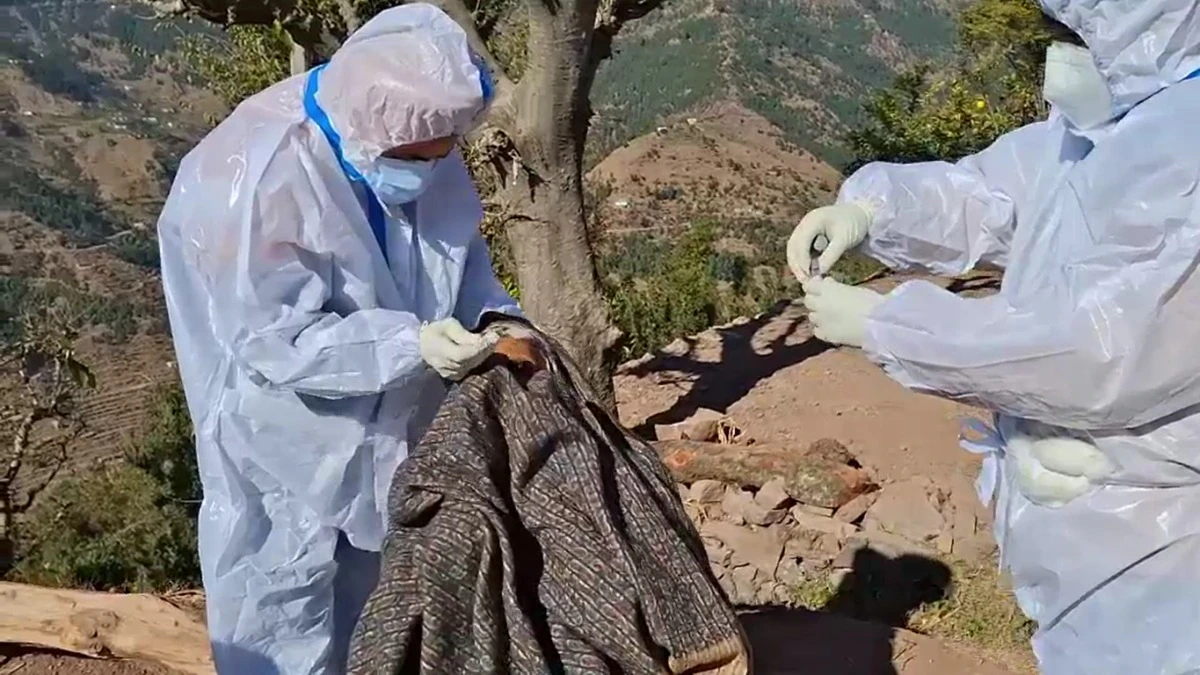
When Javed Iqbal, MLA from Rajouri’s Budhal Assembly constituency, asked a starred question in the Assembly on these deaths, the Health and Medical Education Department stated that the patients exhibited symptoms such as abdominal pain, vomiting, fever, lethargy, and shortness of breath. All affected individuals were admitted to health centers, including CHC Kandi, Medical College Rajouri, and SMGS Hospital Jammu, for specialized treatment. Although the first patient recovered and was discharged from the hospital on January 2, 2025, cases of infection continued to emerge among individuals associated with the affected families. The government stated that extensive containment and testing measures were initiated in coordination with the district administration immediately after the incidents. Medical camps were set up in the area, and 3,577 people were monitored door-to-door. Response teams also conducted screening and contact tracing. Samples of food, water, medicines, and biological material were collected for laboratory testing, while isolation wards were established at GMC Rajouri, GMC Jammu, and SMGS Hospital Jammu. Ambulance services and 24-hour medical teams were also deployed.
The matter was reviewed at the highest level with the participation of expert teams from leading institutions including All India Institute of Ayurveda, Postgraduate Institute of Medical Education and Research, National Centre for Disease Control and Indian Council of Medical Research.
Toxicological analyses conducted by the CSIR-Indian Institute of Toxicology Research and PGI Chandigarh revealed that these incidents do not appear to be related to any infectious disease. Instead, some samples revealed the presence of toxic substances, including pesticides such as aldicarb sulfone, acetamiprid, and butoxycarboxime, as well as high levels of cadmium, pointing to neurotoxic exposure as a possible cause of the illness and deaths.
The government said a special investigation team constituted by the Home Ministry and an inter-ministerial probe team are currently conducting a detailed inquiry into the matter to ascertain the exact cause and circumstances of the deaths. But no one has yet been able to find out where all these toxins came from and how they got into their food.
” We have investigated this matter. The case has now been handed over to the Home Department, which is investigating the matter”, said Sakina Itoo, Minister of Health and Medical Education.

