



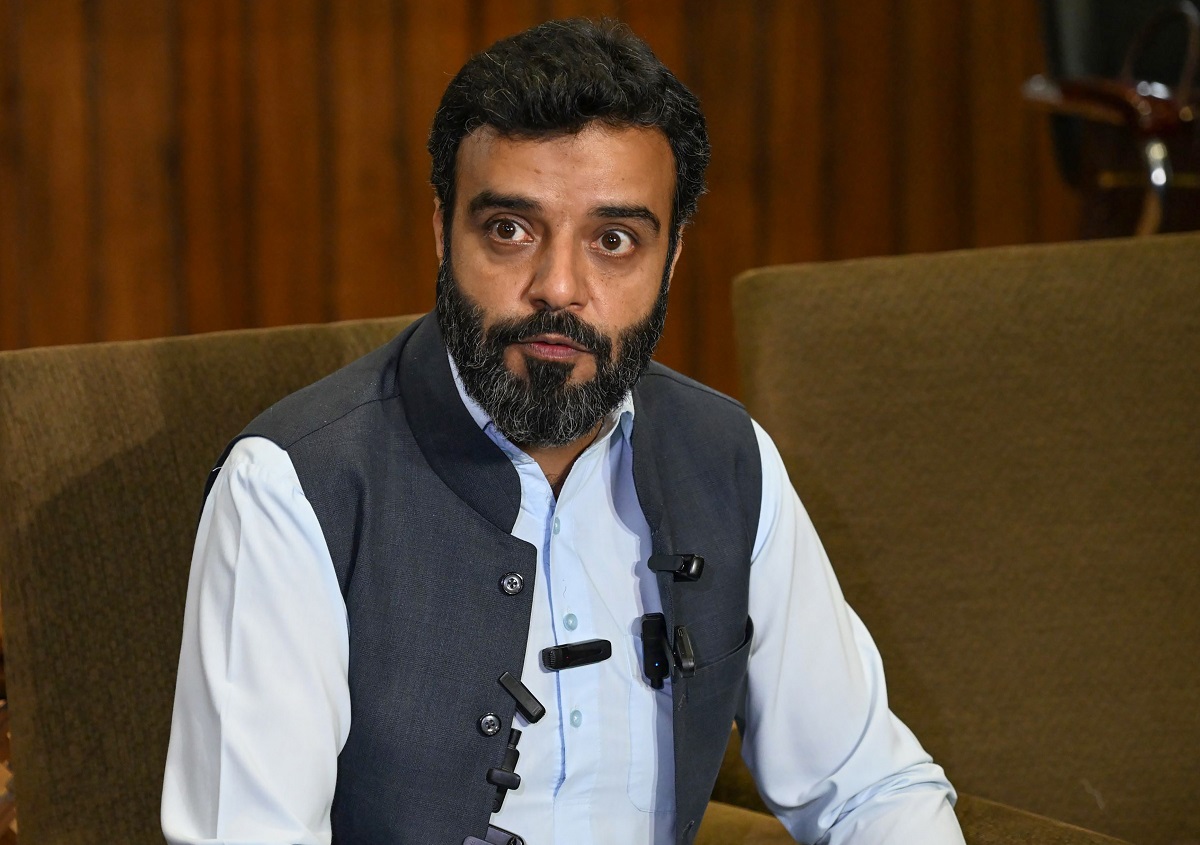
SRINAGAR: Despite an available fund allocation of ₹9.80 crore under the Members of Parliament Local Area Development Scheme( MPLADS) scheme, Srinagar Member of Parliament (MP) Aga Syed Ruhullah Mehdi has spent only ₹50,56,771 so far, with data showing that most recommended development works are yet to be sanctioned or completed.
As per the data available with The News Now, 62.3 percent of the funds remain unutilised, whereas only 37.7 percent has been recommended or committed for development works. This imbalance underscores the slow pace of implementation and delays in administrative sanctioning across departments handling MPLADS-related proposals.
According to the official records, a total of 130 works has been recommended under the Srinagar MP’s MPLADS quota. However, a major portion of these proposed works—58.4 percent—remains unsanctioned at the departmental level.
Another 36.2 percent of the works are still under execution, leaving only 5.4 percent fully completed. These five completed works correspond precisely with those listed in the “Total Works Completed” document, which confirms that project execution has remained extremely limited despite a high volume of recommendations.
The completed projects primarily consist of rural infrastructure improvements, including the installation of tube-wells at Tel Mohalla, Nazneenpora, Sarab, and Tukroo in Shopian, along with a tiled lane improvement in Tral Bala, Pulwama. Together, these five completed works amount to ₹13,65,400, indicating that the majority of MPLADS expenditure has so far been directed to minor water supply and small-scale road development tasks located primarily outside Srinagar city.
In contrast, the total quantum of recommended works is extensive and much broader in scope.
The 130 works listed amount to ₹6,10,68,138.49 and span across Srinagar as well as adjoining districts including Budgam, Pulwama, Ganderbal, and Shopian. Roads, lanes, and drainage-related projects constitute the largest chunk of proposed development, with dozens of recommendations focusing on lane construction, drain repairs, culvert building, and pathway upgrades in areas such as Jamalata, Fateh Kadal, Rainawari, Chattabal, Zadibal, and Nawabazar. Public lighting emerges as another major theme, with allocations running into lakhs for installing street lights across Lal Chowk, Khanyar, Hazratbal, and several rural blocks in Pulwama. Electricity infrastructure improvements also feature prominently, including proposals for multiple 63 KVA and 100 KVA substations, HT/LT network upgrades, and electrical equipment installations across Mujgund, Zakura, Pampore, Lethpora, Marvel, Hatiwara, and Budgam localities.
A substantial part of the recommendations also focuses on water supply and irrigation improvements, which involve tube-wells, borewells, and pipeline augmentation in Rainawari, Khanyar, Khag, Dal, and other rural pockets of Shopian and Pulwama. Additionally, several works aim at developing or upgrading playfields and parks, such as the sports grounds at Noorbagh, Tulkaul, Palpora, Bakhshipora, and public parks in Kawdara, Karan Nagar, and Pulwama. This indicates an effort to balance civic infrastructure development with recreation-oriented upgrades, though execution remains limited due to lack of sanction.
Records analytics further show that the distribution of recommended works between rural and urban zones is almost evenly split. Urban areas account for 52.7 percent of works, while rural areas represent 47.3 percent, suggesting that the MP’s recommendations have been spread across both Srinagar city and peripheral districts.
Category-wise distribution shows that 96.2 percent of recommended works fall under “Normal and Others,” while only a small fraction pertains to institutional categories such as Trust/Society support, Bar Association library purchases, repair and renovation, or community hall construction. This highlights a strong emphasis on basic local infrastructure over organisational or community-institutional development.
Overall, the MPLADS data for Srinagar suggests an active phase of recommendations but an extremely slow pace of sanctioned execution. Even though projects worth over ₹6.10 crore have been proposed, only five have been completed, and expenditure remains below six percent of the available allocation.
