



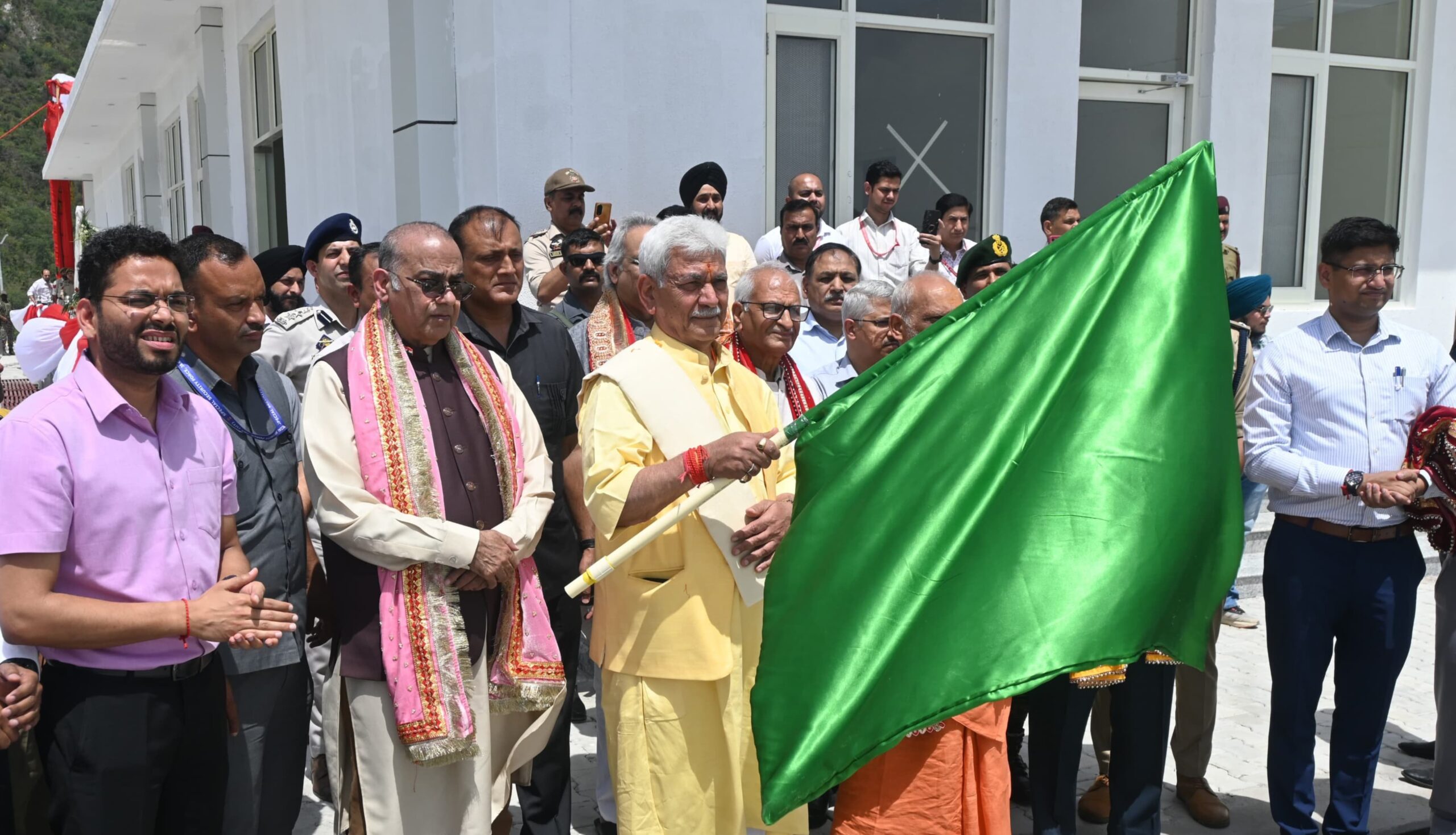
Jammu: Lieutenant Governor of Jammu and Kashmir Manoj Sinha on Thursday unveiled a series of major infrastructure and spiritual tourism projects linked to the revered Shri Mata Vaishno Devi Shrine, saying the initiatives would significantly enhance pilgrim convenience, safety and religious tourism in the region.
The Lieutenant Governor inaugurated the state-of-the-art Shri Mata Vaishno Devi Helipad at Village Hutt in Katra, dedicated the newly constructed Vaishnavi Bhawan to devotees at the Bhawan area, and also chaired a high-level meeting on the proposed International Museum of Goddess at Katra.
Addressing the gathering after inaugurating the heliport facility, Sinha said the integrated aviation infrastructure would streamline heli-operations and strengthen connectivity for pilgrims visiting the shrine.
“This helipad has been developed in strict compliance with the safety and operational norms laid down by the Directorate General of Civil Aviation. The facility places a paramount emphasis on passenger safety, security and seamless travel experience while meeting the growing heli-services demand of devotees,” he said.
He said the project would provide a significant boost to religious tourism and improve overall pilgrimage infrastructure in the region.
The modern heliport at Village Hutt has been developed jointly by the Shri Mata Vaishno Devi Shrine Board and the Shri Shiv Khori Shrine Board to improve accessibility and safety for pilgrims using helicopter services to the two prominent shrines.
According to officials, the infrastructure has been planned on the basis of technical inputs from the Directorate General of Civil Aviation (DGCA) and future operational requirements assessed by the Shrine Board. The facility is capable of handling increased passenger traffic and enhanced helicopter operations, including the future shifting of existing Serli Helipad operations to Village Hutt.
The project includes construction of the helipad and associated aviation infrastructure, a 1.10-kilometre approach road, expanded terminal facilities, waiting halls, ticketing and refund counters, reception areas, offices, security cabins and a modern hangar facility.
The heliport has also been equipped with safety, sanitation, parking, utility services, emergency response systems and queue management facilities to ensure smooth operations.
Officials said the project would help address safety concerns related to helicopter flights over Katra town while also centralising and professionalising heli-services under the management of the Shri Mata Vaishno Devi Shrine Board, which has long experience in operating helicopter services for pilgrims.
The occasion also marked the inauguration of the helipad and allied infrastructure works at Shri Shiv Khori Shrine. Sinha said the enhanced connectivity between the two shrines would encourage more pilgrims visiting Shri Mata Vaishno Devi to also undertake pilgrimage to Shiv Khori.
Later, the Lieutenant Governor chaired a high-level meeting regarding the establishment of a world-class International Museum of Goddess at Katra.
During the meeting, members of the Shrine Board, scholars, academicians and experts discussed plans for creating a modern spiritual and cultural landmark dedicated to Mata Shakti traditions.
The proposed museum aims to blend immersive storytelling, sacred artifacts, local traditions and advanced technology to offer pilgrims a deeper understanding of Shakti worship traditions. The institution will showcase the sacred iconography of 51 Shakti Peethas along with the nine divine swaroops of Maa Durga.
The Shrine Board informed the meeting that several preparatory steps had already been initiated, including the launch of a dedicated website inviting suggestions from across the globe, study visits to premier museums in the country and identification of leading domain experts for the project.
The Board approved the creation of a permanent post of Director General for the International Museum of Goddess and sanctioned a dedicated corpus fund for the conceptualisation, development and operation of the ambitious project.
Sinha suggested deputing expert teams to visit various sacred Shakti Peethas that would be featured in the museum and also called for appointing a specialised consultant for detailed research and architectural conceptualisation.
“The museum shall serve as a spiritual sanctuary and a premier centre of knowledge. It will play a pivotal role in awakening the younger generation to the rich cultural, traditional and spiritual heritage of our Shakti Peethas and the region,” the Lieutenant Governor said.
In another major development, Sinha dedicated the newly constructed Vaishnavi Bhawan at the Shri Mata Vaishno Devi shrine to devotees.
He said the new accommodation facility would significantly improve pilgrim amenities and strengthen the shrine’s capacity to manage the increasing influx of devotees.
The project was developed under the comprehensive master plan for the Bhawan area after the Shri Mata Vaishno Devi Shrine Board approved redevelopment of the Pannishalla area, earlier used for staff quarters, into a modern yatri-cum-staff accommodation complex.
Constructed over approximately 45,784 square feet, the new Vaishnavi Bhawan features 78 well-furnished rooms for pilgrims. The building also houses reception and waiting areas, offices, staff facilities and a Bhojanalaya on the terrace for pilgrims and staff.
The facility has been equipped with five lifts, including three high-capacity passenger lifts, a service lift and a connecting lift linked to Parvati Bhawan to ensure convenience and accessibility for pilgrims.
The construction work for the facility began in February 2024 and was completed within two years.
During his visit, the Lieutenant Governor also paid obeisance at the shrine and prayed for peace, prosperity and well-being of the people of Jammu and Kashmir.
Several members of the Shri Mata Vaishno Devi Shrine Board, senior civil and police officers, district administration officials and representatives of various institutions attended the inaugural ceremonies and review meeting.

