



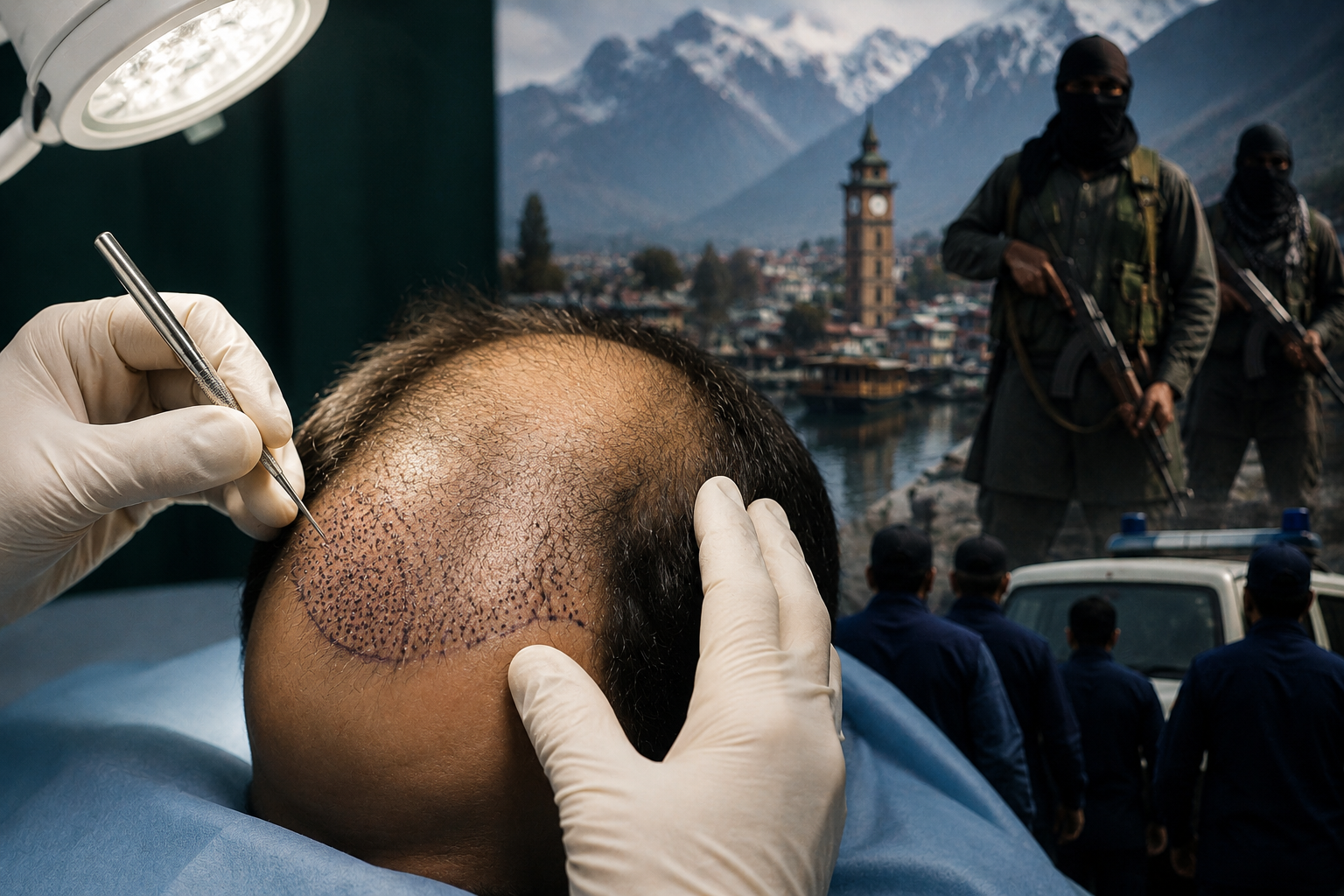
Srinagar,May 18: Security agencies in India have claimed that a Pakistani militant connected to Lashkar-e-Taiba paused his underground activities in Kashmir to undergo a hair restoration procedure in Srinagar.
Investigators identified the man as Mohammed Usman Jatt, also known by the nickname “Chinese.” Officials say he entered Jammu and Kashmir illegally with the purpose of assisting militant operations and building secret support networks.
During questioning, Jatt reportedly told investigators that the lifestyle and environment he witnessed in Kashmir were very different from what he had been taught during training sessions across the border. According to officials, his focus gradually shifted after spending time among local residents.
The investigation is being handled by the National Investigation Agency. Authorities said the accused shared information about the route he used to enter Kashmir and the locations where he stayed while moving across different areas of the Valley.
Officials claim that Jatt had been suffering from noticeable hair loss for a long time and wanted treatment to improve his appearance. While staying in Srinagar, he reportedly met a local shopkeeper who had already undergone a hair transplant. After several conversations, the militant allegedly arranged the same procedure for himself at a clinic in the city.
Security officials also said his interrogation helped police trace several individuals suspected of helping militants with shelter and movement in Srinagar and North Kashmir.
After the medical procedure, Jatt is believed to have travelled to Jammu and later moved towards Punjab. Investigators claim he spent time there trying to learn English and watching foreign television dramas.
Authorities further allege that he intended to secure Indian identity documents in order to remain hidden or eventually leave the country using forged papers.
Officials say the case has brought attention to a wider militant support structure operating across different states, and investigations are continuing.

