



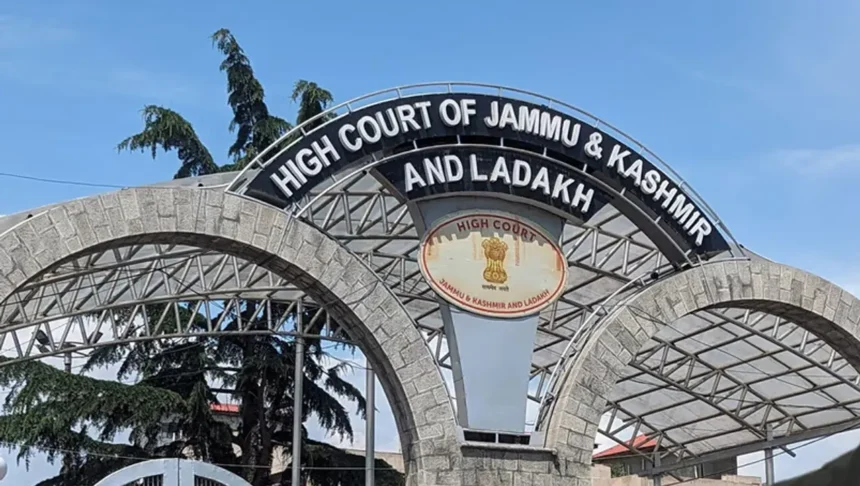
Jammu: The High Court of Jammu and Kashmir and Ladakh has sought clarity on the policy governing government accommodation for political leaders after it was informed that former J-K chief minister Ghulam Nabi Azad and senior BJP leader Ravinder Raina can retain their official residences till March next year following recommendations by a committee.
Hearing a PIL filed by Professor S K Bhalla on October 12, a division bench of Chief Justice Pushpendra Singh Bhati and Justice Rajesh Sekhri questioned the administration over the policy under which the two political leaders have been permitted to continue occupying government accommodation.
Appearing for the UT administration, senior additional advocate general Monika Kohli told the court that a designated committee had considered the cases of Azad and Raina, former president of the J-K BJP, at a meeting held on August 14.
Kohli submitted that the committee recommended continuing the allotments in favour of both leaders.
The recommendations were subsequently placed before the competent authority, which, after due consideration, permitted them to retain the residential accommodations until March 2027 or until the next review, whichever is earlier, Kohli told the bench.
The bench, however, sought an explanation regarding the policy governing such allotments, asking Kohli about the rules under which the designated committee exercises its powers to permit political leaders to retain government accommodation.
“This court, on such submissions, has posed a question to learned senior AAG, as to what is the policy in the UT of Jammu and Kashmir, which governs the retention of government accommodation… And from where the designated committee derives its power to consider whether such government accommodation has to be retained by the political persons,” the bench asked.
Kohli sought time to file an appropriate affidavit and assist the court on the issue of a uniform policy applicable to political persons retaining government accommodation.
Allowing her request, the court posted the matter for November 12.
During the hearing, conducted virtually because the bench is presently based in Srinagar, the petitioner’s counsel argued that unauthorised occupation of government accommodation could not be justified on security grounds.
The petitioner’s counsel, senior advocates S S Ahmad and Supriya Chauhan, referred to an order dated December 26, 2022, in which a division bench declined to protect certain persons against eviction from government properties on security grounds, citing judgments of the Supreme Court and the Delhi High Court in support of their submission.
The PIL, filed by Bhalla in 2020, previously led to the eviction of more than 180 politicians from government accommodations following the 2018 Assembly dissolution and subsequent high court intervention.

