



Jammu: Jammu and Kashmir’s Legislative Assembly is set to undergo its sixth delimitation exercise, with the proposed legislation expected to sail through Parliament given the majority held by the BJP-led NDA in both Houses.
The Union Government is scheduled to introduce a Constitution amendment Bill, a delimitation law, and an enabling legislation to extend the proposed framework to Union Territories with legislatures—including Jammu & Kashmir, Delhi and Puducherry—during the special sitting of Parliament beginning April 16.
The move is aimed at fast-tracking the implementation of the Nari Shakti Vandan Adhiniyam, which mandates 33 per cent reservation for women in Parliament and state assemblies.
If cleared, the legislation will pave the way for a fresh delimitation of Assembly and Lok Sabha constituencies across the country, including Jammu and Kashmir, where such an exercise has already been carried out five times—in 1957, 1966, 1975, 1995 and most recently in 2022.
The 2022 delimitation significantly altered the political map of the Union Territory, increasing the number of Assembly seats from 83 to 90 (excluding 24 seats reserved for areas under Pakistan’s occupation). Of these, Jammu division saw a rise of six seats to 43, while Kashmir division gained one additional seat, taking its total to 47.
Historically, the erstwhile state had 100 Assembly seats carved out in 1951, including 25 earmarked for Pakistan-occupied territories. These numbers were revised periodically through subsequent delimitation exercises to reflect demographic and administrative changes.
The last delimitation before 2019 was completed in 1995 based on the 1981 Census, following a prolonged process that lasted nearly seven years. Until then, the exercise was governed by the J&K Constitution and the Representation of the People Act, 1957.
However, the legal framework underwent a major shift after the abrogation of Article 370 in 2019. The Centre subsequently enacted the Jammu and Kashmir Reorganisation Act, enabling delimitation under central laws.
In 2020, a Delimitation Commission headed by Justice (Retd.) Ranjana Desai was constituted to redraw constituency boundaries and enhance seat strength. T
he commission submitted its final report in 2022, concluding the first delimitation exercise in the Union Territory post-reorganisation.
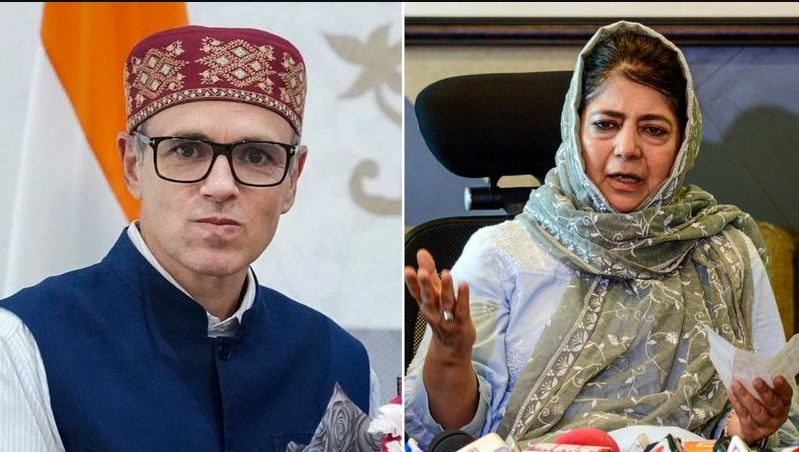
Chief Minister Omar Abdullah expressed caution over the proposed exercise, questioning whether it would genuinely benefit the electorate or serve political interests.
Referring to the previous delimitation, he alleged that the process appeared to favour a particular party through the way constituencies were structured and voters distributed.
PDP president Mehbooba Mufti also voiced apprehension, hoping that the upcoming exercise would not repeat what she termed an “illogical” and uneven distribution of constituencies witnessed earlier. She alleged that the previous exercise involved gerrymandering, particularly in certain regions of Jammu.
At the same time, Mufti reiterated her party’s support for women’s reservation, backing the idea of increased representation for women in legislatures. She also called for greater participation of youth in grassroots democratic processes, including panchayat and local body elections.
With Parliament set to debate the proposed Bills during the April 16–18 session, the stage is set for a politically significant exercise that could reshape electoral representation in Jammu and Kashmir once again.
If approved, the delimitation process will be carried out in line with the latest census data, with implications not just for seat distribution but also for the broader political dynamics of the Union Territory.

