



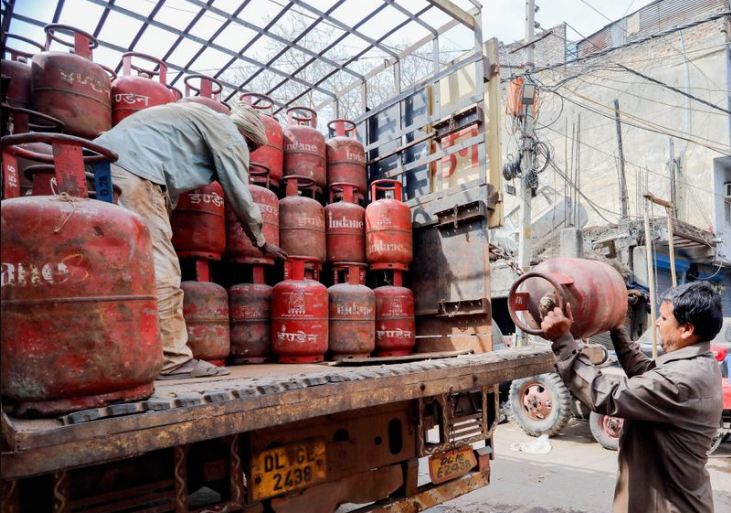
Jammu: Even though the domestic gas consumption may not have increased amid the war in West Asia, public apprehension about domestic liquefied petroleum gas (LPG) shortage has boosted demand by 30 percent in Jammu. Concerns over disrupted energy supply due to the ongoing conflict in West Asia have triggered panic buying and long queues at gas stations across the country.
Given the current situation over the past fortnight, everyone is eager to obtain a gas cylinder, and gas agencies in Jammu are experiencing higher demand than normal.
In fact the government has ramped up efforts to reassure the public, urging them not to panic. Police in multiple states have been directed to keep a watch on the situation and take steps to curb hoarding and black marketing of gas cylinders.
In Jammu district, the delivery of domestic gas cylinders, which normally used to be around between seven and eight thousand per day, has now reached over ten thousand per day. On Saturday a total of 10,725 domestic gas cylinders were delivered in Jammu district, which was about 30 percent more than normal.
According to gas companies, over ten thousand domestic gas cylinders have been delivered daily for the past week. In light of the current situation, some gas agencies have even suspended home delivery, and consumers are only receiving delivery by visiting the agency.
On the other hand, now the online booking system of all three gas companies has also become smooth and cylinders are being delivered only after booking so that black marketing of cylinders can be stopped.
Hindustan Petroleum Corporation Limited has a 50 percent share of total gas cylinder distribution in Jammu and Kashmir. Indian Oil Corporation is second with a 37.4 percent share, and Bharat Petroleum Corporation Limited has the lowest share at 12.6 percent.
According to the data prepared on the basis of the records of the last three months of Jammu and Kashmir, the daily consumption of 19 kg commercial cylinders in the union territory was 1773, on the basis of which the Central Government has fixed a 20 percent quota and has given permission to distribute 355 cylinders per day.
On the basis of this quota, 355 cylinders were distributed to the canteens running in all the hospitals, educational institutions, airports and railway stations of the state yesterday while supplying to the first and second class consumers. The supply of five kg commercial cylinders has been stopped by the gas companies for the time being.
India imports 65% of the fuel, mostly from the Middle East, and shortages since the outbreak of war have led to a jump in prices, long queues and increased theft. Natural gas is not immune from geopolitical challenges. Attacks on the world’s largest liquefied natural gas plant in Qatar have caused global prices of the fuel to spike, and have raised questions about supply reliability in places like India in the months ahead.

