



‘Wake up from slumber’
Seeks action against complicit officers, blames encroachments for 2014 floods
WAJAHAT SHABIR
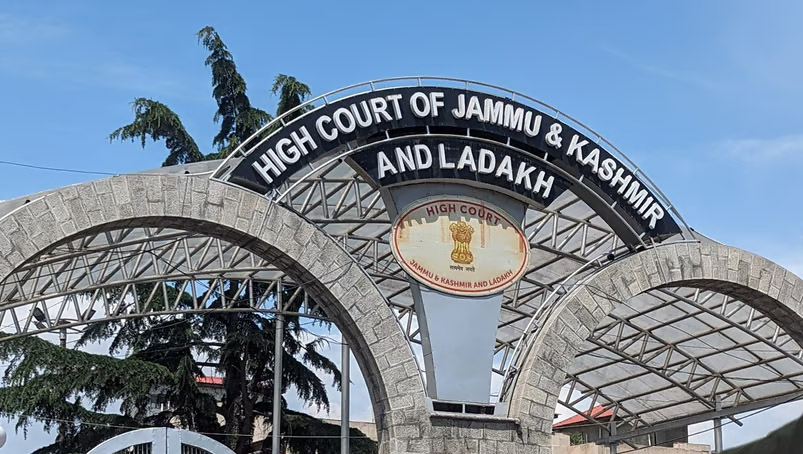
SRINAGAR: In a strongly-worded judgment, the High Court of Jammu & Kashmir and Ladakh has ordered the demolition of an illegal multi-storey structure in Srinagar’s Nowgam area, while slamming the “reckless violations” of building norms and calling on enforcement authorities to wake up from their “slumber”.
The court dismissed a plea filed by Mohamad Rafiq Sheikh and Bashir Ahmad Sheikh—two brothers who had merged three separately sanctioned buildings into a single sprawling commercial complex without leaving the mandatory 30-foot setbacks. The construction, carried out in violation of permissions granted by the Srinagar Development Authority (SDA), was described by the court as a “flagrant breach of planning laws” and a direct threat to the city’s regulated urban growth.
“Offenders cannot approach the court for equity with soiled hands,” observed the division bench comprising Justices Sanjeev Kumar and Sanjay Parihar. The court noted that the builders used the Valley’s 2016 unrest as cover to proceed with unauthorized construction despite repeated notices and even police intervention.
Originally sanctioned as three separate four-storey buildings—two hostels and a guest house—the structure was illegally fused into one unit spanning over 79,600 square feet, far exceeding the permissible 36,636 square feet. Violations included construction over mandatory setbacks, resulting in unauthorized buildup of over 42,000 square feet.
Although the matter was earlier taken to the J&K Special Tribunal—which compounded the violations for a fee of Rs 21.48 lakh—the High Court found this illegal. It ruled that violations on setback areas are not compoundable under either the 1998 or 2001 building regulations. The court also questioned how the Tribunal compounded violations without a specific request or authority under law.
Rejecting the appellants’ plea to save the building by paying a higher fine, the court said, “This would not help anyone except put the law in jeopardy.” The bench directed the SDA to demolish the structure entirely, if required, and submit a compliance report within two months.
In a broader critique, the court addressed the mushrooming of unauthorized constructions across Srinagar and the failure of authorities to act. “We witness daily traffic jams, pollution, and mushrooming structures on riverbanks, lanes and public roads. The 2014 floods were worsened by such unregulated development,” the judges noted.
Importantly, the court urged the government to take disciplinary action against SDA officials under whose watch the violations occurred. It called for a review of regulations to hold such officers accountable in the future.
“The argument that many such structures exist cannot stop us from making a beginning—today and now,” the court said. Emphasizing Srinagar’s significance as a tourist and pilgrim hub, the judges warned that administrative negligence is leading to the city’s decay.
A copy of the judgment has been forwarded to the Chief Secretary of Jammu & Kashmir for necessary follow-up. The court made clear: the rule of law must prevail—no matter how high the cost.

