



Dargah Hazratbal was facelifted by Sher-e-Kashmir Sheikh Mohd Abdullah, today people remember his work and he didn’t install his statues around to prove his work: CM Omar
SAHIL BHAT
SEPT 6: Amid the row triggered by vandalizing the inauguration plague with Ashoka Emblem at Hazratbal Shrine, J&K Chief Minister Omar Abdullah on Saturday said that the Government emblems must not be installed at the religious places and Waqf Board must apologise for hurting religious sentiments.
CM Omar Abdullah unequivocally stated that the Government plagues should be used in Government functions rather than in Shrines or other religious places which hold religious sanity, adding that, Waqf Board should be apologetic in this regard.
“There was no need to put the plague of Ashoka Emblem at a holy place. It was not meant to be displayed at the Dargah Hazratbal. The Waqf Board should have apologized for the mistake they committed by hurting religious sentiments,” said CM Omar Abdullah.
CM Omar also added, “Dargah Hazratbal was facelifted by Sher-e-Kashmir Sheikh Mohd Abdullah and today people remember his work. He didn’t install his statues around to prove his work.”
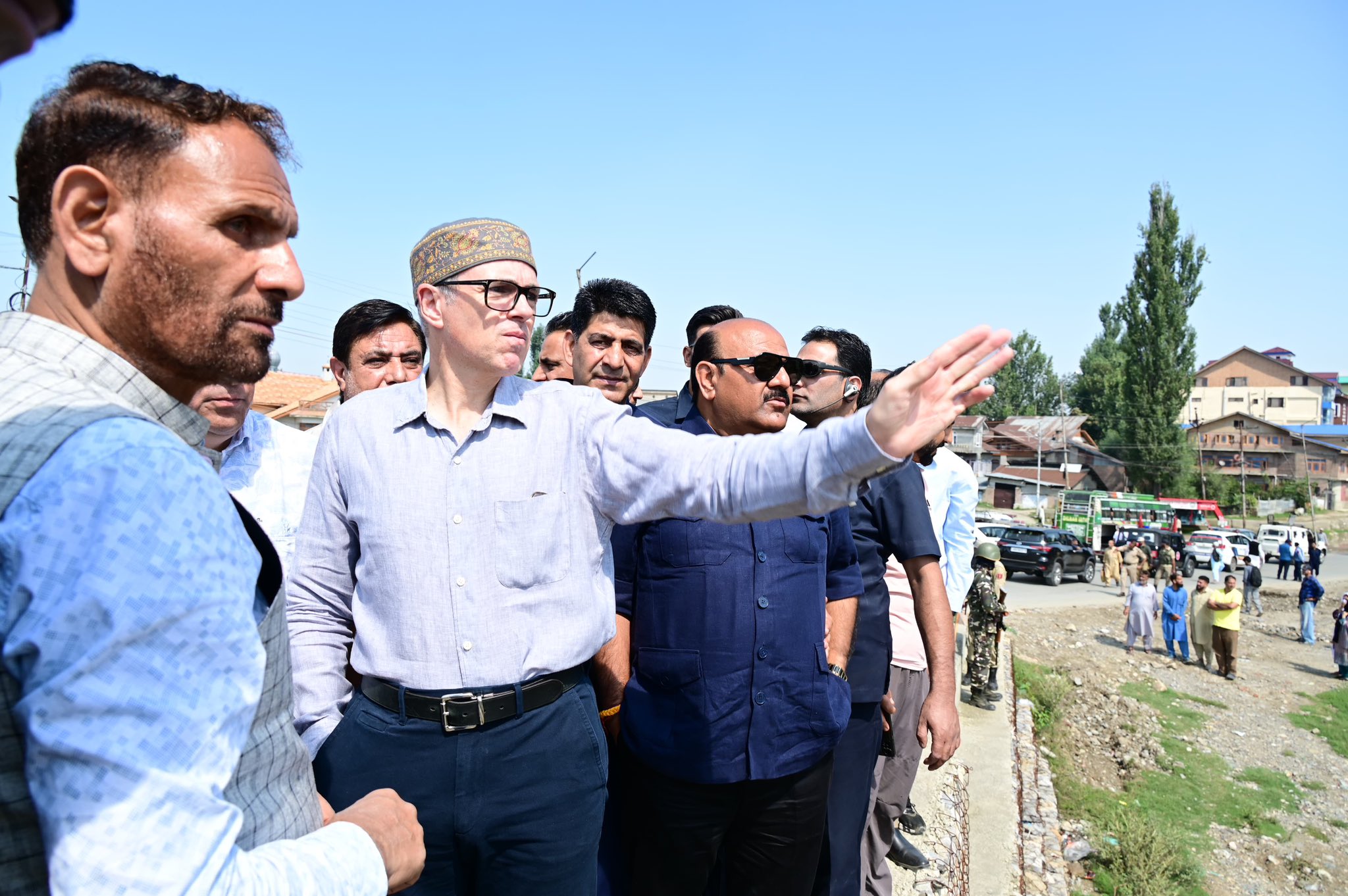
CM Omar visited the flood-hit areas of Anantnag district and interacted with victim families. He further assured the Government stands by them during this adversity and all possible measures will be taken to help them.
He was flanked by Deputy CM Surinder Choudhary, Cabinet Minister Sakina Itoo, Cabinet Javed Ahmed Rana, MLA Pahalgam Altaf Kaloo, MLA Bijbehara Dr Veeri, MLA Anantnag West Adv Abdul Majeed Larmi, MLA Shangus Adv Riyaz Khan, MLA Larnoo Chaudhary Zaffar Khatana and other officials.
On the heels of his visit, Chief Minister Omar Abdullah chaired meeting to take stock of the situation in the aftermath of flood. In the course of the meeting, he directed expedite the relief and rehabilitation efforts and reach out to everyone.
Taking to X, CM Omar posted, “Chief Minister held a review meeting in Anantnag today to assess the post-flood situation. He directed the district administration to expedite relief and rehabilitation, restore essential services, repair damaged infrastructure, strengthen vulnerable embankments, and ensure an adequate supply of food, medicines, and drinking water for the affected population.”

