



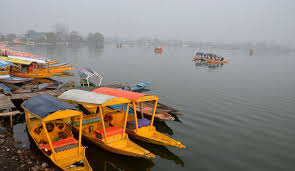
Jammu: As winter intensifies across Jammu and Kashmir, authorities have issued fresh advisories warning of cold wave conditions, dense fog in Jammu plains, and sub-zero temperatures in Kashmir, even as weather activity remains largely dry for the coming days.
In the Jammu division, officials have cautioned commuters about moderate to dense fog likely over the next three days, particularly during early morning and late evening hours. The fog is expected to affect visibility across low-lying areas and open stretches of highways, posing risks to road traffic and daily commuting.
Drivers have been advised to use fog lights, avoid overspeeding, and maintain safe distances while travelling, especially on major highways passing through the plains.
Meanwhile, Government Medical College (GMC) Jammu has issued a detailed cold weather advisory, urging residents to take precautionary measures against extreme cold conditions.
Medical experts warned that cold-related injuries disproportionately affect vulnerable sections, with nearly 50 percent of cases reported among people above 60 years of age, while around 75 percent involve males. Alarmingly, about 20 percent of cold-related incidents occur inside homes.
Doctors cautioned that hypothermia and frostbite pose the most serious risks during harsh winter conditions.
Hypothermia occurs when body temperature falls below 95 degrees Fahrenheit, while frostbite can cause tissue damage within 30 minutes of exposure to wind chill temperatures as low as minus 20 degrees Fahrenheit.
The advisory also highlighted dangers such as carbon monoxide poisoning from improper heating devices, power failures, frozen water pipelines, and vehicle breakdowns.
Residents have been advised to stay indoors during peak cold hours, regularly check on elderly persons, insulate water pipes, and keep safe emergency heating arrangements ready. The use of candles has been discouraged due to fire risks.
GMC Jammu has also urged citizens to carry winter survival kits in vehicles, including blankets, flashlights, snacks, water, and fully charged mobile phones, and to ensure proper winterization of vehicles with antifreeze, correct tyre pressure, and functional wipers.
Doctors emphasized that prevention is far easier than treatment and appealed to people to strictly follow safety guidelines.
While Jammu braces for fog and cold, Kashmir Valley continues to reel under intensified cold wave conditions. Officials said minimum temperatures across the valley dipped further, with Srinagar recording minus 3.2 degrees Celsius on Saturday night, compared to minus 1.5 degrees Celsius the previous night.
The famed ski resort of Gulmarg remained the coldest location for the second consecutive night, recording a minimum temperature of minus 6.5 degrees Celsius, while Pahalgam in south Kashmir recorded minus 5 degrees Celsius. Qazigund, the gateway town to the valley, saw temperatures settle at minus 4 degrees Celsius, Kupwara recorded minus 2.5 degrees Celsius, and Kokernag registered a low of minus 1.6 degrees Celsius.
The region is currently experiencing ‘Chilla-e-Kalan’, the harshest 40-day winter phase when temperatures often plunge several degrees below freezing and snowfall is most frequent. However, officials noted that current temperature readings show a departure from normal patterns, and despite the ongoing cold wave, plains of the valley have not received any snowfall so far this season.
According to the India Meteorological Department, weather across Kashmir is expected to remain largely dry on January 4 and 5, with a brief change around January 6, when conditions may turn generally cloudy. Light rain or snowfall is likely at isolated places in the higher reaches of north and central Kashmir on January 5 and 6, while plains and lower areas are unlikely to witness any significant precipitation. From January 7 to January 15, weather is expected to remain partly cloudy, with no major wet spell anticipated.
Authorities have advised travellers heading to higher reaches to remain alert, as weather conditions in mountainous areas can change rapidly during winter. The forecast suggests that cold wave conditions may persist due to sharp nighttime temperature drops, even as precipitation activity remains limited.
In a related development, authorities on Saturday announced the reopening of the Mughal Road for limited traffic.
The high-altitude route has been opened only for Light Motor Vehicles (LMVs) from 10:30 am to 2:30 pm, following an on-ground assessment of weather and road conditions, particularly around the Peer Ki Gali stretch, which remains vulnerable to snow and ice.
Officials clarified that Heavy Motor Vehicles and passenger buses are not permitted, and only LMVs meeting winter safety norms will be allowed. Drivers have been instructed to strictly follow traffic advisories, avoid unnecessary stoppages, and ensure vehicles are adequately prepared for cold-weather travel.
Authorities cautioned that vehicular movement on the Mughal Road remains subject to change depending on weather conditions, and commuters have been advised to check the latest updates before starting their journey.
As winter tightens its grip, authorities across Jammu and Kashmir continue to monitor weather conditions closely, urging residents and travellers alike to remain cautious and prepared during the ongoing cold spell.

