



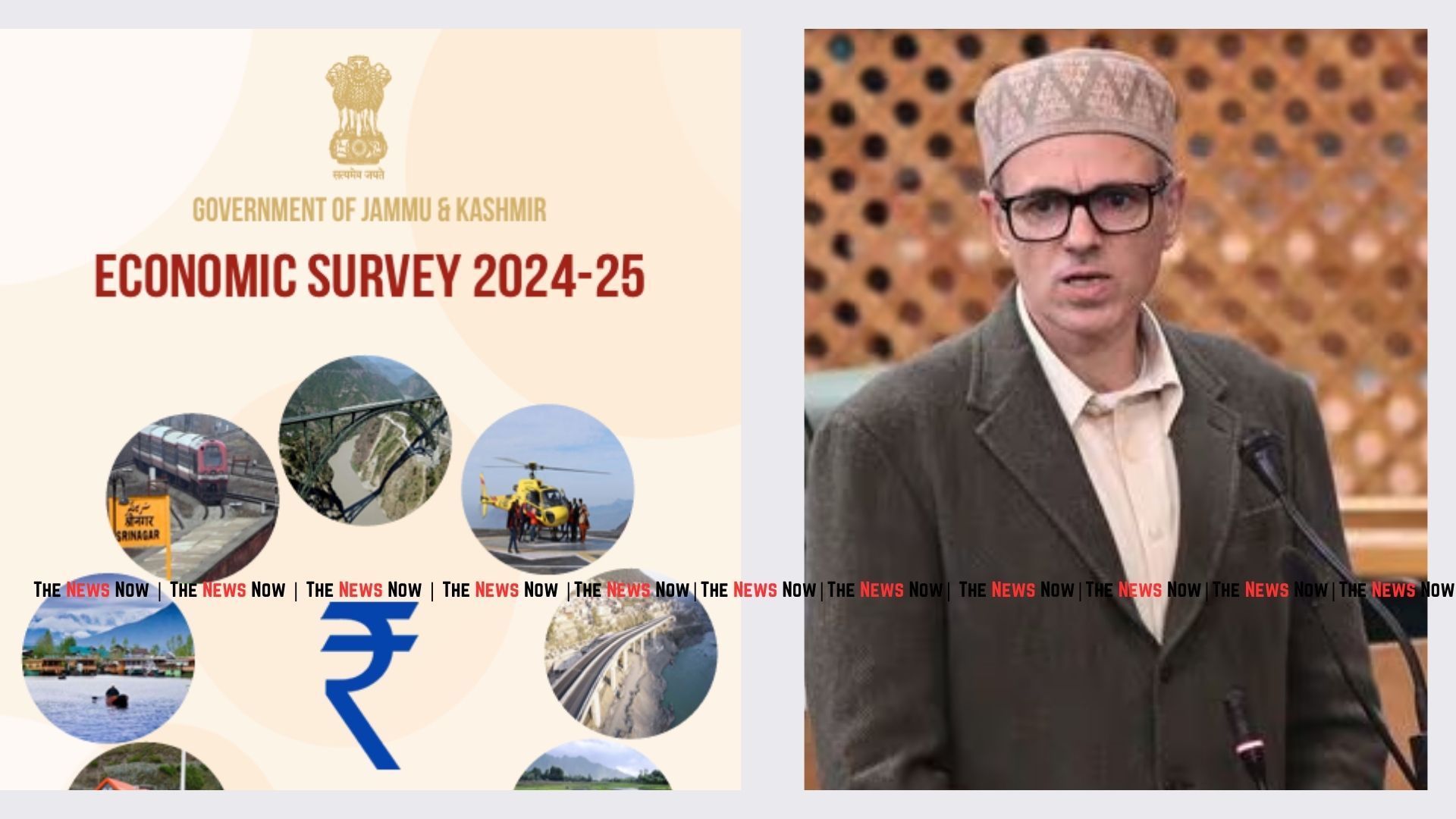
Jammu: Jammu and Kashmir Chief Minister and Finance Minister Omar Abdullah tabled the Economic Survey Report for the year 2025 in the legislative assembly today, showcasing the Union Territory’s impressive economic performance, sectoral advancements, and future prospects.
The report provides a comprehensive analysis of J&K’s economic landscape, highlighting significant achievements in key sectors and outlining the region’s commitment to sustainable development.
As per report The real Gross State Domestic Product (GSDP) is projected to grow at 7.06% in 2024-25, with the nominal GSDP expected to increase by 11.19%, reaching Rs. 2.65 lakh crores. The per capita income is set to rise to Rs. 1,54,703, marking a 10.6% increase, reflecting improved economic well-being for residents. The primary sector contributes 20% to the GSDP, the secondary sector 18.3%, and the tertiary sector 61.7%. The horticulture sector has seen remarkable growth, driven by improved farming techniques and high-value crop production.
The unemployment rate has declined to 6.1% in 2023-24, down from 6.7% in 2019-20, indicating enhanced job opportunities. Inflation remains moderate, with a marginal increase to 4.5% in 2024 from 4.3% in 2023. Over 1,984 units with an investment of Rs. 9,606 crores have been operationalized, creating employment for 63,710 persons. The Credit-Deposit Ratio stands at 62.01%, with increased credit flow to MSMEs and agriculture.
Railway connectivity has been extended to Kashmir, with electrification of the Baramulla-Sangaldan section. The Jammu Semi Ring Road is 98% complete, and the Srinagar Semi Ring Road is progressing rapidly. The Delhi-Amritsar-Katra expressway, covering 135 km in J&K, is under execution and will reduce travel time from Delhi to Katra to 6 hours.
Tourist visits reached a record 2.36 crore in 2024, including 0.65 lakh foreign tourists. Key initiatives like the ropeways at Jammu and Patnitop, the Jambu Zoo, and the Sonamarg tunnel have boosted tourism infrastructure. Significant improvements in health indicators, including reduced neonatal and under-5 mortality rates, and increased life expectancy, have been recorded. Educational enrolment ratios have risen, while dropout rates have declined, reflecting enhanced access to quality education.
The integration of e-services and the District Good Governance Index have ensured efficient public service delivery. J&K has made notable progress in the Sustainable Development Goals (SDG) Index Score, reflecting its commitment to long-term sustainability.
Chief Minister Omar Abdullah, while presenting the report, emphasized the region’s resilience and potential. “The Economic Survey Report 2025 is a testament to the hard work and dedication of the people of Jammu and Kashmir. Our focus on inclusive growth, infrastructure development, and sustainable practices has yielded remarkable results, and we are committed to building on this momentum for a prosperous future,” he said.
The report underscores J&K’s commitment to fostering stability, inclusivity, and sustainability, providing a solid foundation for continued progress and prosperity in the years to come.

