



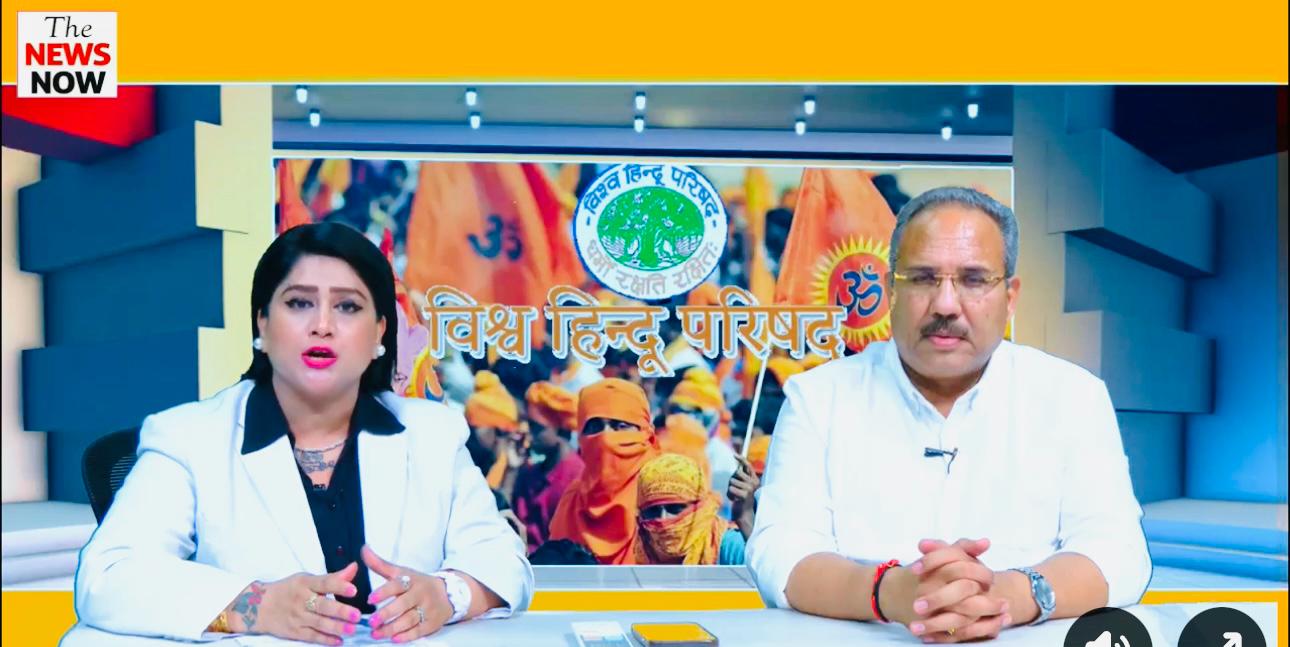
Jammu: The president of Vishva Hindu Parishad (VHP) for Jammu, Kashmir, and Ladakh, Rajesh Gupta said that the central government is prioritizing national interests and cultural values.
In a candid conversation with Tarika Mahajan Assistant Editor of The News Now (TNN), Rajesh Gupta, President of the Vishva Hindu Parishad (VHP) for Jammu, Kashmir, and Ladakh, discusses the organization’s mission, recent socio-political developments, and efforts to unify Hindu society.
Here are the key highlights from the interview.
Q: Welcome, Rajesh Ji. Recently, a grand aarti was organized on the Tawi River in Jammu, reminiscent of Kashi and Haridwar. What significance does this hold?
A: The Tawi River aarti marks a historic moment for Jammu. For years, people awaited the completion of the riverfront project. As it neared completion, the administration and citizens collaboratively revived this tradition. It symbolizes cultural rejuvenation and reflects Jammu’s spiritual aspirations, much like revered sites such as Kashi.
Q: How does VHP view India’s current socio-political landscape?
A: The central government is prioritizing national interests and cultural values. Divisive forces are being exposed, and society is becoming vigilant. While frustration among such groups occasionally leads to destabilizing acts, India is entering an Amrit Kaal (golden era), and we are confident these challenges will be overcome through collective resolve.
Q: Is Hindu identity becoming more assertive, or is polarization increasing?
A: Assertiveness is not polarization. When Hindus demand rights or corrections to historical injustices, it’s awareness, not division. Polarization arises when communities are treated as vote banks, shielding regressive practices. Hindus seek unity and cultural revival, which should be seen as empowerment, not division.
Q: What is VHP’s primary objective—religious awakening or political influence?
A: VHP focuses on societal awakening, not politics. Our mission is to unite Hindus globally, regardless of sect or caste. Many who left Hinduism due to historical pressures are reconnecting with their roots. We aim to eradicate caste-based divisions imposed during colonial times and foster a cohesive, culturally rooted society.
Q: Your thoughts on the recent amendments to the Waqf Act?
A: The amendments were necessary. The old law allowed unchecked encroachment of properties, often benefiting individuals rather than communities. No other law permits such unilateral claims. The reforms ensure accountability and fairness. A review of past injustices under the Waqf Board is essential, and wrongfully seized properties must be returned.
Q: After Ayodhya’s Ram Temple, what is VHP’s next cultural or religious campaign?
A: Our focus is societal upliftment through Lord Ram’s ideals. Historically, many temples were destroyed or encroached. Courts are addressing cases in Kashi and Mathura, and we await just outcomes. Correction of historical wrongs is crucial, whether through legal means or societal efforts.
Q: How is VHP addressing casteism within Hindu society?
A: Casteism is a colonial-era toxin. Through Samarasata (harmony) campaigns, we promote dialogue and eradicate caste-based hierarchies. Education and awareness are key—people now recognize the conspiracy to divide Hindus. We aim for a society united by culture, not fragmented by caste.
Q: What is VHP’s stance on women’s role in Hindu culture?
A: We advocate equality. In Jammu, we opposed laws denying women ancestral rights under Article 35A. Our wings, Matrishakti and Durga Vahini, empower women through education, self-defense training, and leadership roles. Women are the backbone of families and society, and their progress reflects in rising educational and competitive achievements.
Q: How does VHP engage youth and leverage digital platforms?
A: Through Bajrang Dal, we promote sports, spirituality, and service. Blood donation camps, disaster relief, and indigenous games like kabaddi foster unity. Social media amplifies our cultural message, but ground-level service remains our focus—actions over publicity.
Q: What is VHP’s global outreach strategy?
A: VHP operates in 122 countries. The World Hindu Congress and World Hindu Economic Forum unite Hindus culturally and economically. We support diaspora communities in preserving traditions while integrating globally. Hindus abroad hold influential positions, and we collaborate to strengthen their cultural ties.
Q: Plans for the upcoming Amarnath Yatra and Tawi River aarti?
A: The aarti aims to boost Jammu’s spiritual tourism. Initially monthly, we aim to make it weekly and eventually daily during the Amarnath Yatra. Pilgrims should experience Jammu’s cultural heritage

