



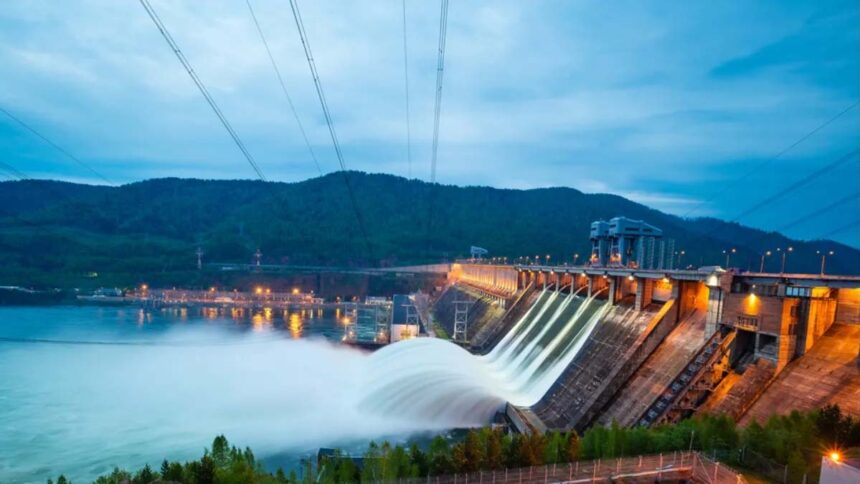
Jammu: Jammu and Kashmir is preparing a fresh policy framework to accelerate development of its 14,635 MW identified hydropower potential, with Chief Minister Omar Abdullah on Tuesday reviewing the Draft J&K Hydropower Policy 2026.
The draft policy seeks to address constraints that have affected hydropower development and establish a roadmap for faster project implementation, increased power generation and sustainable utilisation of the UT’s water resources.
Of the 14,635 MW identified potential, 11,283 MW is in the Chenab basin and 3,084 MW in the Jhelum basin. So far, 3,540.15 MW, or 24.18 per cent of the identified potential, has been commissioned through projects in the Central, UT and private sectors.
During the policy review, Omar directed that the new framework should focus on energy security, sustainable development, economic growth and public welfare. The meeting also examined the experience of the hydropower policies introduced in 2003 and 2011 and discussed measures to remove bottlenecks and facilitate future investment.
The roles of the Jammu and Kashmir Power Development Corporation Limited (JKPDC) and Jammu and Kashmir Energy Development Agency (JAKEDA) were also reviewed as part of efforts to streamline institutional mechanisms.
Environmental safeguards were given particular emphasis, including compliance with ecological flow requirements and Environmental Impact Assessment and Environmental Management Plan provisions. The Chief Minister also stressed that hydropower development should safeguard local drinking water and irrigation requirements.
The policy review comes against the backdrop of significant financial returns from hydropower projects operating in the UT.
Government data placed before the Legislative Assembly shows that Jammu and Kashmir received Rs 3,582.06 crore in water usage charges from NHPC projects during the last five financial years, besides Rs 1,955.26 crore representing the monetised value of 12 per cent free power and one per cent LADF. Together, these benefits amounted to Rs 5,537.32 crore from NHPC projects with a combined installed capacity of 2,250 MW.
The government said hydropower projects also generate wider economic activity through employment, maintenance contracts, transportation, security, housekeeping and other ancillary services, providing opportunities for local contractors, service providers and skilled, semi-skilled and unskilled workers.
Separately, JKPDCL sold 19,222.21 million units of electricity to J&K during the last five financial years at an average selling price of Rs 2.033 per unit and paid Rs 745.151 crore to the government as water usage charges.
The government said the proposed policy would seek to combine faster development of the hydropower sector with sustainable resource management, environmental safeguards and greater economic benefits for Jammu and Kashmir.

