



Back to the meadows
48 parks were shut to visitors after Pahalgam attack on April 22 that left 26 people dead
WAJAHAT SHABIR
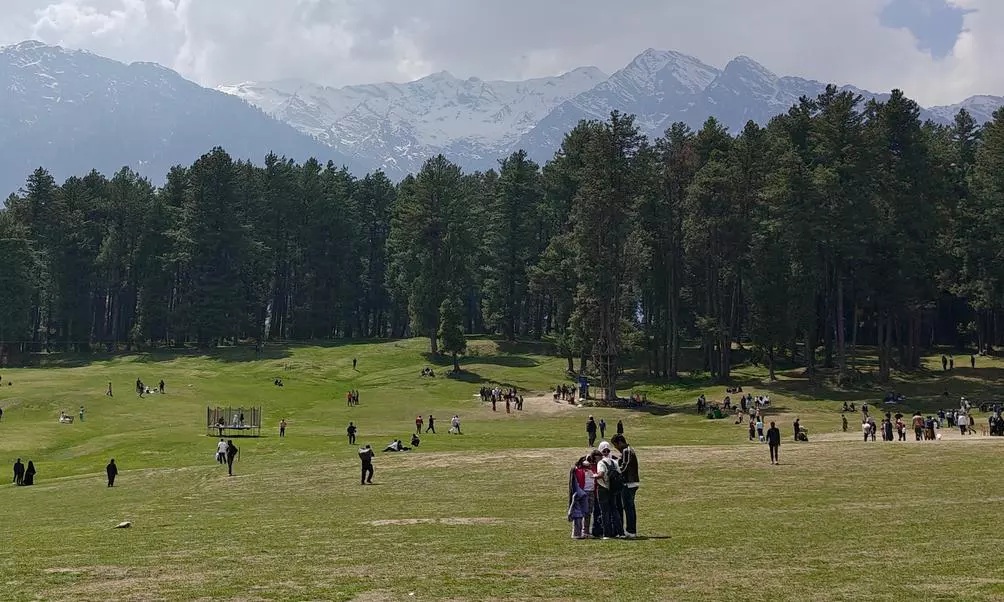
SRINAGAR: On a sun-drenched morning in Pahalgam, the air smelled of pine and fresh grass again. Children’s laughter echoed through Lidder View Park as tourists posed for selfies by the gurgling river.
After nearly two months of silence, life has returned to Kashmir’s most beloved tourist destinations.
On April 22, the tranquillity of this region was shattered when a terror attack in Baisaran meadow claimed 26 lives, including several tourists. Shockwaves from the incident led authorities to close off 48 scenic spots across eight districts, casting a shadow over Jammu and Kashmir’s tourism economy.
But that shadow has begun to lift.
Last week, Lieutenant Governor Manoj Sinha ordered the reopening of 16 parks — eight each in the Jammu region and the Kashmir Valley. He said the destinations would be reopened in a phased manner.
In the first phase, eight parks were reopened in the Kashmir valley. Betaab Valley in Pahalgam and the parks near Pahalgam market, Verinag, Kokernag and Achabal gardens in Anantnag district, Badamwari Park, Duck Park near Nigeen, and Taqdeer Park near Hazratbal in Srinagar were reopened on Tuesday.
“I can’t describe the relief,” said Javed, a prominent hotelier from Pahalgam. “We’ve been through a traumatic pause. This reopening is like oxygen for us. Our rooms had gone empty. Now, at least, there’s hope.”
Among those soaking in the rejuvenated sights was Tanushree Nikus, a 21-year-old tourist from Maharashtra. She had hesitated before planning her trip, her family worried about safety. “But look at this place,” she said, taking a photo of the Lidder River. “The army is here, the people are welcoming, and everything feels calm. We’re glad we came.”
Her friend, Dhurvin, chimed in with determination: “These attacks were meant to scare people away. But we’re here to show we’re not afraid.”
Locals, many of whom depend entirely on tourism, say the past two months have been economically brutal.
Yasir Wani, a vendor who also served as the head of a nearby village panchayat, pointed to a group of young men ferrying picnic baskets on horseback. “About 250 families here live directly off tourism,” he said. “Without tourists, there’s nothing. Today, I finally sold my first cold drink in weeks.”
Even as smiles returned to faces, security remained tight. Checkpoints have been placed at entry gates, and armed personnel from the CRPF, police and army patrol the reopened locations. Officials say each spot has been risk-assessed before being reopened, with more destinations expected to follow gradually.
Javed Burza acknowledges the fear that still lingers, but believes resilience will win out. “Yes, what happened in April was horrifying. But Pahalgam has always stood back up,” he said. “We are offering heavy discounts to attract tourists—some hotels are slashing rates by up to 65%. This is not just business, it’s about reclaiming life.”
From the wooden bridges of Aru to the blooming gardens of Poshwan, Kashmir’s summer is finally stirring again. For a region where tourism is not just an industry but an identity, this reopening isn’t just administrative—it’s emotional.
As the sun dipped behind the pine ridges of Pahalgam, a tourist family from Gujarat lit a small bonfire and brewed Kehwa on the riverside. “This is the Kashmir we dreamed of,” the father said, holding his daughter close. “And we’re not going to let fear take it away.”

