



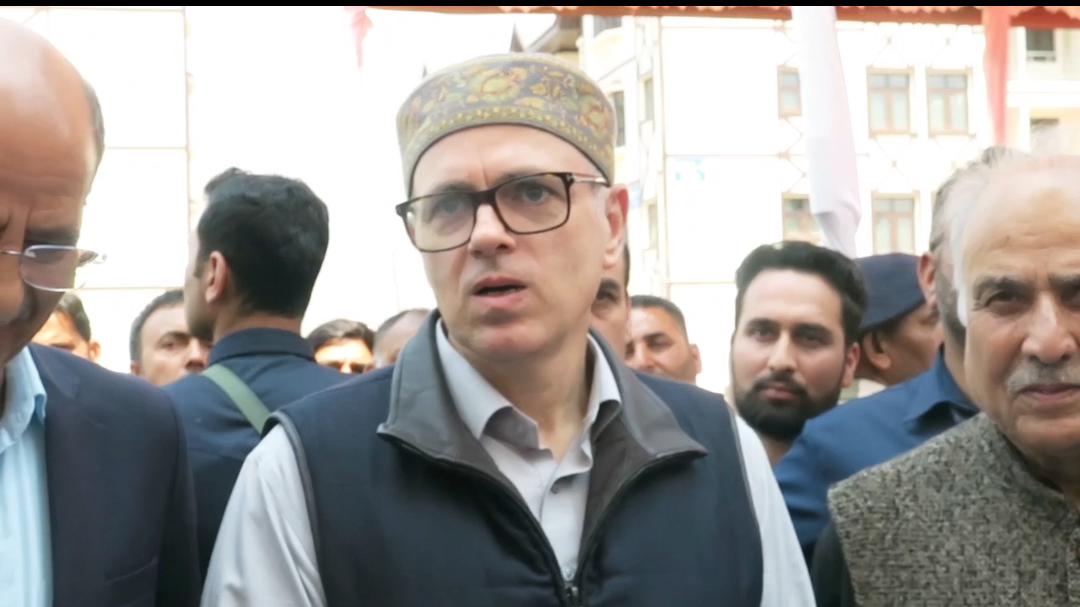
Srinagar, May 01: Chief Minister Omar Abdullah clarified that no decision has been taken to remove Urdu from any official process. He said the matter is still under examination and the government has only sought public feedback, with no final order issued.
Omar stressed that there is a clear difference between inviting suggestions and implementing a policy decision. He added that the concerned file is still under his consideration and nothing has been approved so far. “Those making such claims should produce any official order if it exists,” he said.
On the ongoing debate around Urdu, he reiterated that the issue was being misrepresented and rejected allegations of the language being dropped from official use.
Meanwhile, the Chief Minister launched a political attack on the Peoples Democratic Party (PDP), accusing it of indirectly supporting the Bharatiya Janata Party (BJP) during the Rajya Sabha elections. He alleged that the PDP is now raising the Urdu issue to divert attention from its own political actions.
“They are trying to create confusion by repeatedly bringing up Urdu. On one hand they act in one way and on the other they present a different narrative. They supported the BJP in the Rajya Sabha polls and now want to shift focus away from that,” Omar said.
Referring to exit polls from previous elections, the Chief Minister said such predictions have often proven inaccurate. Citing West Bengal elections, he said most exit polls had projected a BJP advantage, but the actual results were completely different. He added that similar outcomes would be seen once results are declared on Monday, noting that one polling agency even refrained from publishing its survey due to unfavourable findings.
Addressing concerns about elections, Omar said he does not subscribe to claims of EVM tampering, but warned about possible manipulation through revisions in electoral rolls. “The bigger concern now is voter deletion from lists, which can seriously impact democratic processes,” he said.
On inflation, the Chief Minister said rising fuel prices were directly affecting transport costs and daily expenses. He noted that price hikes create a chain reaction across sectors, forcing fare revisions and increasing the burden on people.
He further added that global conflicts are contributing significantly to inflationary pressure. “If tensions ease globally, oil prices will stabilise and people will get relief. There is no justification for such conflicts,” he said.

