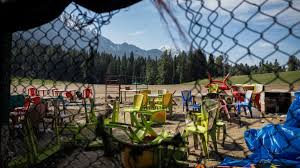
New Delhi: The dastardly Pahalgam attack in Jammu and Kashmir on April 22 not only pierced through the heart of humanity but also cast a grim shadow on tourism in the Valley and impacted the sector at large.
The attack in Baisaran meadows, a prime tourist location, in its immediate aftermath, had dealt a big blow to the tourism and hospitality sector in the Union territory, and hit the psyche of many potential tourists, domestic and foreign, who were planning to visit Kashmir — a popular destination.
Over a month after the terror attack in which 26 people, mostly tourists, were killed, tourism in Kashmir did begin its long journey towards normalcy, but hesitation remained in the minds of travellers.
In early June, however, tourists, though in smaller numbers, had started returning to the Valley, infusing hopes of a gradual turnaround in the sector, and in the following months since then, arrivals gradually grew.
Groups of tourists, especially from states like Maharashtra and Gujarat, were reaching the famous tourist resorts of Gulmarg and Pahalgam.
In October, Jammu and Kashmir Chief Minister Omar Abdullah had said that his government’s efforts to bring back tourists to the Union territory can work only after the tourist spots closed in the wake of the Pahalgam attack were reopened.
“First, we have to reopen those places which have been shut. We did not shut these places in 35 years. When the militancy was at its peak, Drang or Doodhpathri were not closed, the upper areas of Gulmarg were not shut, Aru valley was not closed,” he said.
Abdullah said some courage was needed to be shown and open tourist spots and promote them effectively.
While the sector at large showed further recovery from its impact, the Ministry of Tourism hosted a range of events in the past several months, at several places in the country, ranging from International Tourism Mart (ITM) for the North Eastern Region in Gangtok to a special culinary event held during the fourth edition of World Food India in Delhi.
The 13th edition of the ITM for the North Eastern Region was inaugurated by Arunachal Pradesh Chief Minister Pema Khandu.
This was the second time Sikkim hosted the mega event since its inception in 2013.
“The Northeast is very rich in nature and cultural diversity,” he had said.
Khandu said the ministry is now focusing on the potential of the Northeast.
“I see that local economies in the Northeast are flourishing day by day as per their carrying capacities, and if we compare only 10 years earlier, our region did not have this luxury,” he had said.
The ministry organised ‘World Food India – Reviving the Culinary Treasures of India’ from September 25-28 at Bharat Mandapam.
The event showcased India’s rich culinary heritage and positioned Indian cuisine on the global stage.
The initiative focussed on reviving forgotten food traditions, highlighting ancient cooking techniques, and exploring the export potential of indigenous ingredients.
As the year draws to a close, starting 2026, the government plans to establish autonomous “city-level convention promotion bureaus” in partnership with other stakeholders in the tourism sectors to elevate several Indian cities into globally competitive ‘MICE’ destinations.
‘MICE’ (Meetings, Incentives, Conventions and Exhibitions) tourism refers to tourism-related activities linked with business meetings, conventions and exhibitions.
While an official roadmap is yet to be drawn, the initial plan is to open such centres on a public-private-partnership (PPP) mode in state capitals and one other city in a state, a senior official told PTI.
The idea is to bolster capacities and capabilities of smaller cities too to host big, international events, as well as decentralise the coordination work, he said.
The announcement that the ministry has planned to set up city-level convention promotion bureaus as independent bodies, was made by a top official of the ministry on December 19.
The move seeks to “significantly boost India’s Meetings, Incentives, Conventions and Exhibitions (MICE) tourism ecosystem.”
However, 2025 was a year not many tourists, especially those who were in Kashmir when the Pahalgam attack took place, would like to look back on.
On that fateful day of April 22, besides those killed, several others were injured, and the terror strike had triggered an exodus of sorts from the site and the Valley, as fear replaced leisure in the minds of tourists there.
The very next day, Union Tourism Minister Gajendra Singh Shekhawat, in New Delhi, had said some people with nefarious intentions had tried to again “incite separatism and terrorism” in the Valley and asserted that his ministry would do the best to “minimise the dent” on tourism in Jammu and Kashmir in the wake of the Pahalgam attack.
Interacting with reporters on the sidelines of the 38th meeting of the Central Advisory Board of Archaeology (CABA) here, he had also said that he and his office were in “continuous touch” with the chief secretary and the tourism secretary of the Union territory and keeping an eye on the situation.
Before the commencement of the meeting, chaired by the minister, a minute of silence was observed by the attendees.
“The entire country is pained, and also filled with a sense of anger,” Shekhawat had said in his opening remarks at the meeting held at the Bharat Mandapam here.
The National Human Rights Commission (NHRC) in its newsletter – ‘Human Rights’ – in June, had said that the barbaric Pahalgam attack stands as yet another grim reminder of how terrorism continues to “stain humanity”.
JKCA polls face row
over electoral rolls
Affiliated clubs allege exclusion of 16
units, violations of approved constitution
Jammu: Several clubs affiliated with the Jammu and Kashmir Cricket Association have raised objections over the preparation of electoral rolls for the upcoming JKCA elections, alleging violations of the constitution and the exclusion of 16 clubs from the poll process.
In October, the Supreme Court appointed Achal Kumar Joti IAS (Retd) as the Electoral Officer to conduct the elections within a period of 12 weeks from the date of the order.
“It may shock you to know that, out of 23 clubs eligible to vote, more than 16 clubs have been excluded and have been forced to approach courts of law despite their status and representation being clear in terms of the approved constitution. This has been orchestrated by some vested interests,” a joint statement issued by the clubs said.
The clubs said after prolonged legal battles—first against resistance to the Lodha Committee reforms, then against the Committee of Administrators (CoA) and later against a BCCI sub-committee that allegedly delayed elections—the JKCA had secured a Supreme Court order to conduct elections under the approved constitution.
“Initially hopeful of a transparent process, the clubs alleged that the EO’s actions later mirrored those of the sub-committee, which they accused of attempting to influence the electoral outcome,” the statement said.
According to the clubs, JKCA rules clearly state that orders of a court-authorised ombudsman prevail in disputes relating to club representatives.
However, they alleged that the draft electoral rolls included individuals rejected by the division bench-appointed ombudsman, while excluding those recognised by the court-appointed CoA.
The clubs also alleged that despite a restraint order passed by a Jammu court preventing the JKCA sub-committee from finalising the draft electoral rolls, they were still published.
According to the protesting clubs, the alleged manipulation was aimed not only at influencing the election outcome but also at facilitating the appointment of favoured individuals to key posts such as CEO, Ombudsman, Ethics Officer, coaches and team managers.
They further claimed that clubs which conducted internal elections to comply with eligibility clauses under the sports body’s constitution were penalised through rejection of nominations.
PIC- https://thetheorist.in/wp-content/uploads/2024/07/Indian-Army.jpg
Senior cop for stronger intelligence
to counter terror networks in Poonch
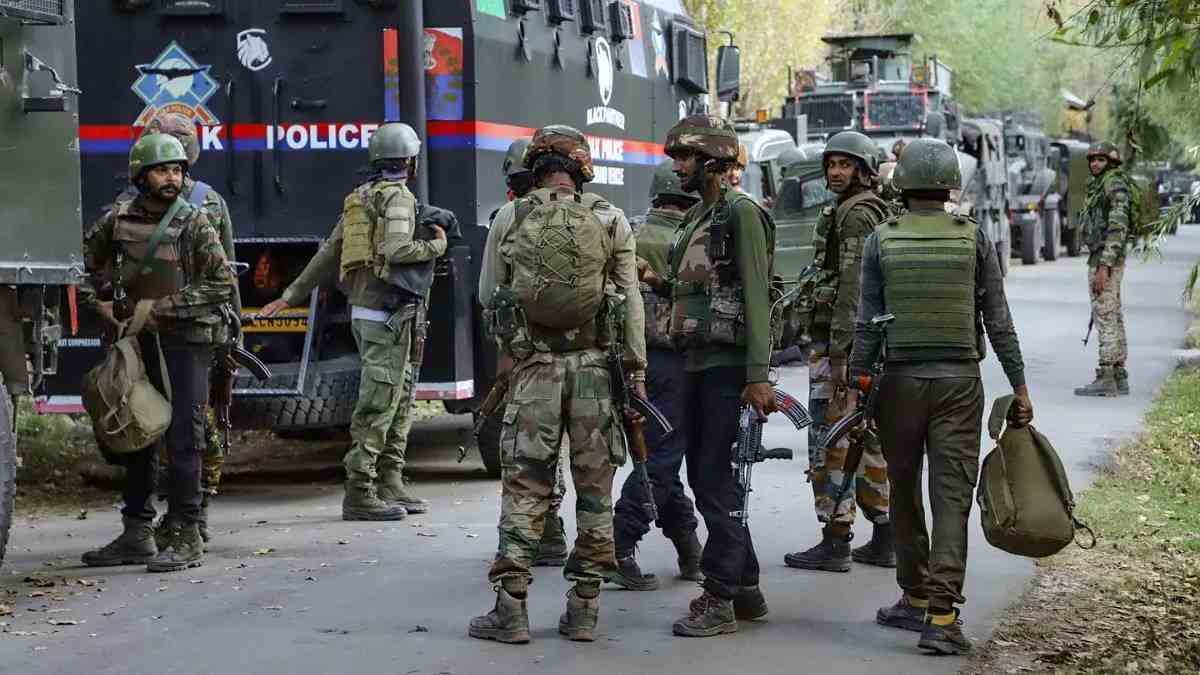
Jammu: A senior police officer in Jammu and Kashmir’s Poonch district on Sunday laid emphasis on human intelligence (HUMINT) collection to counter cross-border narcotic smuggling and terror networks.
The Deputy Inspector General of Police, Rajouri–Poonch Range, Tajinder Singh, while addressing a comprehensive intelligence, security and crime review meeting in Poonch, urged officers to augment operations through innovative intelligence collection and analysis techniques, a police spokesman said.
While reviewing efforts against narco-smuggling and terror networks, the DIG directed officers to strengthen human intelligence networks, he said.
He held deliberations on rejuvenating the intelligence grid and emphasised strengthening grassroots-level intelligence generation to ensure timely inputs and proactive policing, the spokesperson said.
Singh issued instructions for effective implementation of the beat system, with a prime focus on identification and sustained surveillance of the terror ecosystem, narco-support structures, absconders, and other persons of tainted repute, he said.
The officers were directed to ensure regular beat checks, community interaction, and documentation of unit-level intelligence inputs, the spokesperson said.
Earlier, Senior Superintendent of Police, Poonch, Shafqat Hussain briefed the meeting on the prevailing security and intelligence scenario of the district, the spokesman said.
Officers present in the meeting provided a detailed account of their field intelligence networks, existing security arrangements, he said.
They also presented initiatives being undertaken at the level of police stations, police posts, and Special Operation Group (SOG) camps to maintain peace and thwart anti-national and criminal activities, he said.
The DIG, along with SSP Poonch, conducted a visit to Kirni and Qasba villages near the Line of Control (LoC) to strengthen police–public relations and address the issues of border residents on priority.
During the visit, the officers held a public meeting across the border fence and listened to the grievances and concerns of the local residents, the spokesman said.
The issues faced by residents living in forward areas, such as civic amenities, security, border-specific hardships, and movement restrictions, were brought to the notice of the officers, he said
The DIG assured the public of time-bound redressal and necessary follow-ups, while the SSP assured the prompt addressing of grievances falling within the police domain.
The Poonch District Police remains accessible and responsive to the needs of the people, especially those residing in vulnerable and border areas, the SSP said.
The officers also appealed to the public to extend cooperation to the police and other security agencies in maintaining peace, law and order, and overall security in the border belt.