



Arteev Sharma
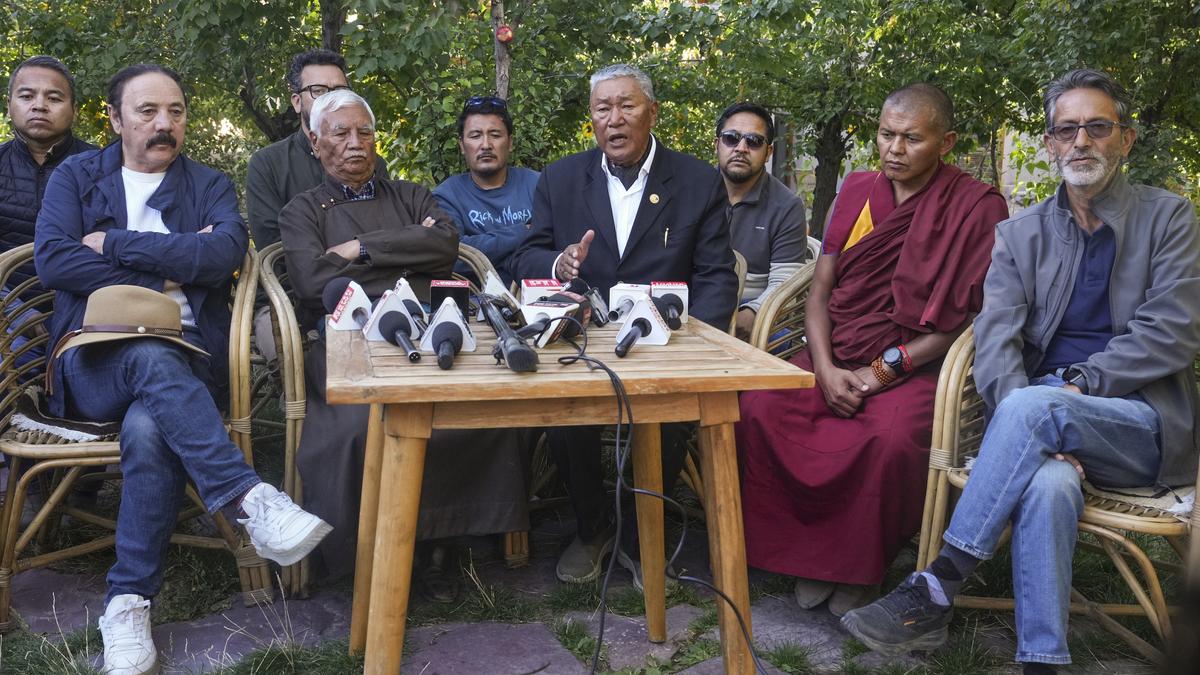
Jammu: With patience among Ladakh’s leadership wearing thin, the Ministry of Home Affairs (MHA) is expected to hold a fresh round of talks with representatives of Leh Apex Body (LAB) and Kargil Democratic Alliance (KDA) on January 10 to discuss their two core demands, including full-fledged Statehood and the region’s inclusion under the Sixth Schedule.
Sources told The News Now that MHA officials have been conducting an “exhaustive assessment” of the 29-page joint document submitted by LAB and KDA, outlining the legal and constitutional framework for their demands. Given the complexity of the issues involved, the next meeting of the High Powered Committee (HPC), headed by Union Minister of State for Home Affairs Nityanand Rai, is likely to be held in New Delhi on January 10.
“The contours of the next meeting are being finalised. As of now, the meeting is tentatively scheduled for January 10 in New Delhi, where representatives of LAB, KDA, the Ladakh Lok Sabha member and other key stakeholders are expected to be invited,” sources said.
When contacted, the LAB co-convener, Chering Dorjay Lakruk, however, said that no formal response has been received from the MHA so far. “We have not received any communication on our document (since it was submitted to MHA on November 17). What we have heard is that the meeting may take place soon, but no date has been finalised or conveyed to us,” he said.
Sources attributed the delay in convening the next HPC meeting to the “detailed and lengthy nature” of the joint document, which lays out specific legal arguments in support of Statehood and Sixth Schedule status. “The MHA is keen to leave no room for ambiguity in its assessment of the joint document, so as to avoid any further delay in resolution of issues or confrontation with the Ladakh groups before convening the next round of talks,” sources said.
A senior BJP leader from Leh, however, claimed that they have been conveyed that the next round of talks on all issues concerning Ladakh is likely to be held by, or on January 10.
In the document titled “Sixth Schedule Provisions and a Case for Statehood: Draft Framework for Ladakh,” the joint document of LAB and KDA sought the integration of the proposed State of Ladakh under Article 371 through the introduction of a new provision, Article 371-K. It presents a detailed constitutional argument for Ladakh’s inclusion under Article 371.
Describing their proposal as a “Sui generis model for protected Statehood and Sixth Schedule,” the LAB and KDA have recommended replacing the existing Autonomous Hill Development Councils (AHDCs) of Leh and Kargil with more empowered Autonomous District Councils (ADCs) on the lines of those provided under the Sixth Schedule. These ADCs, the groups proposed, should be extended to all existing districts as well as the five new districts proposed for Ladakh.
The joint document also sought a 30-member Legislative Assembly for the proposed State of Ladakh, two Parliamentary seats and other related measures.
According to sources, the legal provisions cited by the two bodies required “close and careful scrutiny” by the MHA that resulted in delay in holding talks between two sides.
The last Sub-Committee meeting of the MHA was held on October 22, after which both LAB and KDA expressed satisfaction, stating that Home Ministry officials appeared positive towards addressing Ladakh’s concerns.
The Sub-Committee comprised officials from the MHA and the Union Territory administration of Ladakh, three members each from LAB and KDA, the Ladakh MP, and the Chairpersons of the Leh and Kargil Hill Councils. The subsequent meeting was to be that of the HPC chaired by Nityanand Rai. The dialogue had resumed after nearly five months as the previous meeting was held on May 27.
The MHA had sought a comprehensive document from LAB and KDA detailing their demands before convening the next meeting. Talks between the Centre and the Ladakh groups had broken down following violence on September 24, after which both LAB and KDA stayed away from the dialogue scheduled for October 6. They agreed to participate in the October 22 meeting only after the MHA ordered a judicial inquiry into the violence, to be conducted by a retired Supreme Court judge.
Pertinently, differences had surfaced between Lieutenant Governor of Ladakh Kavinder Gupta and the Leh Apex Body (LAB) after the LG publicly acknowledged concerns over what he described as “imbalanced” representation in the talks with the Centre.
He had said that “some people were unhappy over what they perceive as imbalanced representation in the ongoing talks with the Union government”.
The remarks drew a sharp reaction from the LAB, which accused the Lieutenant Governor of attempting to “create community discord and sabotage Ladakh’s collective struggle for Statehood and constitutional safeguards.”
Taking a strong exception to his statement, LAB leaders warned the LG against what they termed as “meddling” in the internal affairs of the Apex Body and asserted that Ladakhis would not tolerate any “administrative attempts to influence the composition or functioning” of the organisation.
Moreover, Hindu Mahasabha of Ladakh, in a statement, had requested the LAB to include a representative from the Hindu community for the ongoing talks with the Centre. “Since all major communities are part of the Apex Body, we feel that Hindu representation will make the Body complete and more inclusive,” the statement had said.
The LAB leaders rejected such suggestions, alleging that the administration appeared to be making efforts to “plant its own people within the Apex Body” in a bid to dilute and weaken Ladakh’s movement for constitutional protection.

