



Avinav Verma
Leh: The political divide in Ladakh widened on Tuesday as Lieutenant Governor Vinai Kumar Saxena took a veiled dig at those pursuing “political aims” without concern for the Union Territory’s development, while the Kargil Democratic Alliance announced a major rally in Kargil on September 20 over its pending political demands and the issue of last year’s violence.
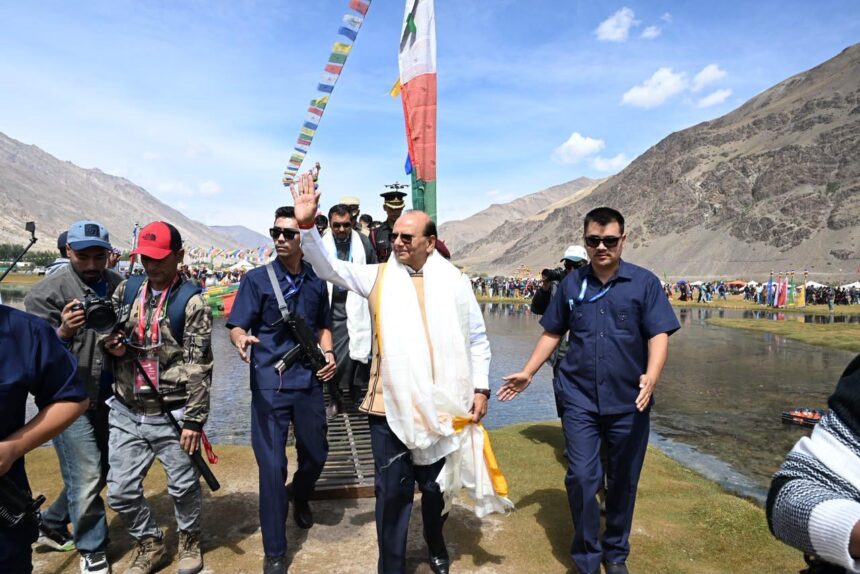
Saxena, speaking to reporters after inaugurating the 11th Ladakh Zanskar Festival in Zanskar, said some people were trying to advance their political interests and had little concern for Ladakh’s development.
“There are some people who are trying to advance their political aims, and who have no real concern for the development of Ladakh,” he said, without naming any individual or organisation.
The LG said political issues had their own place but development was a separate matter and no one should be allowed to come in the way of Ladakh’s progress.
He cited the expansion of the road network as one of the major changes since Ladakh became a Union Territory in 2019, saying the region had around 1,700 km of roads at that time compared with nearly 4,400 km now. He also pointed to the increase in tourist arrivals and said better infrastructure was creating new economic opportunities.
Saxena’s remarks came on the same day that the KDA announced a protest rally in Kargil on September 20, accusing the Centre of failing to show adequate seriousness in the ongoing talks over Ladakh’s political future.
KDA leaders said the rally would highlight what they described as the lack of substantive progress in discussions with the Ministry of Home Affairs. The programme will also focus on the demand for justice for the four people killed in police firing during the September 24 violence in Leh last year.
The announcement has added to the pressure on the Centre ahead of the next phase of talks.
The Leh Apex Body and KDA have been seeking an elected governance arrangement for Ladakh along with constitutional safeguards relating to land, employment, culture and identity.
Their demands also include statehood and Sixth Schedule-type protection.
The two groups had described their September 9 meeting with the MHA as unproductive, with the KDA maintaining that no concrete draft of the proposed UT-level governance structure was placed before them.
The LAB has separately sought a written assurance from the Centre by September 17 and has warned of a padyatra from September 19 if the assurance is not received.
However, the proposed agitation has also met opposition from sections of Ladakh’s senior political leadership.
Veteran leader ThupstanChhewang has opposed the agitation, maintaining that the Centre’s willingness to consider Ladakh’s demands should be appreciated and that another round of protests could send the wrong message at a time when talks are continuing.
Former LAHDC Leh CEC Rigzin Spalbar and former MLA Tsering Samphel have also opposed the proposed padyatra and favoured giving the dialogue process more time.
This has brought an increasingly visible difference within Ladakh to the fore. While LAB and KDA want greater pressure on the Centre before the next round of talks, some senior leaders believe that continued engagement with New Delhi is a better course than returning to the streets.
The immediate focus is now on the September 17 deadline set by the LAB, followed by the proposed padyatra from September 19 and the KDA rally in Kargil on September 20.
With the administration stressing development and the protest groups pressing for political and constitutional safeguards, Ladakh appears headed for another politically charged phase, even as differences over the timing and nature of agitation grow within the region itself.
