



Avinav Verma
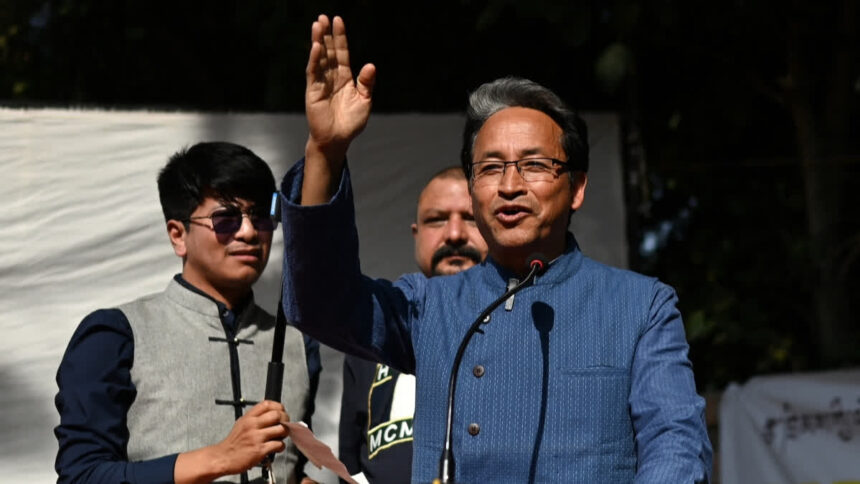
Leh: The row over Ladakh’s excise policy intensified after the UT administration rejected climate activist Sonam Wangchuk’s allegations of a forced expansion of liquor outlets, prompting him to hit back, citing 50 liquor-serving bars and protests by women against alcohol availability.
The administration termed Wangchuk’s October 22 remarks “false” and “baseless”, asserting that only one liquor shop is currently operational across Ladakh.
It said the new Excise Policy 2026-27, notified on June 1, was rolled back on August 26 following feedback and objections from residents and social organisations.
The administration said the proposal to open new wine shops was withdrawn and the auction notice cancelled.
The previous Excise Policy 2025-26 was restored, under which two liquor shops were permitted in Leh’s wards 4 and 6.
However, only one shop became operational in ward 6 after an auction on October 14, while no bid was received for ward 4.
Wangchuk, in his response, argued that the administration was focusing on the number of standalone liquor shops while overlooking the number of bars operating across the Union Territory.
He claimed that the policy had paved the way for 50 liquor-serving bars, which he described as the highest number in Ladakh’s history.
According to the administration, 50 retail liquor vends attached to restaurants are operational across Ladakh, including 38 in Leh, seven in Nubra, three in Zanskar and two in Changthang. Two beer bars are also operational in Leh.
The administration said licences were issued to applicants meeting prescribed norms, including distance requirements from highways, religious places and educational institutions.
It rejected Wangchuk’s allegation that bars were being opened in every street and near schools.
Wangchuk maintained that the rollback came after sustained opposition from civil society groups and a week-long sit-in by women.
He questioned why hundreds of women would leave their homes and children to protest for six nights in sub-zero temperatures if concerns over alcohol availability were unfounded.
He also alleged that the administration had used the celebratory atmosphere surrounding the Dalai Lama’s visit to Ladakh to facilitate the expansion of bars.
The administration, meanwhile, advised Wangchuk to verify information through official sources before making public statements, accusing him of creating unnecessary public alarm.
The exchange has brought the focus back on the implementation of Ladakh’s excise policy, with the administration defending the restoration of the previous policy and Wangchuk arguing that the number of liquor-serving establishments remains a matter of concern.

