



Ahmed Ali Fayyaz
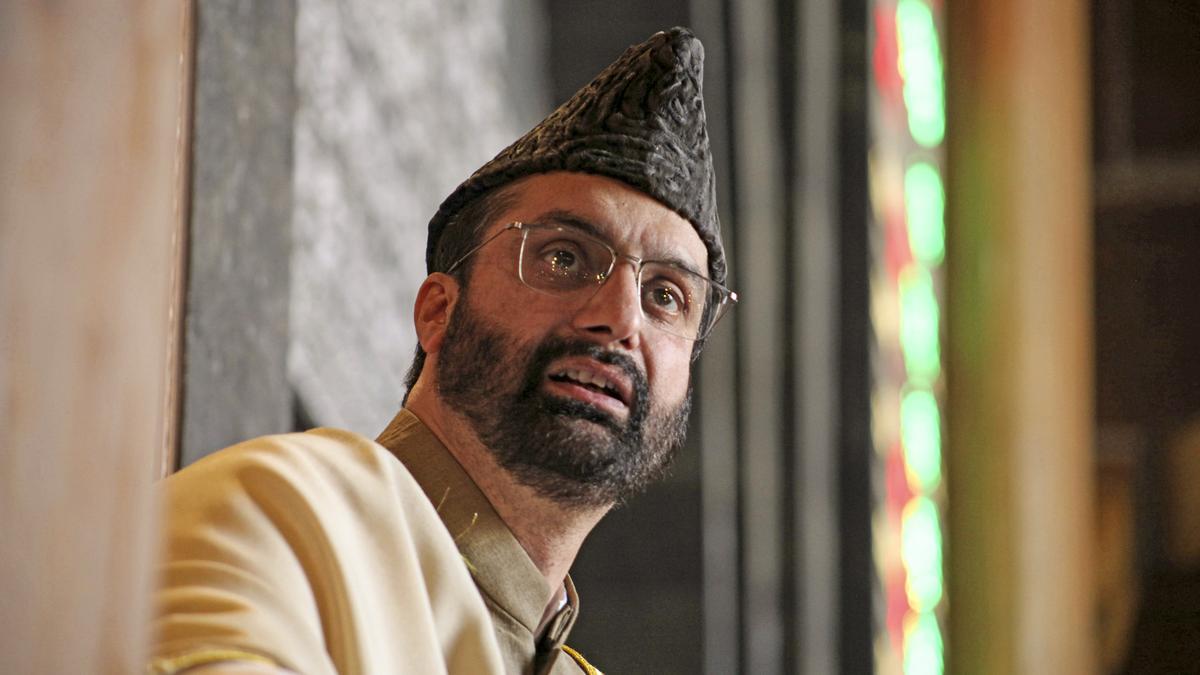
SRINAGAR: When a 7-member delegation of the representative Kashmir Muslim clergy appeared before the Indian Parliament’s Joint Parliamentary Committee (JPC) with suggestions on the government-sponsored Wakf Bill on Friday, it created a history. Never before has any political or religious individual or organization appeared before such a panel to contribute to Indian lawmaking in the last over 35 years.
Boycott to all elections held by the Indian authorities in Kashmir had begun in 1989—three years before the separatist conglomerate ‘All-Party Hurriyat Conference’ was floated with open facilitation of Pakistan. Alleged rigging in the Assembly elections of March 1987 was claimed to be the reason for the ‘loss of faith in the Indian democracy’.
Ironically the Hurriyat’s teenage chairman Mirwaiz Umar Farooq’s father and influential cleric-politician Maulvi Mohammad Farooq was a part and parcel of the “Rajiv-Farooq Accord” or a pre-poll alliance between Farooq Abdullah’s National Conference (NC) and Rajiv Gandhi’s Congress party. Even as Mirwaiz Farooq’s Awami Action Committee (AAC) did not formally contest the elections, two of the cleric’s nominees, namely Mohammad Shafi Khan and Peer Mohammad Shafi, were supported by the NC-Congress alliance.
The situation changed in Kashmir drastically in the year 1989 when nobody except the NC candidate Mohammad Shafi Bhat filed a nomination from Srinagar and the lowest ever turnout of 3-5 percent was recorded in the Lok Sabha elections in North and South Kashmir. Mirwaiz was assassinated allegedly by two Hizbul Mujahideen terrorists at his Nageen residence on 21 May 1990.
Unlike other politico-religious groups, AAC never participated directly in any Assembly or Parliamentary elections before or after 1987.
Mirwaiz Farooq’s 17-year-old son, Umar Farooq, not only succeeded him in his political and religious organization but was also appointed as the Hurriyat’s first Chairman.
Ever since 1996, Mirwaiz Umar’s diatribe against the ‘farcical Indian democracy’ is itched in the valley’s post-1990 political history. He spearheaded Hurriyat’s anti-election campaigns and declared all democratic exercises as proscribed “until the permanent resolution of the Kashmir issue, either through trilateral talks between India, Pakistan and the real representatives of the Kashmiris (euphemism for the separatists) or implementation of the UNSC resolutions”.
However, it is hard to concur that the Mirwaiz junior was personally against the participation in the Indian democratic exercises. Most of his anti-poll campaigns and statements occurred from 1993 to 2019 when there was a culture of competitive separatism and much of the separatists’ and the militants’ control was under the hardliner Syed Ali Shah Geelani.
The young Mirwaiz was put under the maximum possible pressure. His father as well as uncle Maulvi Mushtaq were shot dead. A higher secondary school running under the aegis of the Mirwaiz dynasty and their Anjuman-e-Nusrat-ul-Islam was set on fire. The separatists ran a tirade against Mirwaiz Umar when he broke a tradition of “social boycott to the mainstream politicians” and called on Chief Minister Farooq Abdullah, at his Gupkar Road house, to offer his condolences over the death of the CM’s mother in 2000.
Following the abrogation of Article 370 on 5 August 2019 and Geelani’s death on 1 September 2021, the separatists’ and the militants’ potential of sabotaging elections has remarkably receded. In the Lok Sabha and Assembly elections of 2024, there was no boycott call or an organized act of terror to sabotage the elections or impact the voter turnout.
The Kashmir clerics’ delegation which landed in New Delhi and appeared before the JPC, headed by the BJP MP Jagdambikapal, on Friday, gave a slew of suggestions which can be arguably in the best interest of the constituency they represent. With the details still pouring in, the Mirwaiz-led delegation echoed most of the concerns and apprehensions which the Indian opposition, particularly a section of the Muslim leadership, has forcefully emphasized since last year.
In addition to Mirwaiz Umar, two more religious leaders of the delegation have been prominently active in the valley’s separatist camp. Masroor Abbas Ansari or his father, late Maulvi Abbas Ansari, the founder of Shia religious group Anjuman Ittehadul Muslimeen have never contested elections. However, Maulana Abbas Ansari’s brother Maulvi Mustafa Hussain Ansari contested the Assembly elections of 1987 on the Muslim United Front ticket from Pattan, albeit unsuccessfully.
Current president of Anjuman Sharayi Shiaan Aga Syed Hassan dabbled in separatist politics since 1990. Even after he himself contested the 1977 Assembly elections on the Janata Party ticket unsuccessfully from Budgam and his brother late Aga Syed Mehdi contested Assembly and Lok Sabha elections, all unsuccessfully, Aga Syed Hassan’s slogan after 1990 was ‘azadi’. At least two of his close relatives were elected as MLAs and MPs and also functioned as Ministers. His own son contested the 2024 Assembly election from Budgam as the PDP candidate.
However, it is for the first time that, alongside Mirwaiz, the two Hurriyat leaders were part of the clerics’ delegation that appeared before the JPC and registered its opposition to the controversial Waqf Bill.
Mirwaiz completed his B.A and M.A in Islamic Studies and finally a Ph. D on the revered saint Mir Syed Ali Hamadani’s life and philosophy from Jamia Millia Islamia. In 1998, he got a distinction and figured among the gold medalists of the University of Kashmir later at the University Convocation. He made it a point to stay away from the Convocation as he was supposed to receive his honours from the President of India.
In 2012 too, Mirwaiz refused to attend the University Convocation for the reason that he had to receive his degree from the President of India.
Friday’s participation in the JPC hearing may appear to be a routine development but is highly significant for being in sharp contrast to Mirwaz Umar’s statements and activities in the last 35 years. It is likely to yield criticism from a section of the valley politicians and clerics. A BJP leaders’ praise of Mirwaiz Umar’s participation in the legislative business of the Indian Parliament may further trigger an onslaught on the Kashmir leader.

