



NAVVNEET DUBEY
Jammu: The rainfall in Jammu region has failed to improve the air quality as AQI of the city dipped into ‘ poor’ category on Monday. Data from AQI.in, showed the Air Quality Index (AQI) in Jammu remained in the very poor category at 360 at 11 AM, however on an average the winter capital recorded 225 AQI today.
Jammu has been struggling with worsening air conditions since the start of December as the month has been categorised as most polluted with 205 AQI in the current years. As per data, pollution levels remained high with PM10 ranging between 225 and 174 micrograms per cubic metre and touching 328 micrograms per cubic metre at 11 AM today. The PM2.5 also touched 250 micrograms per cubic metre, both far above the World Health Organization’s safe limits.
The AQI is a public health tool designed to communicate air pollution levels or the quality of air. Eight pollutants namely particulate matter (PM) 10, PM2.5, Ozone (O3), Sulphur dioxide (SO2), nitrogen dioxide (NO2), carbon monoxide (CO), lead (Pb) and ammonia (NH3) act as major parameters in deriving the AQI of an area.
An AQI within 0-50 is considered ‘good,’ 51-100 ‘satisfactory,’ 101-200 ‘moderate,’ 201-300 ‘poor’, 301-400 ‘very poor,’ and 401-500 ‘severe.’ Each of these categories reflects the level of pollution and the associated health risks.
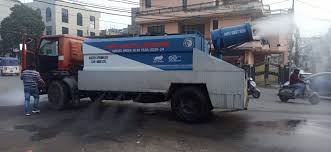
Meanwhile, the Jammu Municipal Corporation (JMC) has intensified measures to control air pollution and safeguard public health. Today a series of strict on-ground and regulatory steps have been initiated to curb dust and particulate emissions across the city. The Commissioner Devansh Yadav, has directed the concerned wings of JMC to implement immediate mitigation measures. These include night-time mechanical sweeping of major roads, daytime water sprinkling in high-traffic areas, markets and construction zones and the use of anti-smog gun–mounted vehicles to suppress airborne dust.
Special focus has been laid on regulating construction and demolition activities. The covering of the construction sites and vehicles transporting construction material with green sheets, jute fabric or plastic covers has been made mandatory. Dumping or storage of material on public roads and footpaths has been strictly prohibited.
JMC field officers have been directed to conduct surprise inspections, and impose penalties ranging from Rs 4,000 to Rs 50,000 on violators contributing to dust pollution or mismanagement of construction waste.
Alongside this, JMC has strengthened its solid waste management operations to prevent open dumping and burning of garbage, a major contributor to air pollution. The Health and Sanitation Wing has been instructed to maintain zero tolerance towards the burning of waste, dry leaves or plastic.
Appealing for public cooperation, Yadav emphasized that improving air quality requires collective effort. Citizens have been urged to avoid open burning, support cleanliness drives, plant trees and report pollution-related violations. For achieving better air quality, 4 water sprinklers/multifunctional tanks and two anti smog guns have been put to service on roads.
Environmental observers say a mix of stagnant cold air, vehicle emissions, open burning and widespread use of firewood for heating has turned the Valley into a “pollution bowl”. “It is alarming to see the Valley’s AQI entering a very poor zone. The air looks clean but feels heavy and unhealthy,” said an environmental researcher.

