



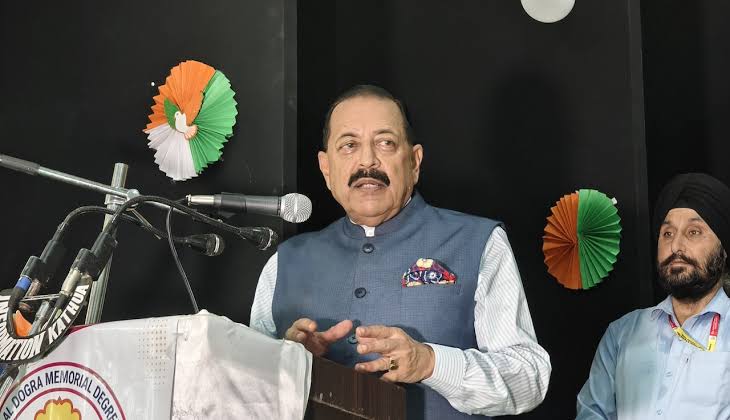
Jammu: Union Minister Jitendra Singh on Saturday said the central government is strengthening early intervention mechanisms for children with disabilities, with a focus on timely identification, treatment and rehabilitation.
Cross-disability early intervention centres are being established across the country to facilitate early identification and provide appropriate support to children with disabilities from infancy, the minister said, addressing a ‘Prabudh Matri Shakti’ Sammelan on preventing avoidable disabilities and empowering Divyangjans in Kathua district.
He said early identification, followed by timely treatment, rehabilitation and continued support, can help children realise their developmental potential, enhance their participation in education and enable them to contribute more fully to society.
The Minister of State in the Prime Minister’s Office said the government has taken several measures over the last decade to strengthen support for persons with disabilities and create greater opportunities for their participation in society.
These efforts complement community-level initiatives such as the Matri Shakti Sammelan, which seek to build awareness at the level of families and communities.
Singh also referred to the expansion of sports and specialised infrastructure for Divyangjan.
India’s first high-tech Sports Training Centre for Divyangjan was inaugurated in Madhya Pradesh to provide elite coaching and systematic training support, he said, adding such dedicated infrastructure has helped create an enabling ecosystem for sporting excellence and contributed to India’s record-breaking performance of 29 medals at the Paris 2024 Paralympic Games.
Singh also referred to measures available for government employees having Divyang children, which seek to provide greater support to families managing the specialised needs of their children.
These include exemption from rotational transfer, Children Education Allowance up to the age of 22 years, consideration for posting near medical facilities and two years of paid Child Care Leave, as applicable under the relevant government provisions, he said.
The minister said such measures reflect the need for a support system that addresses the entire journey, from pregnancy and early childhood to education, rehabilitation, skill development and eventual self-reliance.
While government programmes provide institutional support, sustained awareness among women and families can ensure that these interventions reach children at the stage when they can make the greatest difference, he said.
The minister said the purpose of the Prabudh Matri Shakti Sammelan was therefore not limited to supporting Divyang persons in the present, but also to create greater awareness today for a healthier, more inclusive and empowered generation tomorrow.
“Empowered mothers and aware families can become the foundation of early prevention, early identification and greater inclusion. The vision is simple: every mother aware, every family empowered, every child given the best possible beginning, and no one left behind,” he said.
He said efforts to prevent avoidable disabilities need to begin as early as possible, even before a child is born.
“Awareness about maternal health, adequate nutrition, antenatal care, prevention of infections, safe use of medicines, regular health check-ups and timely consultation with medical professionals can help families take informed decisions at crucial stages of pregnancy and early childhood,” he said.
Singh said where a condition can be identified during pregnancy, timely medical intervention and appropriate care can make a meaningful difference to outcomes.

