


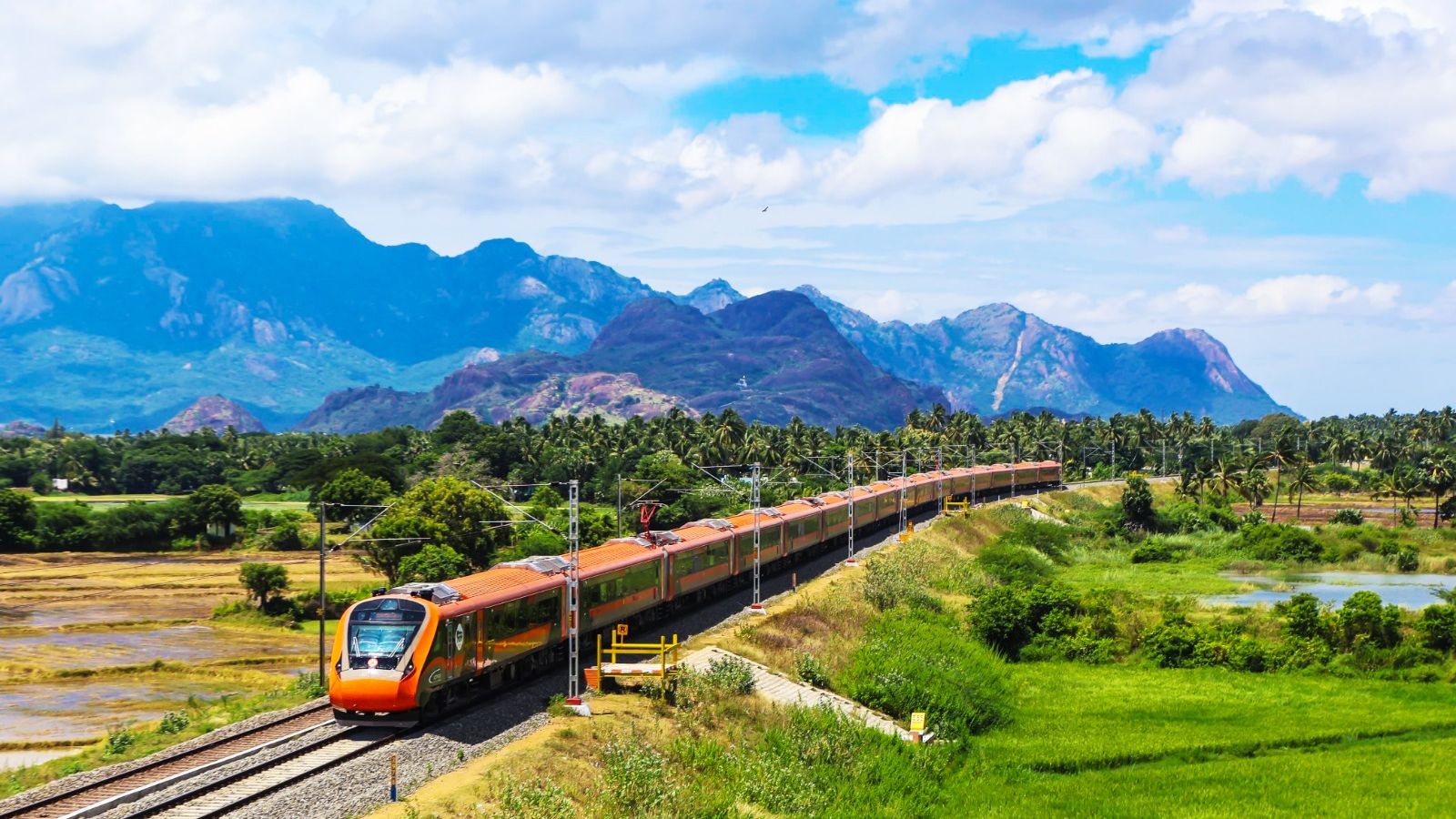
Jammu: A major step is underway toward a high-speed rail network in Jammu and Kashmir. The National High-Speed Rail Corporation Limited (NHSRCL) has begun work on the Amritsar-Jammu High-Speed Rail Corridor (AJHSRC).
Once operational, this project will bridge the gap between Punjab and Jammu and Kashmir. This project is considered an extension of the Delhi-Amritsar bullet train corridor, which will provide a new impetus to Jammu and Kashmir’s connectivity.
State-of-the-art LIDAR technology, drone surveys, and aerial mapping will be used to survey and map the corridor.
Tenders are also about to be floated for the surveys and other related works for the Amritsar-Jammu High Speed Rail Corridor (approximately 240 km long).
Union Minister of State in PMO Dr Jitendra Singh, recently while speaking to media, had asserted that following the successful operation of Vande Bharat Express to Kashmir, J&K would soon witness further enhanced connectivity after the completion of Delhi-Amritsar-Katra Expressway.
“Following it, the high-speed rail corridor would give a substantial boost to the connectivity in J&K, adding new dimensions to the development process,” Dr Jitendra had said.
Following the Vande Bharat route to Kashmir, the Railway Ministry has now begun work on a high-speed rail corridor between Amritsar and Jammu, aiming to reduce travel time from 4-5 hours to just two hours. Upon completion of this project, the Amritsar to Jammu journey, which currently takes 4 to 5 hours, will be reduced to approximately two hours.
This will provide passengers with fast, safe, and modern travel. This high-speed rail project is expected to significantly benefit tourism, business, and religious travel in Jammu and Kashmir. In particular, pilgrims visiting Mata Vaishno Devi will be able to travel much faster and easier.
This corridor will not only lay rail tracks, but will also open new doors to prosperity. Experts believe that if the Amritsar-Jammu Corridor is completed on time, it could play a major role in the development of Jammu and Kashmir.
From construction to operation, thousands of young people will find new employment opportunities. Improved connectivity will provide a major boost to local industries and the logistics sector in Punjab and Jammu.
Work on the country’s first bullet train project, the Mumbai-Ahmedabad corridor, is progressing rapidly and is expected to be operational by August next year.
The track under the project will be designed for speeds of up to 350 kilometers per hour, while the bullet train’s operating speed will range from 250 to 320 kilometers per hour.