



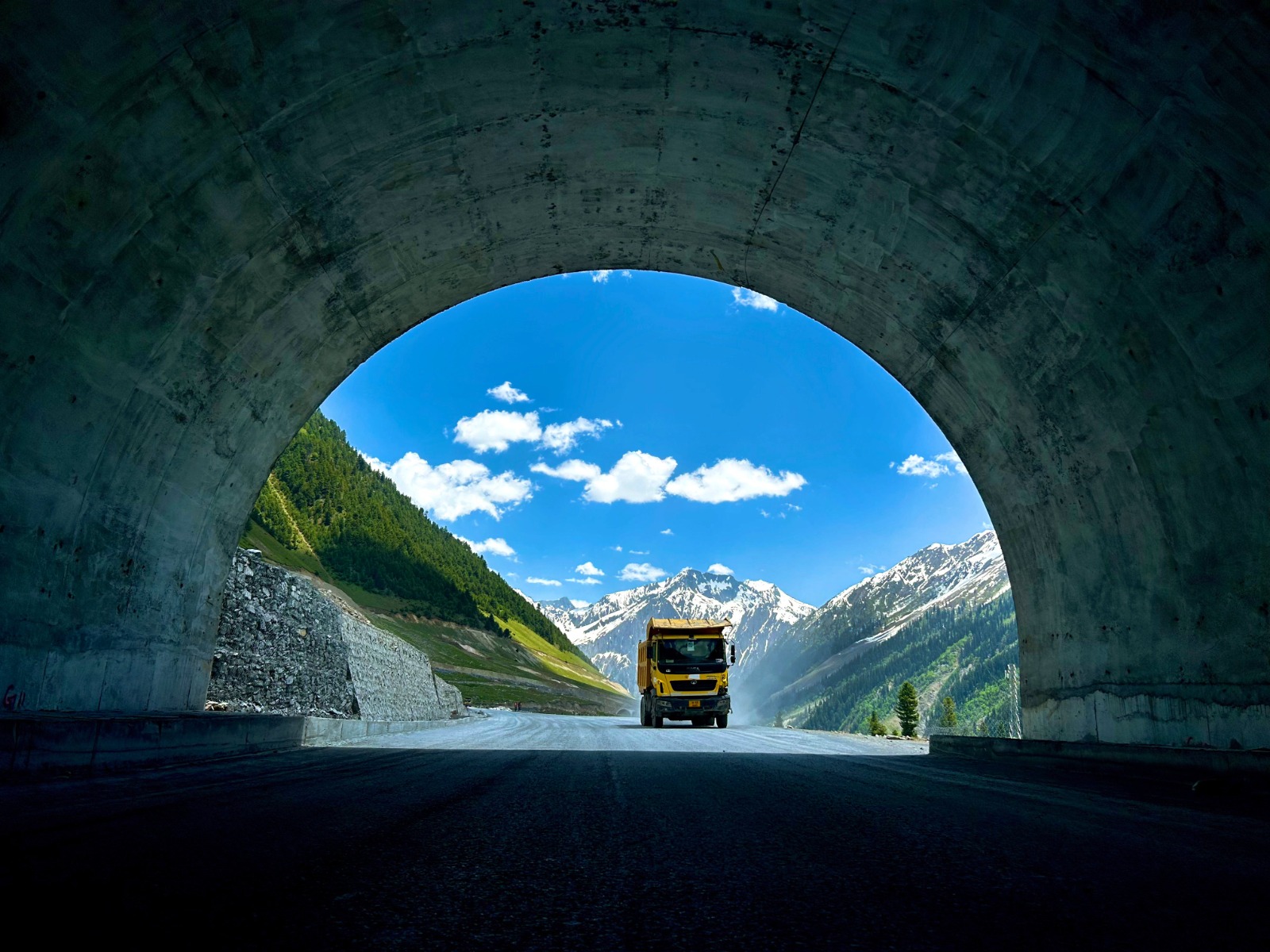
Jammu: The strategically important Zojila Tunnel project is set to achieve a major milestone on June 9 with the final breakthrough of the main tunnel, paving the way for all-weather road connectivity between Kashmir and Ladakh.
Union Minister for Road Transport and Highways Nitin Gadkari is scheduled to trigger the breakthrough blast of the 13.15-kilometre tunnel, one of the country’s most ambitious mountain infrastructure projects.
Located between Baltal in Sonamarg and Meenamarg in the Drass sector, the Zojila Tunnel is being developed as the world’s longest single-tube bi-directional road tunnel at such a high altitude. Situated at nearly 11,578 feet above sea level, the tunnel is expected to provide year-round connectivity across the Zojila Pass, which remains closed for several months every year due to heavy snowfall and harsh weather conditions.
The project is being executed by Megha Engineering and Infrastructure Limited (MEIL) for the National Highways and Infrastructure Development Corporation Limited (NHIDCL).
Officials said the final breakthrough will mark the completion of the most challenging phase of excavation work. Tunnelling has been carried out simultaneously from both the Baltal and Meenamarg ends through difficult Himalayan terrain marked by fragile geology, avalanche-prone slopes and extreme weather conditions.
The tunnel is being constructed using the New Austrian Tunnelling Method (NATM), a specialised engineering technique suited for unstable mountain geology. The method allows continuous monitoring and adaptation to varying rock conditions, ensuring safety and structural stability during construction.
Apart from the main tunnel, the project includes approach roads, bridges, snow galleries, protective structures, cut-and-cover sections and the Nilgrar twin tunnels. The first phase of the project, comprising approach roads, bridges and associated infrastructure, was completed in March this year.
Once operational, the tunnel will ensure uninterrupted connectivity between Srinagar, Drass, Kargil and Leh throughout the year, significantly reducing travel disruptions caused by snowfall. The project is also expected to boost tourism, trade, healthcare access and economic activity across Ladakh and the border districts of Jammu and Kashmir.
Beyond its civilian benefits, the tunnel carries major strategic significance by strengthening connectivity and logistics along a sensitive frontier region. It is expected to enhance the movement of personnel, equipment and essential supplies throughout the year.
Construction of the project began in October 2020 and has since recorded over 10 million safe man-hours, reflecting the scale and complexity of the engineering effort.
With the final breakthrough now imminent, the Zojila Tunnel moves a step closer to transforming connectivity between Kashmir and Ladakh and stands as one of India’s most significant infrastructure achievements in the Himalayas.

