



Jammu: Bharatiya Janata Party (BJP) leaders on Tuesday paid tributes to Bharatiya Jana Sangh founder Dr Syama Prasad Mookerjee on his death anniversary, remembering his role in advocating the complete integration of Jammu and Kashmir with the rest of India and asserting that the abrogation of Article 370 marked the fulfilment of his long-standing vision.
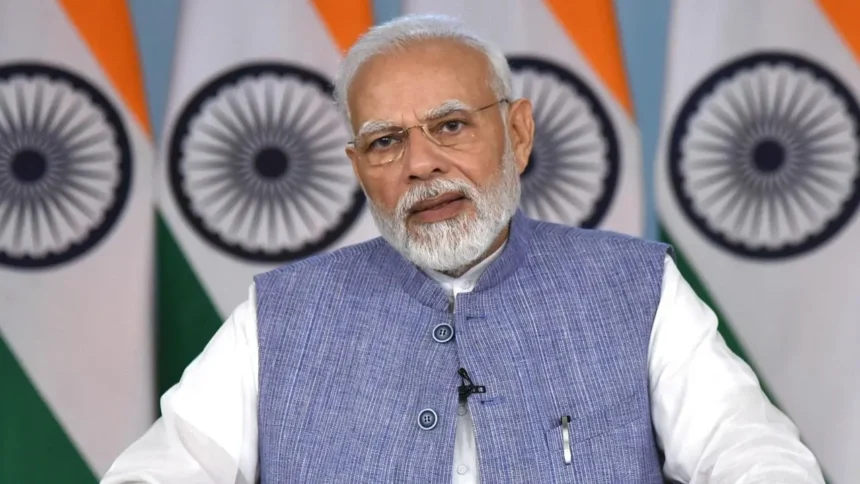
Prime Minister Narendra Modi led the tributes and described Mookerjee as a distinguished patriot, scholar and statesman whose commitment to national interest and public service continues to inspire generations.
In a post on X on the occasion of Mookerjee’s Balidan Diwas, the Prime Minister said that his sacrifice remains permanently etched in the nation’s collective memory.
“On his Balidan Diwas, I pay homage to Dr Syama Prasad Mookerjee, a distinguished patriot, scholar and statesman who dedicated his life to India’s development. His unwavering conviction, courage in public life and commitment to national interest continue to inspire generations,” Modi said.
The Prime Minister added that the country remains committed to building a strong and developed India guided by the values that Mookerjee upheld throughout his life.
Dr Mookerjee, founder of the Bharatiya Jana Sangh—the ideological predecessor of the BJP—died under detention in Srinagar on June 23, 1953, after being arrested during his protest against the permit system that was then in place for entry into Jammu and Kashmir.
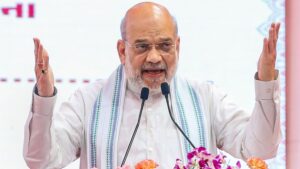
Union Home Minister Amit Shah also paid homage and described June 23 as a day of inspiration for BJP workers, saying Mookerjee made the ultimate sacrifice for preserving national unity and integrity.
Addressing a gathering in New Delhi during the launch of NAFED’s auction portal, Shah said Mookerjee stood firmly against the separate constitutional arrangement that existed in Jammu and Kashmir after Independence.
He recalled that Article 370 had granted special constitutional status to Jammu and Kashmir and argued that the arrangement created separate political and constitutional institutions in the region.
Shah said Mookerjee launched a movement against what he described as the concept of “two constitutions, two flags and two prime ministers in one country.”
Recalling the historical campaign, Shah said Mookerjee travelled from Delhi to Jammu and Kashmir but refused to seek a permit for entry, maintaining that Kashmir was an inseparable part of India. According to Shah, Mookerjee was subsequently arrested and later died while in detention.
The Home Minister also highlighted Mookerjee’s political role during the partition period and claimed his efforts ensured that West Bengal remained with India during the division of British India.
Linking the historical movement with contemporary developments, Shah said the Narendra Modi-led government’s decision to abrogate Article 370 on August 5, 2019, fulfilled Mookerjee’s long-standing objective of complete constitutional integration of Jammu and Kashmir with the Union of India.
“Today, Syama Prasad Mookerjee’s dream has come true. Article 370 has been abrogated,” Shah said while also noting the growth of the Bharatiya Jana Sangh into the present-day BJP.
BJP president Nitin Nabin also offered floral tributes to Mookerjee at the party headquarters in New Delhi and said his sacrifice for national integration would continue to inspire party workers.
Nabin stated that the removal of Article 370 represented a major step toward realising Mookerjee’s vision and said the BJP under Prime Minister Modi’s leadership was carrying forward the ideological legacy of the Jana Sangh founder.
Meanwhile, in Srinagar, BJP National General Secretary and Member of Parliament Tarun Chugh reiterated that the Centre remains committed to restoring statehood to Jammu and Kashmir.
Addressing a press conference on the occasion of Mookerjee’s 73rd death anniversary, Chugh said Prime Minister Narendra Modi had already indicated that statehood would be restored and asserted that the commitment remains unchanged.
“The promise has been made, and it will be fulfilled,” Chugh said.
Paying tribute to Mookerjee, Chugh said the Jana Sangh founder sacrificed his life for the complete integration of Jammu and Kashmir.
He also raised questions over the circumstances surrounding Mookerjee’s arrest and death in custody in 1953 and demanded that records linked to the case be made public.
“The country deserves to know the truth,” Chugh said, while questioning why details connected to the case remained unavailable for decades.
The BJP leader further called for the declassification of archival records related to the 1947 tribal invasion of Jammu and Kashmir. He alleged that historical accounts had failed to fully document the violence, destruction and suffering experienced by communities during that period.
Chugh said people from different communities—including Muslims, Hindus, Sikhs, Kashmiri Pandits and Christians—were affected and stressed the need to preserve historical records for future generations.
Drawing comparisons with international efforts to document major historical tragedies, he said similar efforts should be undertaken regarding events linked to Jammu and Kashmir’s past.
He also defended the BJP government’s governance record and rejected opposition allegations of corruption, stating that the party follows a policy of zero tolerance toward corruption.
Highlighting recent developments in Jammu and Kashmir, Chugh referred to parliamentary visits to the Valley, the hosting of the G20 meeting in Srinagar, and major infrastructure initiatives including the Chenab Railway Bridge, rail connectivity expansion and the Zojila Tunnel.
Inviting tourists from across India and abroad, Chugh said Jammu and Kashmir is witnessing peace, development and rapid infrastructure growth.
“Do not be misled by negative narratives. Come and see Jammu and Kashmir for yourself. This is a land of peace, hospitality and progress,” he said.
The tribute events were attended by several senior BJP leaders as the party marked Mookerjee’s 73rd death anniversary across the country.

