



WAJAHAT SHABIR
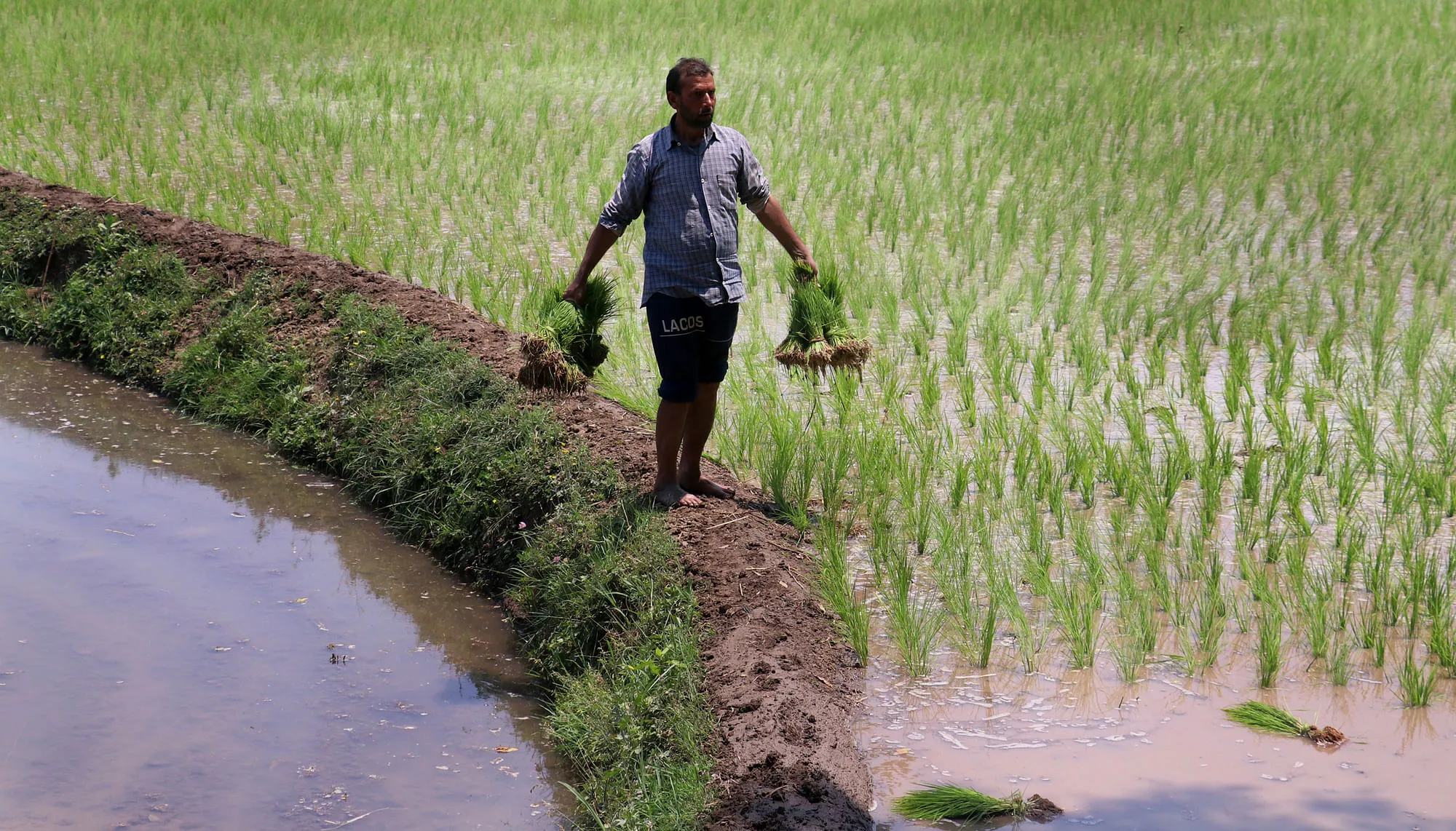
SRINAGAR: More than 1.8 lakh farmer applications in Jammu and Kashmir have benefited from crop insurance claims amounting to ₹67.57 crore over the last three years, the Union Government informed Parliament.
According to the Ministry of Agriculture and Farmers Welfare, farmers in the Union Territory are being covered under the Pradhan Mantri Fasal Bima Yojana (PMFBY) and the Restructured Weather Based Crop Insurance Scheme (RWBCIS), which provide financial protection against crop losses caused by natural calamities, adverse weather conditions, pests and diseases.
In a written reply to an unstarred question in the Rajya Sabha, Minister of State for Agriculture Bhagirath Choudhary said the schemes offer risk coverage from pre-sowing to post-harvest stages and are implemented by the Jammu and Kashmir administration.
The government data shows that ₹6.34 crore in claims were paid in 2022-23 benefiting 17,385 farmer applications, while ₹34.78 crore were disbursed in 2023-24 covering 69,245 applications. In 2024-25, claims worth ₹26.45 crore were paid benefiting 93,701 applications, taking the total to ₹67.57 crore and 1,80,331 applications over three years.
The ministry said crop losses due to wild animals can also be notified by states under the scheme at their own cost, but such losses have not been notified by the Jammu and Kashmir administration so far.
The Centre further said several measures have been introduced to ensure transparency and timely settlement of claims under PMFBY. These include the National Crop Insurance Portal, integration with the Public Finance Management System, and the Digiclaim module to track and process claims digitally.
To discourage delays, a 12 percent penalty is automatically imposed on insurance companies for late claim payments from the Kharif 2024 season, while states may also face penalties for delayed subsidy release.
The government has also introduced technology-based initiatives such as YES-TECH for remote-sensing based crop yield estimation and WINDS, a network of automatic weather stations and rain gauges, to improve crop loss assessment and strengthen disaster management systems.
Under the National Policy on Disaster Management, the primary responsibility for providing relief during natural calamities lies with state governments, which utilize funds from the State Disaster Response Fund. Additional assistance may be provided from the National Disaster Response Fund in case of disasters of severe nature.

