



Arteev Sharma
Jammu: After years of delay caused by legal and technical hurdles, the Centre has finally set the ball rolling for the 1.05-km Shankaracharya Temple ropeway project by inviting bids for the long-awaited link between Srinagar city and the historic hilltop shrine.
Estimated to be completed with an approximate cost of Rs 147.23 crore, the ropeway will provide commuters and pilgrims with panoramic views of the Dal Lake and surrounding areas. The project is being implemented under the Hybrid Annuity Mode (HAM) and is scheduled to be completed within two years from the appointed date of the concessionaire.
The ropeway project, which was announced in the Union Budget 2022-23 under the National Ropeway Development Programme—ParvatmalaPariyojana, was initially expected to be completed by December 2026. However, legal and technical issues delayed its execution.
“The ropeway project for the historic Shankaracharya Temple has been approved and is under the bidding stage,” the Union Ministry of Road, Transport and Highways said in an official document tabled in Lok Sabha recently.
It added that it (ropeway) was among 15 major ropeway projects announced under the ParvatmalaPariyojana to improve last-mile connectivity in hilly and difficult terrains.
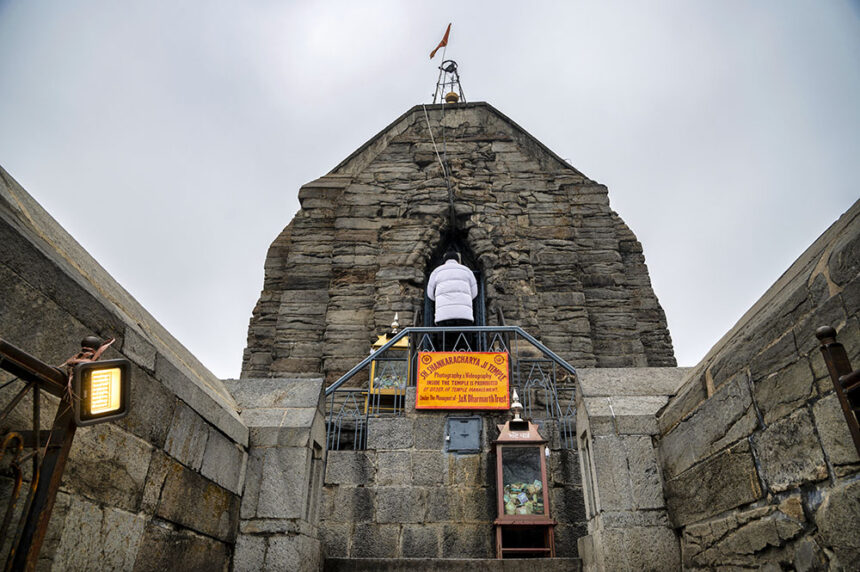
The Shankaracharya temple, dedicated to Lord Shiva and believed to be the oldest shrine in the Kashmir valley, is situated atop Shankaracharya hill in the Srinagar district, standing at a height of 1100 ft above the city’s surface level.
The estimated cost of the project has also increased from the earlier Rs 120 crore to Rs 147.23 crore and could rise further if there are additional delays in its implementation, sources said.
The proposed ropeway will connect Srinagar city from the SDA parking area near Zabarwan Park to the Shankaracharya Temple. It is expected to reduce the travel time to the shrine from around 30 minutes to nearly five minutes.
“The government is planning to use Monocable Detachable Gondola (MDG) technology for the project, with a proposed capacity of 700 passengers per hour per direction (PPHPD),” sources said, adding “Besides reducing travel time, the ropeway is expected to provide visitors with panoramic views of Srinagar, particularly the world-famous Dal Lake. It will also make the temple more accessible to senior citizens and persons with disabilities, who currently face difficulties in reaching the hilltop shrine”.
Sources further said the project is also aimed at promoting tourism and providing an eco-friendly alternative to conventional modes of transport in the hilly terrain. Ropeways require comparatively less land and can offer efficient connectivity in areas where conventional mass-transit infrastructure is difficult to develop.
According to official document, the project is expected to boost tourist footfall at the shrine, generate employment opportunities and improve last-mile connectivity. “The project aims to be eco-friendly and create employment opportunities by enhancing tourism. Ropeways or cable cars are seen as viable options in challenging terrains, and several new projects, including the Srinagar one, are expected to be ready by 2026.
Sources further said the ropeway infrastructure is an ecologically sustainable alternative to conventional infrastructure in difficult hilly areas. “The idea is to improve connectivity and convenience for commuters, besides promoting tourism. This is also suitable for congested urban areas, where a conventional mass transit system is not feasible,” they said.

