



Jammu:: In a significant breakthrough after five years of sustained agitation, the Leh Apex Body (LAB) and Kargil Democratic Alliance (KDA) on Friday reached an “in-principle” understanding with the Centre on a future administrative and political framework for Ladakh, proposing a Union Territory-level elected body vested with legislative, executive and financial powers.
It came during a sub-committee meeting held in New Delhi between representatives of LAB, KDA and the Ministry of Home Affairs (MHA), where discussions focused on restoring democratic governance and extending constitutional safeguards to the Union Territory.
According to a joint statement issued by LAB and KDA, both sides agreed in principle that all legislative, executive and financial powers would rest with elected representatives through a Union Territory-level legislative body, which could take the form of an Assembly or another structure to be finalised later.
The proposed framework envisages that all bureaucrats in the Union Territory, including the Chief Secretary, would function under the executive authority of the elected body, headed by a proposed Chief Minister.
“After today’s sub-committee meeting, we have reached an in-principle consensus to have a UT with a legislature, including an Assembly or another body with a different nomenclature as things would be worked out in due course. All officers, including the Chief Secretary, will come under the executive head of this UT-level elected body,” LAB co-chairman CheringDorjay Lakruk told The News Now over phone from New Delhi.
The joint statement further stated that Ladakh would be granted constitutional safeguards on the lines of Articles 371A, 371F and 371G, which currently provide special protections to Nagaland, Sikkim and Mizoram.
Although leaders of two bodies maintained a guarded silence, the outcome of the meeting is being viewed as a clear indication that the Centre and agitating groups have arrived at a consensus to end the agitation.
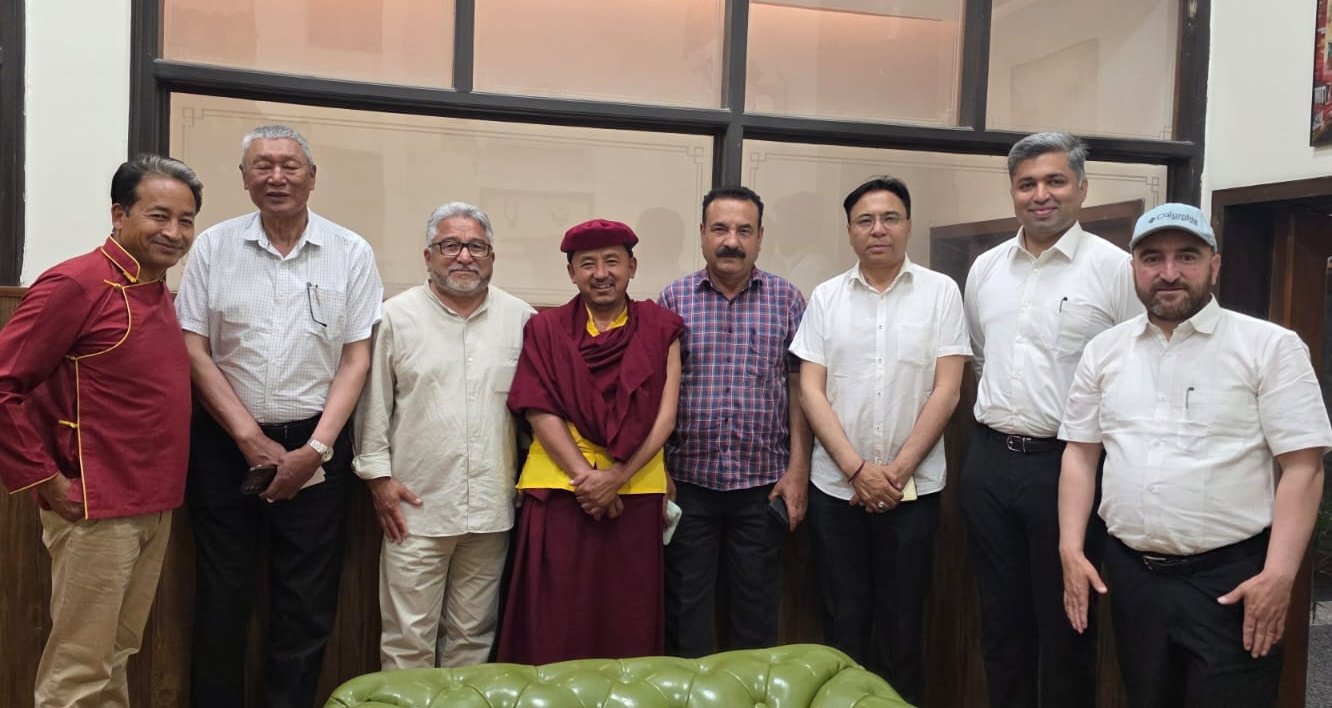
The three-member LAB delegation comprised co-chairman CheringDorjay Lakruk, climate activist Sonam Wangchuk and All Ladakh Gonpa Association president Dorjey Stanzin. The KDA delegation included co-chairmen Asgar Ali Karbalai and Sajjad Kargili, along with National Conference vice-president Ghulam Rasool Nagvi, who was recently inducted following the demise of veteran Kargil leader and KDA co-chairman Qamar Ali Akhoon.
Ladakh Member of Parliament Mohammad Haneefa Jan and Chief Executive Councillor (CEC) of the Ladakh Autonomous Hill Development Council (LAHDC), Mohammad Jaffer Akhoon, also attended the meeting.
During the meeting, the MHA officials explained that the only reason Ladakh cannot be granted statehood at present is its inadequate revenue generation to meet revenue expenditure, such as employee salaries. However, officials indicated that the proposed arrangement could eventually pave the way for full statehood once revenue benchmarks are achieved.
Earlier, the LAB and KDA leaders reiterated the long-standing aspirations of the people of Ladakh regarding the restoration of democracy, constitutional safeguards, and the demands for statehood and Sixth Schedule protections, reflecting the shared commitment of all stakeholders towards an inclusive and sustainable governance framework for the region.
The two bodies said that following detailed and constructive deliberations, both sides arrived at an in-principle understanding on several critical points.
The KDA and LAB said they look forward to working closely with MHA to finalise the operational details in consultation with legal and constitutional experts.
The development is being seen as a major step towards addressing the long-pending demands of the people of Ladakh, who have been seeking greater political empowerment and constitutional protections since the region was carved out as a separate Union Territory in August 2019.
The proposed arrangement is expected to provide Ladakh with a democratically elected government having substantial powers over governance and administration, a demand that has remained at the centre of public discourse in the region over the past several years.
Former Lok Sabha member and veteran Buddhist leader ThupstanChhewang whose resignation from LAB was accepted recently described the development as “historic consensus to get customised political system with law-making authority.
He said a customized political system will be implemented giving elected bodies powers similar to those of a Chief Minister and ministers.
Talking a news agency, the leader said the meeting was “highly anticipated” and discussions covered Ladakh’s long standing issues.
“For five to six years, dialogue with Home Ministry had brought partial consensus and implementation at the ground level but the key demands statehood and UT with legislature along with the constitutional safeguards had remain unresolved,” he said.
“Today, a historic consensus was reached. It was agreed that due to financial non-viability Ladakh cannot at present be granted statehood or with UT with legislature. Yet, customized political system will be implemented giving elected bodies power similar to those of a Chief Minister and ministers including law-making authority,” he said.
The last meeting of the MHA’s High Powered Committee (HPC) on Ladakh, held on February 4, failed to yield any breakthrough on the twin demands. Ladakhi leaders have so far remained stick to their core demands with a detailed 29-page document submitted to the MHA in November last year, outlining constitutional, cultural and administrative justifications for both statehood and Sixth Schedule protections.

