



Atiya Mujeeb
Srinagar, May 12:National Conference president Farooq Abdullah on Tuesday expressed concern over the growing fuel and gas shortage fears, warning that the situation could push Jammu and Kashmir towards economic instability if the crisis deepens further.
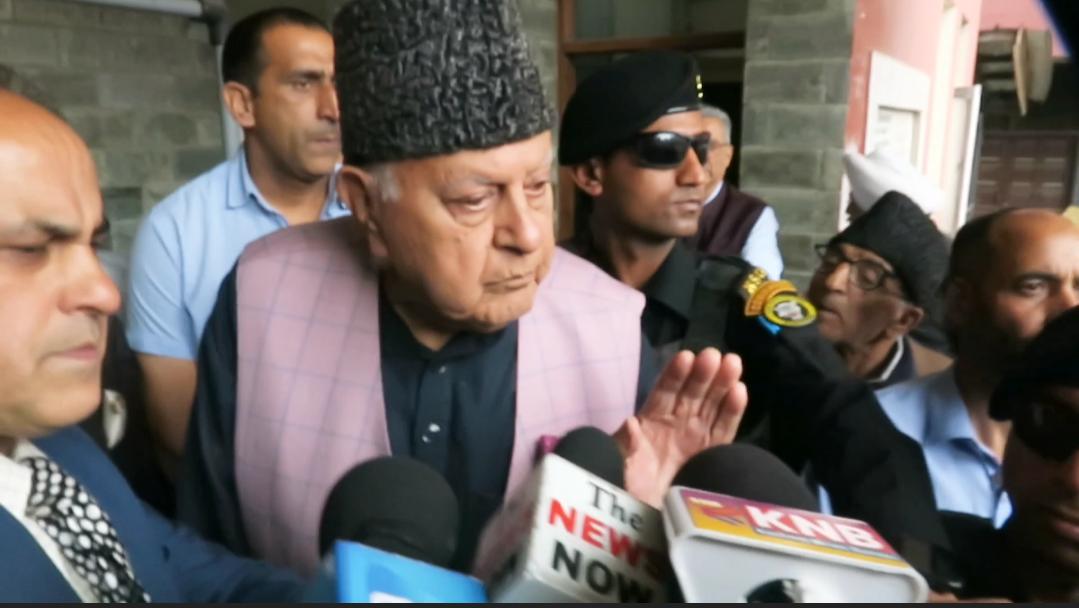
Speaking to reporters, Abdullah said the government’s reported move to suspend school transport services due to the fuel situation would adversely affect poor families, particularly those without access to online facilities.
“We are heading towards difficult times because of the fuel and gas crisis. Poor people do not have online options, so such measures cannot work everywhere,” he said.
Referring to rising tensions involving America and Iran, the veteran leader said any prolonged conflict in West Asia could severely affect the region’s economy and daily life.
“If the conflict between America and Iran does not stop, only Allah knows what situation we may face,” Abdullah remarked.
Commenting on the ongoing debate surrounding liquor sales in Jammu and Kashmir, Abdullah said the issue should be approached from a practical perspective, adding that prohibition would also impact government revenue.
“People who consume alcohol will continue to find ways to get it, whether here or elsewhere,” he said.
Recalling the period when former Prime Minister Morarji Desai advocated prohibition, Abdullah said his father, former chief minister Sheikh Abdullah had once conveyed that Jammu and Kashmir could stop liquor sales if the Centre compensated the resulting revenue loss.
“If the Government of India provides the revenue generated from liquor sales, the administration can stop it within minutes,” he said.
The NC leader also questioned those protesting against liquor outlets, asking why they had remained silent when such shops were opened in different areas over the years.
“We did not establish these liquor shops. The same people who allowed them earlier are now protesting,” he added.
Abdullah further accused some groups of trying to create political pressure through public campaigns, asserting that such actions would not intimidate his party.

