



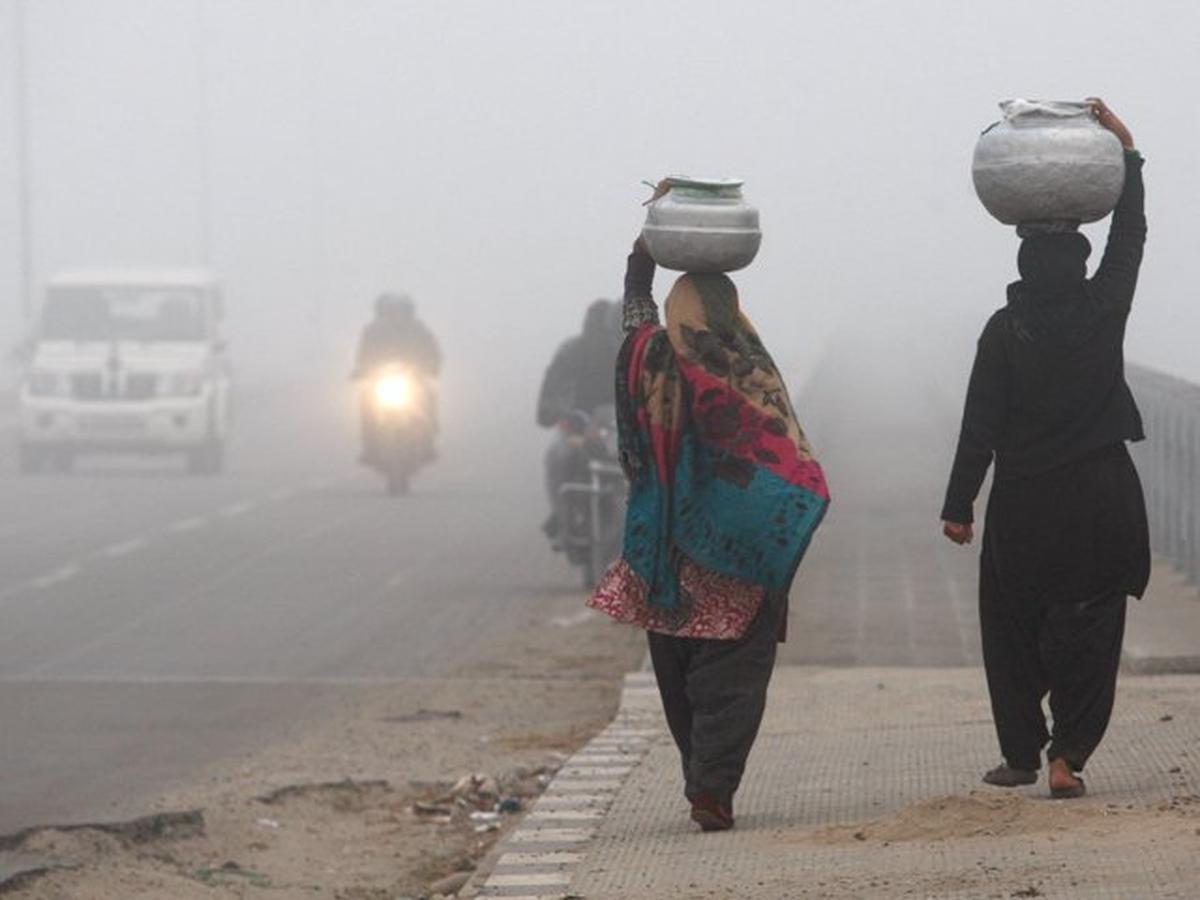
Jammu: Jammu on Wednesday reeled under an unusually harsh winter spell, recording one of its coldest days in decades and emerging colder than several high-altitude locations in the Kashmir Valley, as dense fog disrupted normal life and transport across the plains.
The city registered a maximum temperature of just 7.4 degrees Celsius, nearly 10 degrees below the seasonal average, making it the fourth-lowest daytime temperature recorded in Jammu in the past four decades.
Only three colder daytime highs have been recorded earlier — 5.0 degrees Celsius in 1986, 6.7 degrees Celsius in 2013, and 7.1 degrees Celsius in 2016.
The cold was compounded by a low night temperature, with Jammu recording a minimum of 4.0 degrees Celsius, around 2.9 degrees below normal for this time of the year.
Notably, on Tuesday, Jammu had turned out to be the coldest recorded place in the Union Territory, surpassing even the snow-bound regions of Kashmir.
In contrast, several locations in the Kashmir Valley witnessed comparatively warmer daytime conditions.
Gulmarg, the famous ski resort in north Kashmir, recorded a maximum of 8.2 degrees Celsius, while Pahalgam in south Kashmir registered 10.6 degrees Celsius.
Srinagar saw a relatively mild day with the mercury touching 13.3 degrees Celsius. Banihal, the gateway town to Kashmir along the Jammu–Srinagar National Highway, remained significantly warmer at 17.8 degrees Celsius, while Katra, the base camp for pilgrims visiting the Mata Vaishno Devi shrine, recorded a high of 18.2 degrees Celsius.
While daytime temperatures in parts of Kashmir remained moderate, nights turned sharply colder across the Valley, with minimum temperatures plunging further. Srinagar recorded a low of minus 5.2 degrees Celsius, while the city airport dipped to minus 6.0 degrees Celsius. South Kashmir experienced a sharper chill, with Shopian at minus 7.5 degrees Celsius and Pulwama at minus 7.0 degrees Celsius, among the coldest in the plains. Anantnag settled at minus 6.6 degrees Celsius, while Awantipora recorded minus 6.4 degrees Celsius.
In north Kashmir, Sopore registered minus 6.9 degrees Celsius, Kupwara minus 6.2 degrees Celsius, and Baramulla minus 1.8 degrees Celsius. However, Sonamarg saw a notable rise in night temperature, settling at minus 2.2 degrees Celsius, a sharp improvement from the previous day. Gulmarg recorded a minimum of minus 3.8 degrees Celsius.
The Jammu region witnessed mixed night-time trends. Jammu city remained slightly warmer than the previous night, while Bhaderwah rose above freezing to 0.5 degrees Celsius. Banihal recorded 5.3 degrees Celsius, and Rajouri slipped below freezing at minus 0.6 degrees Celsius.
In Ladakh, extreme cold conditions continued unabated. Leh recorded minus 11.4 degrees Celsius, while Hanle also plunged to minus 11.4 degrees Celsius. Kargil and Nubra Valley recorded minus 10.0 degrees Celsius and minus 10.4 degrees Celsius, respectively.
Back in Jammu, dense fog once again blanketed the plains, severely affecting air and rail services.
Of the 26 scheduled flights at Jammu airport, three flights were cancelled, including services on the Srinagar–Jammu–Mumbai, Srinagar–Jammu–Srinagar and Delhi–Jammu–Delhi sectors, while nine other flights were delayed. Several trains were also delayed due to poor visibility, adding to commuter woes.
Weather officials have forecast a gradual rise in minimum temperatures from January 15 onwards, but warned that moderate to dense fog is likely to persist over the Jammu plains for the next three days. Snowfall in the Kashmir plains remains unlikely until January 20, though a series of weak Western Disturbances is expected to affect the region from January 16, bringing light snowfall to higher reaches and isolated light rain in the plains.
Travellers and transporters have been advised to remain cautious, plan journeys carefully and strictly follow official traffic advisories as winter conditions continue to challenge daily life across Jammu and Kashmir.

