



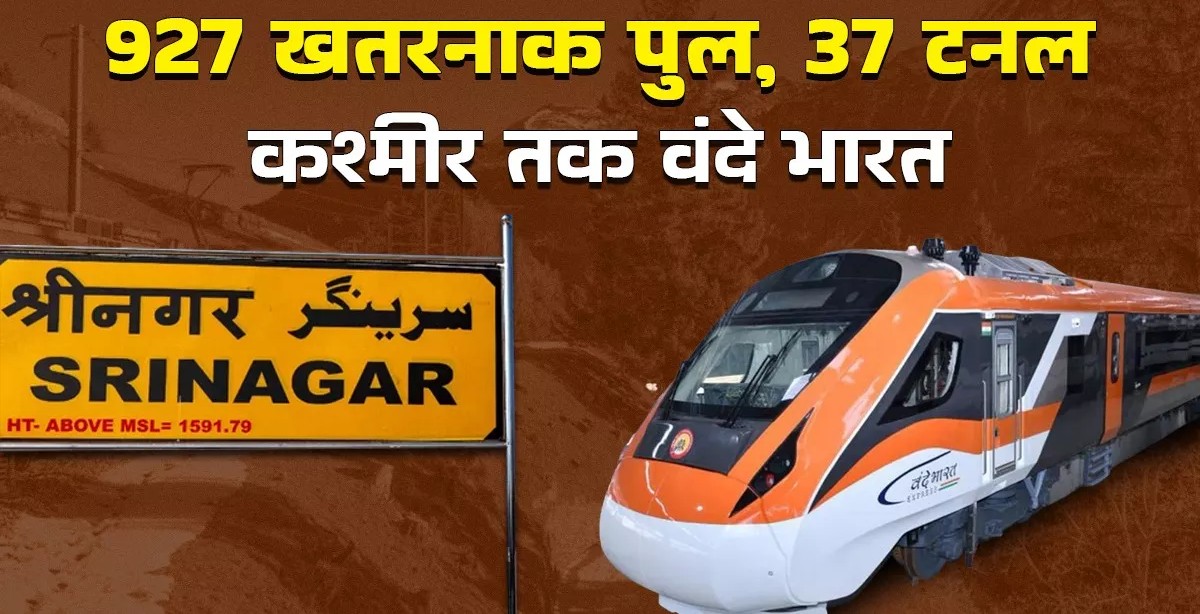
Jammu: The dream of connecting Kashmir by train is finally coming true. All preparations for the much-awaited train service to the valley are complete, and now the nation eagerly awaits Prime Minister Narendra Modi to flag off the historic journey. Initially, the inauguration was expected on February 17, but it has been postponed due to unforeseen reasons.
While the train service to Kashmir is now a reality, it’s important to recognize the immense effort behind this achievement. It took 30 years of relentless hard work, with thousands of laborers pouring their blood and sweat into this project.
From cutting through mountains to excavating tunnels, their dedication has been unparalleled. Alongside engineers, architects, and planners, the laborers played a crucial role in transforming this dream into reality.
In December, the Indian Railways completed the 272-kilometer-long Udhampur-Srinagar-Baramulla Rail Link (USBRL) project. Over the past month, nearly a dozen trial runs have been conducted across various sections of the track, ensuring safety and efficiency.
This historic journey features India’s first cable-stayed rail bridge, the Anji Khad Bridge, along with the iconic Chenab Arch Bridge. During the trial runs, both bridges underwent thorough inspections and received approval from the Commissioner of Railway Safety, marking a significant milestone in the completion of the USBRL project.
Key Engineering Marvels of the Kashmir Rail Link
Anji Khad Bridge:
A crucial part of the USBRL project, this single-tower cable-stayed bridge is an engineering wonder. Rising 331 meters above the riverbed, the bridge stands at a height of 191 meters from its foundation. Spanning a total length of 473.25 meters, it ranks among the world’s highest railway bridges.
Chenab Arch Bridge:
Standing 359 meters above the Chenab River, this bridge holds the title of the world’s tallest railway bridge—35 meters taller than the Eiffel Tower in Paris.
Tunnels and Bridges:
The journey from Katra to Banihal, a 111-kilometer stretch, posed immense challenges. This segment alone includes 37 bridges. In total, the Kashmir rail link features 927 bridges and 38 tunnels, with the longest tunnel stretching 12.75 kilometers. The project’s success is a testament to the tireless efforts of engineers, laborers, and technical experts who braved harsh conditions to achieve this remarkable feat.
The Commissioner of Railway Safety has given the green light for operations along the Katra-Baramulla section. While the official inauguration date is yet to be announced, the wait for the first passenger train to Kashmir is nearly over.

