


Srinagar: The Jammu and Kashmir Government has directed all departments, law officers and government counsels to ensure timely filing of replies, objections, LPAs and SLPs before courts, warning that negligence or delays in litigation matters will invite strict action.
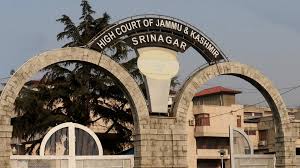
The directions were issued by the Department of Law, Justice and Parliamentary Affairs through a circular following serious observations made by the High Court of Jammu and Kashmir and Ladakh in the case Ali Mohammad Wani vs UT of JK and Ors.
The High Court had observed that in a large number of cases involving the government, replies were not being filed within the stipulated time despite repeated opportunities, resulting in mounting backlog and hampering administration of justice. The court had also sought the personal appearance of Commissioner Secretary, Law Department, Achal Sethi.
The court stressed the need for a time-bound mechanism to ensure prompt transmission of records to counsels, timely preparation of objections and fixing responsibility on officers delaying replies.
Subsequently, the Law Department informed the court that measures were being put in place to avoid such situations and to ensure proper coordination between departments and government counsels.
The circular reiterated duties already laid down under previous government orders regarding litigation management and appointment of Officers In-Charge (OICs) for court cases.
As per the instructions, OICs have been tasked with maintaining close coordination with departments and counsels, collecting records, preparing para-wise replies, ensuring timely filing of objections and monitoring the progress of cases. They have also been made responsible for examining judgments and processing decisions regarding implementation or filing of appeals within limitation periods.
Law Officers have been directed to ensure that replies, appeals and pleadings are filed within time and that delays or casual handling of cases will attract disciplinary action. The circular stated that condonation of delay applications should not be drafted casually and repeated adjournments will be viewed seriously.
The government also directed counsels to avoid unnecessary adjournments, appear in court with proper preparation and contest matters on merits instead of routinely consenting to disposal of cases with directions to “consider claims under rules”.
The circular further stated that any negligence, laxity or casual approach by OICs, Law Officers or Government Counsels resulting in adverse court orders would be viewed seriously and action would be taken under rules.
The circular also stated that in cases where multiple departments are made parties, a single Officer In-Charge (OIC) will be appointed by the Law Department to coordinate the litigation and ensure a unified stand before the court. In situations involving conflicting positions among departments, the matter will be referred to the Law Department for legal advice and final instructions.
The government further directed that appeals against judgments should be processed well within the limitation period and, wherever required, proposals for filing appeals must be forwarded to the Law Department at least one month before expiry of the limitation period.
The circular emphasised that cases where courts impose costs on the government due to repeated adjournments or negligence would be treated seriously. Departments have been asked to identify officers responsible for such lapses and initiate suitable action, including recovery of costs from erring officials.
Government counsels have also been instructed to furnish weekly department-wise advance cause lists and regularly update the Law Department regarding the status of pending litigation. The circular said performance monitoring mechanisms and reporting formats had already been devised under earlier government orders to track court cases and review the functioning of officers and counsels.
The order noted that despite detailed instructions issued earlier, casual and lackadaisical handling of litigation was still being observed in several departments, resulting in adverse court orders and serious prejudice to government interests.