



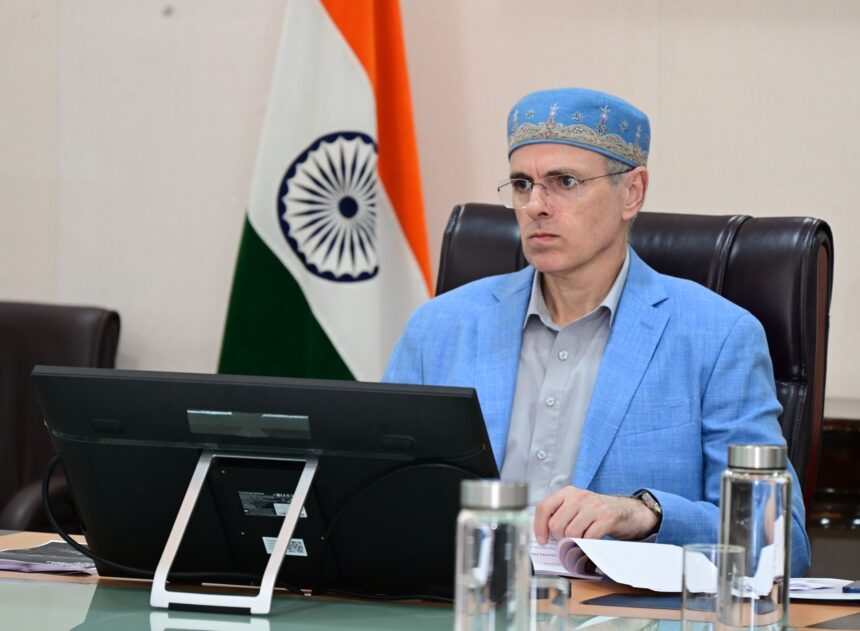
Jammu: Chief Minister Omar Abdullah’s decision to leave for New Delhi on the final day of the Jammu and Kashmir Assembly session has added significance coming days after the House passed a resolution seeking the immediate restoration of full statehood, with Congress legislators backing the move amid a wider political debate over its reference to the Assembly’s 2000 autonomy resolution.
Omar flew to the national capital on Wednesday to attend the INDIA bloc meeting at the Constitution Club, where Opposition parties are discussing the Election Commission, electoral processes and the Special Intensive Revision of voter lists.
The Delhi meeting comes at a politically sensitive juncture for the J&K coalition. Congress supported Omar’s statehood resolution in the Assembly, while the BJP opposed the wording because it linked the fresh demand to resolutions passed in 2000 and 2024.
The latest resolution, however, specifically calls for the “immediate and urgent restoration of full statehood” and its forwarding to the Government of India.
The reference to the 2000 autonomy resolution has widened the political debate beyond statehood. While the latest resolution does not itself seek restoration of the pre-1953 constitutional arrangement, its reference to the earlier resolution has been challenged by the BJP, which has maintained that it supports statehood but opposes any revival of the autonomy agenda.
Congress’s support has meanwhile assumed greater importance within the ruling alliance.
The party remains outside Omar Abdullah’s council of ministers, with differences inside the J&K Congress over whether to accept the National Conference’s renewed offer of cabinet representation or maintain the position that Congress should enter the government only after restoration of statehood.
Against this backdrop, the NC and Congress are also moving towards an eight-member joint coordination committee, with four representatives from each party.
The proposed mechanism is intended to institutionalise coordination between the coalition partners, address policy differences and jointly take up governance and public issues.
The committee assumes particular significance as Congress’s central leadership weighs its position on joining the Omar Abdullah-led government.
For the NC, it could provide a formal channel to manage disagreements with its alliance partner; for Congress, it offers a platform to remain engaged in governance while its position on cabinet participation remains unresolved.
Omar’s Delhi visit therefore comes at the intersection of two separate but politically connected developments—his government’s renewed push for statehood and the future shape of its relationship with Congress.
The timing is also significant because the Assembly’s statehood resolution has already exposed differences between the ruling alliance and the BJP over whether the demand should remain confined to statehood or be read alongside the Assembly’s earlier positions on autonomy and special status. The resolution was ultimately passed after BJP members walked out of the House.
While the INDIA bloc meeting is primarily focused on national electoral issues, Omar’s participation comes with the J&K political debate still unfolding.
Congress leaders from J&K are not expected to attend the Delhi meeting, while PDP president Mehbooba Mufti is expected to participate.

