



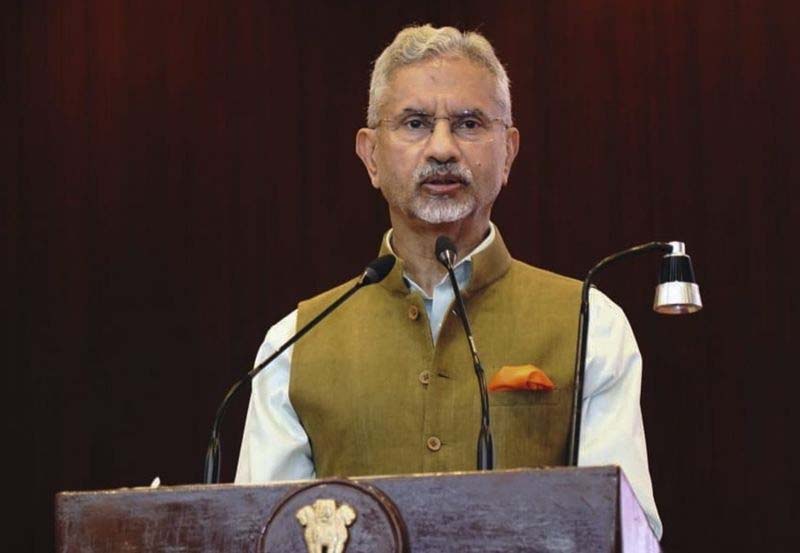
New Delhi,: India’s border with China has become “more alive” and requires a much greater commitment of Indian troops on a sustained basis, External Affairs Minister S Jaishankar said on Saturday as he listed New Delhi’s policy approach to enhance infrastructure along the frontier.
Jaishankar also said that India has bolstered its military capabilities along the Line of Actual Control (LAC) since the deadly clashes in Eastern Ladakh’s Galwan Valley in 2020.
His remarks at an interactive session at the HT Leadership Summit came amid ongoing efforts by New Delhi and Beijing to normalise their relations that came under severe strain following the over four-year border face-off in Eastern Ladakh.
“Just think about the last few years. How often do you now read – a new tunnel has been built, some new bridge has been built, another airfield has been commissioned. You’re getting this news with greater and greater frequency,” he said.
“What has happened today is the border with China has become more alive in a way. It has required a much greater commitment of troops on a sustained basis.”
“The fact is that the work we had already done allowed that kind of numbers to be deployed out there, and the work we continue to do will maintain those numbers,” he said.
After over four years of frosty ties over the eastern Ladakh military standoff, India and China began to repair relations following a meeting between Prime Minister Narendra Modi and Chinese President Xi Jinping in the Russian city of Kazan in October 2024 that took place after the face-off ended.
The talks between Modi and Xi covered a range of issues, including reducing their trade deficit, tackling challenges like terrorism and ensuring fair trade in multilateral platforms.
“I would say when it comes to the border, I would honestly make this point, and I think there’s a lot of data and evidence to back it up, which is that the border infrastructure was really neglected till about a decade ago. I mean, people spoke about it, people drew up plan,” Jaishankar said.

