



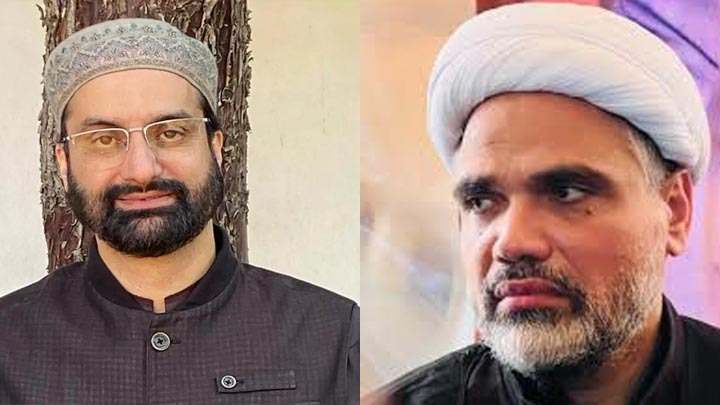
Mirwaiz condemns move, ban another blow to Kmr’s social and political landscape: Mehbooba
WAJAHAT SHABIR
SRINAGAR: A 5-year ban has imposed Ministry of Home Affairs on Awami Action Committee (AAC), led by Mirwaiz Umar Farooq and Kashmir Ittihadul Muslimeen (JKIM), headed by Masroor Abbas Ansari under the Unlawful Activities (Prevention) Act, 1967 for five years. It has also banned the Jammu and Kashmir Ittihadul Muslimeen (JKIM), headed by Masroor Abbas Ansari for five years.
Two separate notifications in this regard were issued by Ministry of Home Affairs. The notification sited that both organizations were involved in activities that threaten the sovereignty, integrity, and security of India.
According to the notification, AAC members have been supporting terrorist activities, propagating anti-India narratives, and mobilizing funds for secessionist movements in Jammu and Kashmir. The government has also accused the group of inciting violence, promoting disaffection against the Indian state, and encouraging armed resistance.
The ministry listed multiple criminal cases against AAC and its leaders, including charges of sedition, unlawful assembly, and incitement of violence. Cases have been registered at various police stations in Srinagar, including Nowhatta, Safakadal, and Kothi Bagh, against Umar Farooq and other AAC members for delivering speeches against the Indian government, promoting election boycotts, and instigating protests.
The National Investigation Agency (NIA) has also filed a chargesheet against AAC spokesperson Aftab Ahmad Shah and others for their alleged involvement in anti-national activities. The government believes that if not curbed, AAC will continue to support militancy, disrupt public order, and fuel separatist movements in Jammu and Kashmir.
Invoking Section 3 of the UAPA, the government has imposed a five-year ban on AAC, effective immediately. The notification stated that the ban is necessary to prevent the group from further engaging in activities detrimental to India’s national security.
This move follows a broader crackdown on organisations accused of fostering separatism and militancy in Jammu and Kashmir.
Similarly, the government said that members of JKIM have been actively supporting terrorist activities, engaging in anti-India propaganda, and mobilizing funds to promote separatist and secessionist agendas in Jammu and Kashmir. The government also accused the group of inciting public unrest, advocating violence, and working against the constitutional framework of the country.
The MHA stated that if JKIM’s activities are not curbed, it would continue promoting anti-national sentiments, disputing Jammu and Kashmir’s accession to India, and disrupting public order. Citing these concerns, the government has banned the organization for five years, effective immediately, under Section 3 of the Unlawful Activities (Prevention) Act, 1967.
Criticizing the move, Mirwaiz Umar Farooq on X said, “Strongly condemn the ban on Awami Action Committee and declaring it an “Unlawful Association.” Formed by shaheed e Millat at the peak of holy relic (moi muqadas) agitation in 1964, it has unwaveringly stood by the people of J&K advocating their aspirations and rights through completely non violent and democratic methods and calling for peaceful resolution of the Kashmir conflict through dialogue and deliberation, for which it’s members suffered jails and incarceration and even martyrdom”.
This move seems part of the continuation of the policy of intimidation and disempowerment that is being followed viz a viz J&K since August 2019. The voice of truth may be suppressed through force but will not be silenced, he said.
Meanwhile, PDP President said that move to ban the organization is another blow to Kashmir’s social and political landscape.
MHA’s banning of Jammu and Kashmir Awami Action Committee ( AAC ) headed by Mirwaiz Ummer Farooq and Ittihadul Muslimeen (JKIM) headed by Mohammad Abbas Ansari is another blow to Kashmir’s social and political landscape, Mehbooba Mufti wrote on X.
Suppressing dissent will only deepen tensions rather than resolve them. The J&K government must intervene to stop such actions. Democracy is about more than elections – it’s about protecting citizens’ fundamental rights. While silencing Kashmir’s voices may serve BJP’s political agenda, it undermines the very Constitution that safeguards these rights. The central government must reassess its approach and move away from heavy-handed tactics, she said.
