



Arteev Sharma
Jammu: Ladakh could be heading towards another phase of agitation as the wait for fresh dialogue with the Union Ministry of Home Affairs (MHA) over key demands has begun testing the patience of leaders of the Leh Apex Body (LAB) and Kargil Democratic Alliance (KDA).
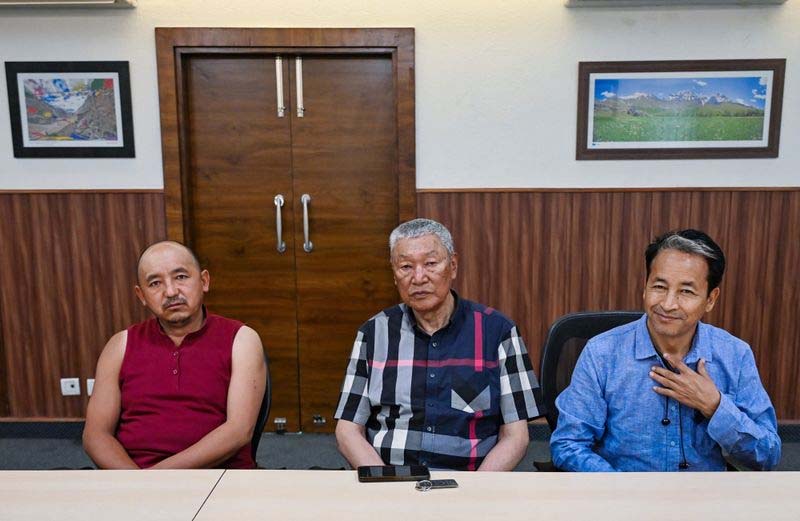
LAB chairman and veteran Buddhist leader Chering Dorjay Lakruk said no invitation for the next round of talks had been received so far, despite assurances that the meeting would be held in the first week of October.
“We have not received any invitation so far. So there is no update as of now. Given the dilly-dallying tactics, we are being compelled to think otherwise. The people will come to know in a day or two about our next course of action if the MHA continues to adopt this approach,” Lakruk told The News Now.
Asked about the possibility of fresh agitation, he said the stakeholders had been expecting the meeting during the first week of October, which has already passed.
“We were asked to hold the meeting in the first week of October, which is over now. Our patience is beginning to wear thin. We will have to think seriously over this dilly-dallying. You will come to know in a day or two what we are going to do now,” he said.
Sources said the MHA team was expected to travel to Ladakh for the next meeting of the Sub-Committee constituted to carry forward discussions with the LAB, KDA and other stakeholders on the proposed UT-level elected body and its powers.
The next meeting was agreed to be held in Ladakh—either Leh or Kargil—instead of New Delhi after the LAB and KDA leaders conveyed their inability to travel repeatedly to the national capital for negotiations.
Sources said the MHA officials are expected to hold discussions with representatives of the LAB and KDA besides officials of the UT administration on the broad contours of the proposed elected body, including its legislative, financial and executive powers.
“Ladakh leaders were reportedly assured that the meeting would be held in the first week of October with a desire to seek greater clarity on the proposed structure of the UT-level body during the next round of talks but the MHA officials, as usual, did not keep their word this time as well due to which these leaders have started sulking,” sources said, adding “the LAB is ready with its response to nine specific questions submitted by the MHA during the September 9 meeting in New Delhi”.
Sources said Ladakh leaders would submit their response to the questions to the MHA at the Sub-Committee meeting proposed to be held in Ladakh.
The LAB has reportedly taken the assistance of legal experts while preparing its response, with the questions primarily relating to the proposed structure and functioning of the UT-level elected body.
Pertinently, the last meeting of Sub-Committee that took place on September 9, though remained inconclusive, had reportedly agreed that members of the UT-level body would be directly elected by the people, rather than being chosen by representatives of the seven newly notified Autonomous Hill Development Councils.
The Ladakh stakeholders were also informed that subjects including land, culture, heritage, forests, environment and natural resources would fall under the proposed elected body under Article 240. However, the MHA has so far not finalised several key aspects, including the name of the proposed body, total number of seats, precise distribution of powers and its institutional structure.
The LAB and KDA had reached an in-principle understanding with the Centre during the May 22 meeting in New Delhi on restoring a democratic framework in Ladakh and providing constitutional safeguards broadly on the lines of Articles 371A, 371F and 371G.
The discussions also covered the creation of a UT-level elected body with legislative, financial and executive powers. Two subsequent meetings were held by the MHA in Leh, where the proposed structure and powers of the elected body were discussed further. Despite these rounds of dialogue, the Centre has yet to place before the stakeholders a comprehensive framework of the proposed institution.

