



Atiya Mujeeb
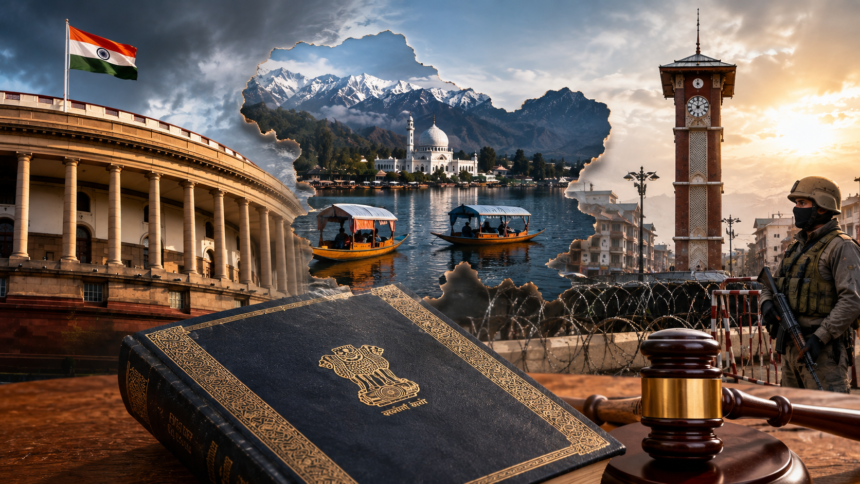
Jammu, Aug 5: Seven years after the abrogation of Article 370 and Article 35A, the constitutional changes introduced by the Centre on August 5, 2019, continue to remain at the centre of political debate in Jammu and Kashmir. While the Central Government says the move has accelerated development and ensured uniform laws across the country, several regional political parties continue to demand the restoration of the erstwhile state’s special status.
On August 5, 2019, Parliament revoked Article 370, which had granted Jammu and Kashmir a special constitutional status, and rendered Article 35A inoperative. The move also led to the bifurcation of the erstwhile state into the Union Territories of Jammu and Kashmir and Ladakh.
Before its abrogation, Article 370 allowed Jammu and Kashmir to have its own Constitution and provided the region with autonomy in several matters. Most Central laws required the concurrence of the state government before they could be extended to the region.
Article 35A, introduced through a Presidential Order in 1954, empowered the erstwhile state’s legislature to define permanent residents and grant them exclusive rights in matters such as land ownership, government employment, scholarships and certain other benefits.
The Central Government maintained that the constitutional changes were aimed at fully integrating Jammu and Kashmir with the rest of the country. According to the government, the decision would ensure uniform application of laws, accelerate infrastructure development, attract investment, create employment opportunities and extend all Central welfare schemes directly to the people of the region.
Supporters of the decision argue that the move has resulted in faster infrastructure development, improved governance, increased investment opportunities and greater implementation of Central Government schemes.
However, several regional political parties, including the National Conference and the People’s Democratic Party, continue to oppose the decision. They maintain that the abrogation ended Jammu and Kashmir’s special constitutional identity and raised concerns over the protection of land rights, government employment and the region’s autonomy.
As the seventh anniversary of the constitutional changes is observed, Article 370 remains one of the most significant political issues in Jammu and Kashmir. While regional parties continue to seek the restoration of the erstwhile special status, the Central Government maintains that the decision has strengthened governance, promoted development and brought Jammu and Kashmir under the same constitutional framework as the rest of India.
The issue continues to shape political discourse in the Union Territory, reflecting differing views over governance, constitutional status and the future of Jammu and Kashmir.

