



Atiya Mujeeb
Jammu, November 26: Eighteen years have passed since Mumbai witnessed one of the darkest chapters in India’s history. However, the memories of November 26, 2008, remain fresh for the families who lost their loved ones, survivors who witnessed the tragedy and security personnel who risked their lives to protect others.
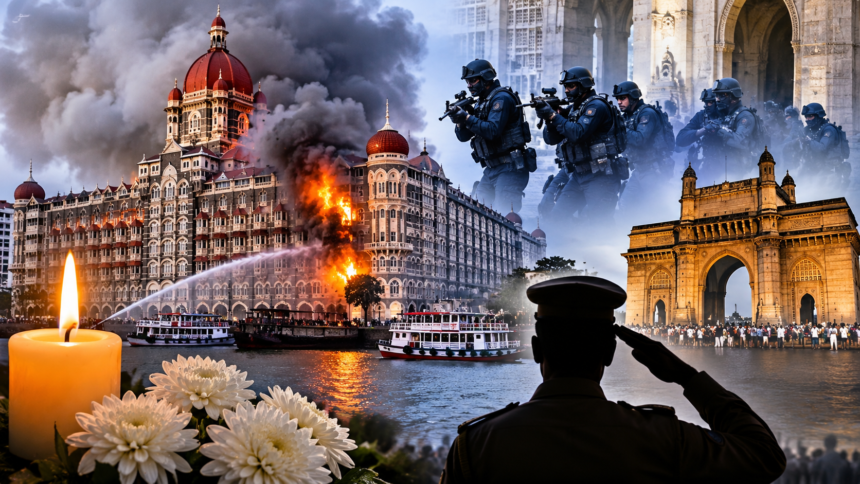
What began as an ordinary evening soon turned into a nightmare when ten terrorists entered Mumbai by sea and launched coordinated attacks at several locations, including the Taj Mahal Palace Hotel, Oberoi-Trident Hotel, Chhatrapati Shivaji Terminus, Nariman House and Leopold Cafe.
The attacks continued for nearly three days, claiming 166 lives and leaving more than 300 people injured. People from different parts of India and several foreign countries were among those affected.
The city came to a standstill as gunfire and explosions spread fear across crowded public places. Mumbai Police and other security forces launched operations to rescue people trapped inside buildings and eliminate the attackers. The operation finally ended on November 29, 2008.
Remembering the Heroes
The attacks also brought forward stories of extraordinary courage. Mumbai Police personnel were among the first to confront the terrorists. Senior officers Hemant Karkare, Ashok Kamte and Vijay Salaskar lost their lives while responding to the attacks.
Assistant Sub-Inspector Tukaram Omble showed exceptional bravery while capturing terrorist Ajmal Kasab alive. NSG commandos and other security personnel later carried out operations to rescue hostages and bring the siege to an end.
Their sacrifices remain an important part of the country’s memory of 26/11.
Security Lessons and Changes
The attacks exposed major gaps in India’s coastal security, intelligence sharing and emergency response systems.
In the aftermath, the government established the National Investigation Agency (NIA) and introduced several measures to strengthen coastal surveillance and counterterrorism operations. NSG regional hubs were also established to improve response times during emergencies.
On the legal front, Ajmal Kasab was convicted and executed in November 2012. Other investigations and proceedings involving those accused of planning and supporting the attacks have continued over the years.
Eighteen Years On
Mumbai has moved forward, but November 26 remains a painful reminder of the lives lost and families affected by terrorism.
For the younger generation, 26/11 is not just a date in history but a reminder of the importance of national security, unity and preparedness.
Eighteen years later, remembering the tragedy means honouring the victims, recognising the courage of those who fought back and ensuring that the lessons of that night are never forgotten.

