


WAJAHAT SHABIR
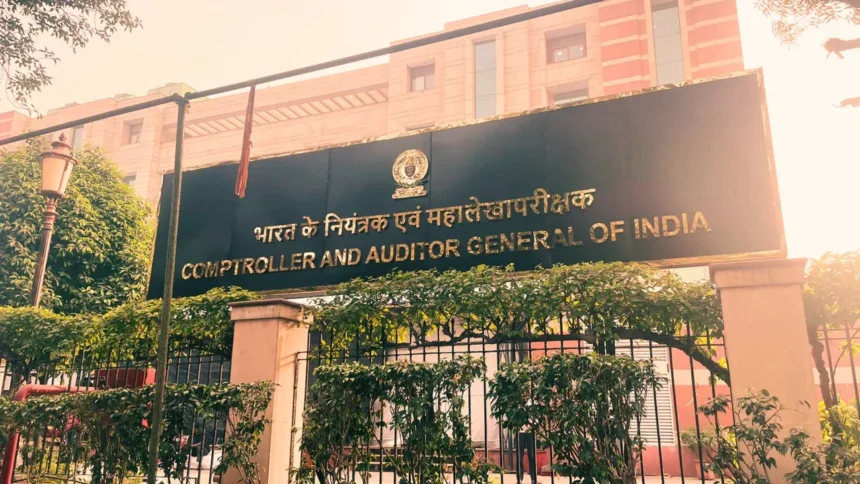
SRINAGAR: The Comptroller and Auditor General of India (CAG) has flagged an irregularity in the implementation of the Direct Tax Vivad se Vishwas Scheme, 2020, in Jammu and Kashmir, identifying a Srinagar-based private company among the beneficiaries who were allegedly extended the scheme’s benefits despite being ineligible.
According to the CAG’s Report No. 8 of 2026, the case pertains to V1 Pvt. Ltd., falling under the Principal Commissioner of Income Tax (PCIT), Srinagar charge, for the assessment year 2017-18. The audit has reported a tax effect of ₹4.17 lakh in the case.
The finding forms part of a broader audit observation in which the CAG identified 17 cases involving a total tax effect of ₹6.96 crore across 11 states, where the Income Tax Department extended the benefits of the scheme to ineligible assessees.
The Srinagar case is listed at serial number 16 in Annexure 5.8 of the report. While the assessee’s name has been partially masked, the audit document identifies the company as V1 Pvt. Ltd. and specifies the jurisdiction as PCIT Srinagar. The report does not provide a separate detailed explanation of the circumstances surrounding the Srinagar case. However, the broader audit observation relates to the extension of the scheme’s benefits to taxpayers who did not fulfil the prescribed eligibility conditions. The report also provides figures concerning Jammu and Kashmir’s participation in the scheme.
According to the state-wise data compiled by the audit, 585 applications were received from Jammu and Kashmir under the Direct Tax Vivad se Vishwas Scheme, 2020. Of these, only nine cases, representing 1.5 per cent of the state’s application population, were selected for detailed audit examination.
The nine cases formed part of a larger audit exercise covering 5,335 cases across the country, selected from a total population of 1,48,366 applications. Jammu and Kashmir accounted for approximately 0.39 per cent of the total applications recorded under the scheme, placing it among the states and Union Territories with the lowest application numbers.
At the national level, the CAG examined 5,212 cases and found non-compliance with the provisions of the DTVsV Act and Rules in 389 cases, involving a total revenue impact of ₹1,675.65 crore. The irregularities included incorrect determination of disputed tax and amounts payable, failure to recover interest paid to assessees, incorrect calculations in search-related cases, and extension of benefits to ineligible taxpayers.
The audit also highlighted delays in processing applications, shortcomings in documentation and weaknesses in the department’s internal monitoring and information technology systems. The CAG has recommended that the Central Board of Direct Taxes strengthen its monitoring mechanisms, ensure uniform application of rules and introduce appropriate internal controls to prevent similar irregularities in future.