



SUMIT SHARMA
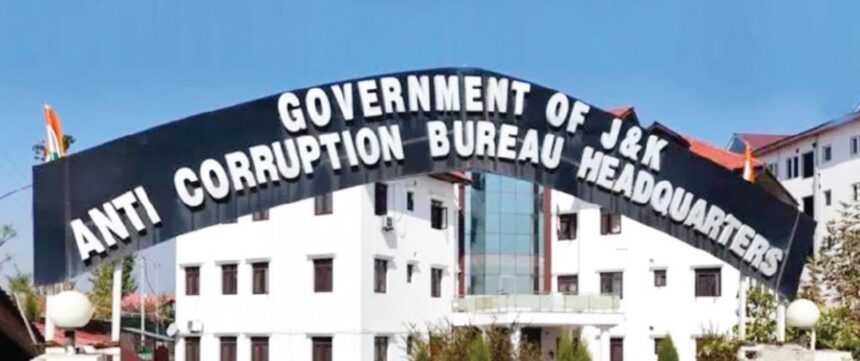
Jammu: The Anti-Corruption Bureau (ACB) on Tuesday stepped up scrutiny of construction works executed by the J&K Sports Council, examining official records at MA Stadium, Jammu, and the Sports Council office in Bakshi Nagar, Srinagar, in connection with allegations of financial irregularities in sports infrastructure projects, including Khel Gaon Nagrota and other works across Jammu and Kashmir.
The record-checking exercise, which began around 1:10 pm, was carried out by an ACB team led by DySP Kamal Sangra, accompanied by Inspectors Chetan and Davinder in Jammu, while a team headed by Shoukat Ahmed conducted the exercise in Srinagar. Officials examined files and records relating to works executed by the Sports Council during the last three years and reportedly took certain documents for further scrutiny.
The ACB has not officially disclosed the alleged amount involved or specified the nature of the suspected irregularities. No finding of financial loss, embezzlement or culpability against any official or contractor has been established at this stage.
The scrutiny assumes significance because of the scale of expenditure on sports infrastructure in the Union Territory, particularly the Khel Gaon Nagrota project, one of Jammu’s major sports infrastructure initiatives.
The project was formally launched in 2019 over around 170 kanals, with a plan to create an integrated sports village equipped for athletics, football, volleyball, kabaddi, basketball, hockey, badminton, cycling, shooting and other sporting activities.
Government records have previously put the investment in the project at around ₹31 crore, with several facilities developed and brought into use.
However, questions over the pace of execution and completion of various components have persisted. A 2024 assessment had indicated that while football and cricket facilities had been completed, several major components—including the athletic track, hockey field, cycle track and multipurpose indoor hall—were still under construction.
The works cited in the assessment included an athletic track costing around ₹6 crore, a hockey field of approximately ₹5 crore, a cycle track costing about ₹1 crore, a multipurpose indoor hall estimated at ₹7 crore, besides a cricket-ground spectators’ gallery costing around ₹50 lakh.
The financial trail does not end with the original project expenditure. A tender issued in 2025 reportedly estimated nearly ₹1 crore for construction of a road serving Grounds A and B at Khel Gaon.
In 2026, another tender placed the estimated cost of cricket-ground remodelling at ₹1.50 crore, bringing renewed attention to continuing expenditure on a project that was conceived years ago as a comprehensive sports village.
The latest ACB exercise could therefore bring under scrutiny not only individual works but also the broader chain of tendering, execution, measurements, payments, quality of construction, utilisation of funds and delays.
The ACB’s wider examination of Sports Council records has also brought other sports infrastructure works across Jammu and Kashmir under public scrutiny, including stadium-related projects and swimming-pool works.
However, the precise projects, financial figures and allegations being examined by the ACB have not been officially detailed. Any connection between specific stadium or swimming-pool works and the present verification would therefore require confirmation from the investigating agency.
The documents taken for examination could help establish whether the allegations, if substantiated, concern inflated or incorrect measurements, payment against incomplete works, tendering procedures, execution quality, utilisation of funds, delays or other procedural violations.
For now, Tuesday’s exercise remains a record-checking and verification process. The ACB has not publicly announced registration of an FIR or established wrongdoing in the works examined.
The significance of the exercise, however, lies in the scale of public investment involved and the continuing demand for functional sports infrastructure for athletes, students and the wider sporting community.
The central accountability question emerging from the scrutiny is straightforward: whether the substantial public expenditure on sports infrastructure has translated into completed, quality and usable facilities—and whether every rupee spent can be matched with work actually executed on the ground.
The ACB’s further course of action is expected to depend on the material and records collected during the verification process.
